Why is a B2B deal stalled by a divided buying group?

A B2B deal can stall when influential stakeholders have not reached a shared view of the problem, the value of the solution or the risks involved. Account marketing can help by mapping the buying group, aligning sales and marketing around account insight, and creating messages that address role-specific business challenges without fragmenting the wider case.

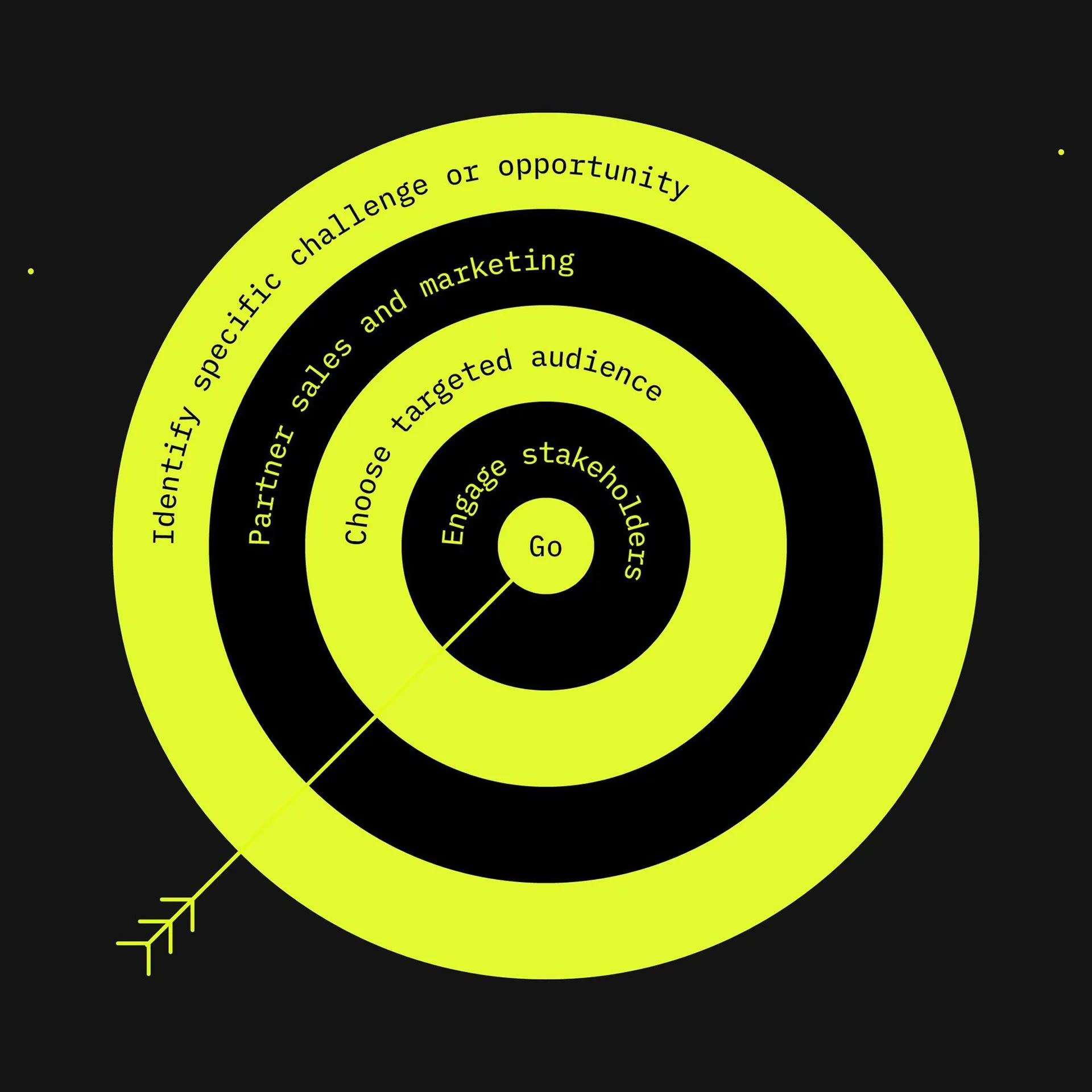
Concentric target diagram with an arrow hitting the bullseye, featuring steps from the outer ring to the center: Identify specific challenge or opportunity, Partner sales and marketing, Choose targeted audience, Engage stakeholders, and Go at the center.

A stalled deal is often a buying-group problem

A strategic B2B opportunity can lose momentum even when sales has strong relationships and has presented a clear case. The issue may be that the account team has not reached enough of the people who influence the decision. Account-based marketing starts from a different premise than broad outreach: identify the account that matters, understand who is involved in the decision, and focus communications on that group.

This matters when a deal involves people with different priorities, responsibilities and concerns. A message that works for one contact may not give another stakeholder a reason to engage. The practical task is to build a shared account view with sales, identify the buying committee, and develop relevant messages around the business and role-based challenges those people face. The aim is not simply more activity, but progress within a specific account.

Sources: Understanding ABM in five steps, Account-Based Marketing | The Frameworks

Build relevance around the account, not one contact

Account marketing works best when sales insight and marketing creativity are used together. Sales may understand the history of the relationship, the current opportunity and where earlier conversations have stalled. Marketing can use that information to shape a coherent programme with messages and content relevant to the account.

The campaign journey begins with account selection and stakeholder mapping. From there, the team develops account insight and key themes, then creates messaging and content that speak to the account's needs. Those messages should address specific business and role-based challenges rather than relying on a generic product narrative. Engagement should continue across the campaign timeline, with account progress measured as the work develops. This provides a more disciplined way to assess whether communications are helping the account move forward, rather than treating engagement from a single contact as a reliable signal of progress.

Sources: Understanding ABM in five steps, Account-Based Marketing | The Frameworks

Account marketing is more focused than broad demand generation

Broad B2B marketing is designed to reach a wide audience and generate interest across a market. Account-based marketing is designed for a named account or a small group of accounts that is important, difficult to secure or difficult to retain. It is particularly relevant when usual sales activity has not created enough momentum, or when a significant opportunity requires a more tailored case.

That focus does not automatically prove that one-to-one or one-to-few account marketing will outperform broad demand generation in every situation. The two approaches serve different jobs. Broad activity can build reach, while account marketing concentrates effort on understanding a specific decision environment, strengthening relationships and creating targeted programmes for priority accounts. For high-value opportunities, the appropriate test is whether the programme reaches relevant stakeholders, gives them useful reasons to engage and supports measurable account progress.

Sources: Understanding ABM in five steps, Account-Based Marketing | The Frameworks

FAQs

What makes B2B messages feel intrusive to a buying group?

B2B messages can feel intrusive when they are overly tailored to individuals without reflecting the wider account context or the different needs within the buying group. Communications should remain relevant to business and role-based challenges while maintaining a coherent message across the account.

How can account marketing reach hidden buyers in a B2B deal?

Account marketing can reach hidden buyers by mapping stakeholders before campaign development and identifying the people who influence the decision beyond existing sales contacts. Sales and marketing can then use account insight to create targeted messages and content for the buying committee.

What content helps a buying group agree on a B2B purchase?

Content should address the specific business and role-based challenges faced by members of the buying group. Account-relevant messaging built from stakeholder insight and shared account themes can give different decision-makers a clearer, more consistent case for engaging.

Is account marketing moving B2B deals forward?

Account marketing is intended to move specific priority accounts forward by focusing on the people involved in the decision and creating relevant communications for them. Progress should be measured at account level throughout the campaign, rather than inferred from activity by one contact.

When is account marketing worth more than broad outreach?

Account marketing is most relevant when there is a specific challenge or opportunity in a high-value account, especially when usual sales approaches have not created progress. Broad outreach builds reach, while account marketing concentrates effort on a defined buying committee and a tailored account case.

How do I map a B2B buying group?

Use sales insight, stakeholder mapping and account-relevant themes to build a clearer picture of who can move or block an opportunity.

  1. Align with sales

    Bring sales and marketing together before planning communications for the account. Use sales knowledge of the relationship, previous activity and stalled conversations to establish a shared view of the opportunity.

  2. Identify the stakeholders

    Map the people involved in the account's buying committee, not only the contacts already engaging with sales. Identify which stakeholders are influential and where the team has not yet reached enough of the relevant people.

  3. Develop shared account themes

    Turn stakeholder insight into account themes, relevant messaging and content that address business and role-based challenges. Engage the account over time and measure account progress to determine whether the programme is helping create momentum.