How do we develop bold ideas for a campaign?

Bold campaign ideas come from a specific audience insight and a clear truth about the business, then turn that tension into a memorable human story backed by honest functional proof. For complex B2B brands, creative commitment means moving beyond generic claims while retaining the clarity, relevance and technical credibility buyers need.

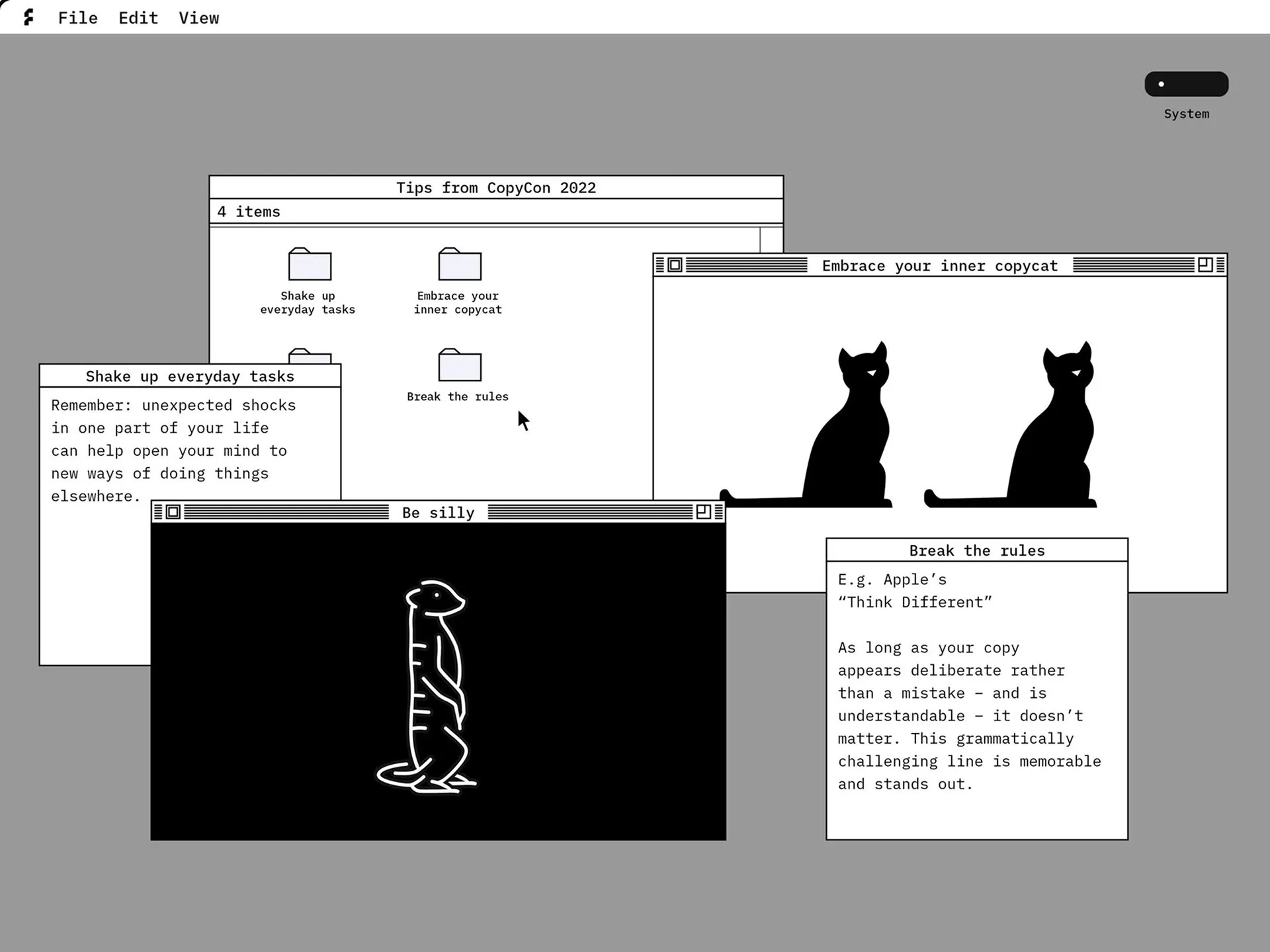
Vintage computer desktop interface with open windows displaying tips from CopyCon 2022, including notes on creativity, two silhouette cats, and a line drawing of a meerkat.

Bold ideas start with a truth worth expressing

Bold campaign concepts are rooted in a real audience tension, business truth or unmet expectation, rather than a desire to sound different. In complex B2B marketing, the most useful starting point is a clear view of the audience, the wider category and the commercial challenge the campaign needs to address. That work creates the context for a distinctive idea that has message relevance, rather than another piece of undifferentiated content.

A strategy-first brief should examine audience expectations, insight and empathy before creative development begins. The resulting idea can be surprising, emotional or playful, but it must still communicate clearly and honestly. Creative authenticity means avoiding false claims, explaining what audiences need to understand and resisting the urge to make an exaggerated promise simply to attract attention. Boldness is more credible when it makes a difficult or meaningful truth easier to recognise.

Sources: Faking bad: why marketers need to maintain standards in a post-truth world, The problem with playing it safe

Make the campaign distinctive by making it specific

A bold B2B campaign becomes memorable when its language, story and visual expression are specific to the organisation behind it. Generic slogans can sound ambitious but create little brand recognition or attribution because almost any business could use them. A stronger campaign draws on a defining characteristic of the business and gives that characteristic a human, memorable expression.

Emotional connection can help a complex offer feel relevant, but it should work alongside functional proof rather than replace it. Technical buyers still need clarity about what the business does, why it matters and what supports the promise. The creative task is therefore to translate a credible proposition into a story people can remember, while ensuring the campaign does not contradict the information available through sales, website and buyer-enablement materials. Distinctiveness without relevance is noise; relevance without distinctiveness is easy to overlook.

Sources: Taglines aren’t just for fun. They help your customers fall in love with you, Faking bad: why marketers need to maintain standards in a post-truth world

Give bold creative the discipline to survive scrutiny

Bold campaign ideas need a persuasive rationale, careful planning and room for challenge if they are to move beyond the safe option. Timelines, stakeholder expectations and the need to defend spend can all push teams towards familiar creative territory. Building a clear story around the idea helps decision makers understand how the work answers the brief, reflects audience insight and supports the wider brand.

Create an environment where people can exchange views, disagree and test assumptions without dismissing unconventional thinking too early. Research broadens the range of possible references and prevents a campaign from relying on category conventions alone. Before committing, check the idea against audience understanding, the claims being made and the practical information buyers need. A campaign can be daring without being unclear, dishonest or disconnected from the business. Planned and budgeted creative risk is more manageable than last-minute novelty.

Sources: How to Turn Insights into Great Creative, The problem with playing it safe, Want to be more creative? You’ve got to get weird., Faking bad: why marketers need to maintain standards in a post-truth world

Bold B2B campaigns should reveal a business truth, not chase novelty

We believe bold campaign ideas earn attention when they express something distinctive and truthful about a business. A surprising line or visual is not enough if it could belong to any competitor, overstates the offer or leaves technical audiences without clarity. That is why we begin with the deeper context around the challenge, including audience expectations, insight and empathy, before developing creative work.

We have used this approach to shape UST's award-winning Boundless campaign around its focus on the human impact of technology. We also make space for creative friction, where strategy and creative teams can challenge assumptions, exchange views and develop stronger ideas. For us, boldness is disciplined: it combines originality with relevance, honesty and a clear reason for stakeholders to believe in the work.

Sources: Taglines aren’t just for fun. They help your customers fall in love with you, Faking bad: why marketers need to maintain standards in a post-truth world, How to Turn Insights into Great Creative

Stats

69% of B2B buyers reported inconsistencies between website information and information from sellers.

Gartner

61% of B2B buyers preferred an overall rep-free buying experience.

Gartner

FAQs

How do we make a B2B campaign bold without losing technical credibility?

A bold B2B campaign retains technical credibility when the creative idea is built around a truthful proposition and supported by clear information. Check that the campaign does not overstate benefits, hide important limitations or leave audiences uncertain about what is being offered. Emotional or unexpected creative can add interest, but clarity and honesty must remain part of the execution.

How do we avoid generic campaign slogans?

Generic campaign slogans can be avoided by identifying a quality, commitment or perspective that is genuinely distinctive to the business. A line should express that truth in a way competitors could not credibly adopt. The strongest campaign language connects a memorable expression to the organisation's underlying character, rather than relying on broad calls for change or innovation.

How do we get stakeholder approval for a bold campaign idea?

Stakeholder approval is more likely when the idea comes with a convincing story about why it answers the brief and why it is right for the audience. Explain the insight, the intended effect and the connection between the creative work and the business. Careful planning and budgeting also make a bold idea easier to present as a considered decision rather than an unmanageable risk.

Where should campaign inspiration come from?

Campaign inspiration should begin with audience and industry research, then extend beyond the immediate category. Looking at work from other B2B and B2C sectors can reveal unfamiliar ways to frame an audience tension or tell a story. References should inspire fresh thinking, not become templates that reproduce the same creative conventions.