I start most days on LinkedIn. I’m not doomscrolling, hiring or job searching. I’m trying to maintain my run on the platform’s mini-sudoku game. I’ve even been known to log on at weekends.
I play the full suite of LinkedIn games, from the Queens spatial logic challenge to the simple join-the-numbers Zip. And there’s even a bit of (friendly) in-office rivalry for the best times.
It’s not that surprising I’m a little obsessed: games release a hit of the feel-good chemical dopamine. That makes it easy to make a habit of playing – and that’s really valuable to game-makers. Why else would the New York Times (NYT) pay millions to secure Wordle?
And this – alongside our own recent game success – got me thinking: it’s high time more B2B businesses got in on the action.
The business of games
Games really are a big business; it has long been a multi-billion-dollar industry and is projected to be worth a whopping $564.27 billion globally this year.
Puzzle-style games in particular are booming. NYT games, including the popular Connections, where players have to find the links between words, were played more than 8 billion times in 2023, double the number reached in 2022. LinkedIn launched its suite of games in 2024.
It’s not just dopamine driving their popularity. People like games because they offer a heady mix of mental stimulation and escapism. Games hark back to simpler times in childhood where play shapes learning – and is even celebrated. The pressure is off and trial and error encouraged.
B2B can still learn from B2C
B2C brands are no stranger to tapping into the power of the gaming world. Gucci outfits featured in Sims 4 and Walmart built its own virtual world in Roblox. Some have even built their own gaming experiences like Oreo’s Twist, Lick and Dunk game.
But B2B brands are less likely to use games to their advantage. Perhaps they’re worried that too much levity could undermine their serious B2B status. But it doesn’t have to be like that. In B2B, we’re still talking to humans. And we know that people not only enjoy games, but are wired to gain knowledge through them.
This is why games can work so well for storytelling. Take IBM’s CityOne. It asked professionals to make decisions about running a sustainable and environmentally conscious city using data and technology. It was informative, giving information and guidance about the domino effect certain decisions would have, but still playful. And most importantly, it gave you a score at the end.
Gamification in practice
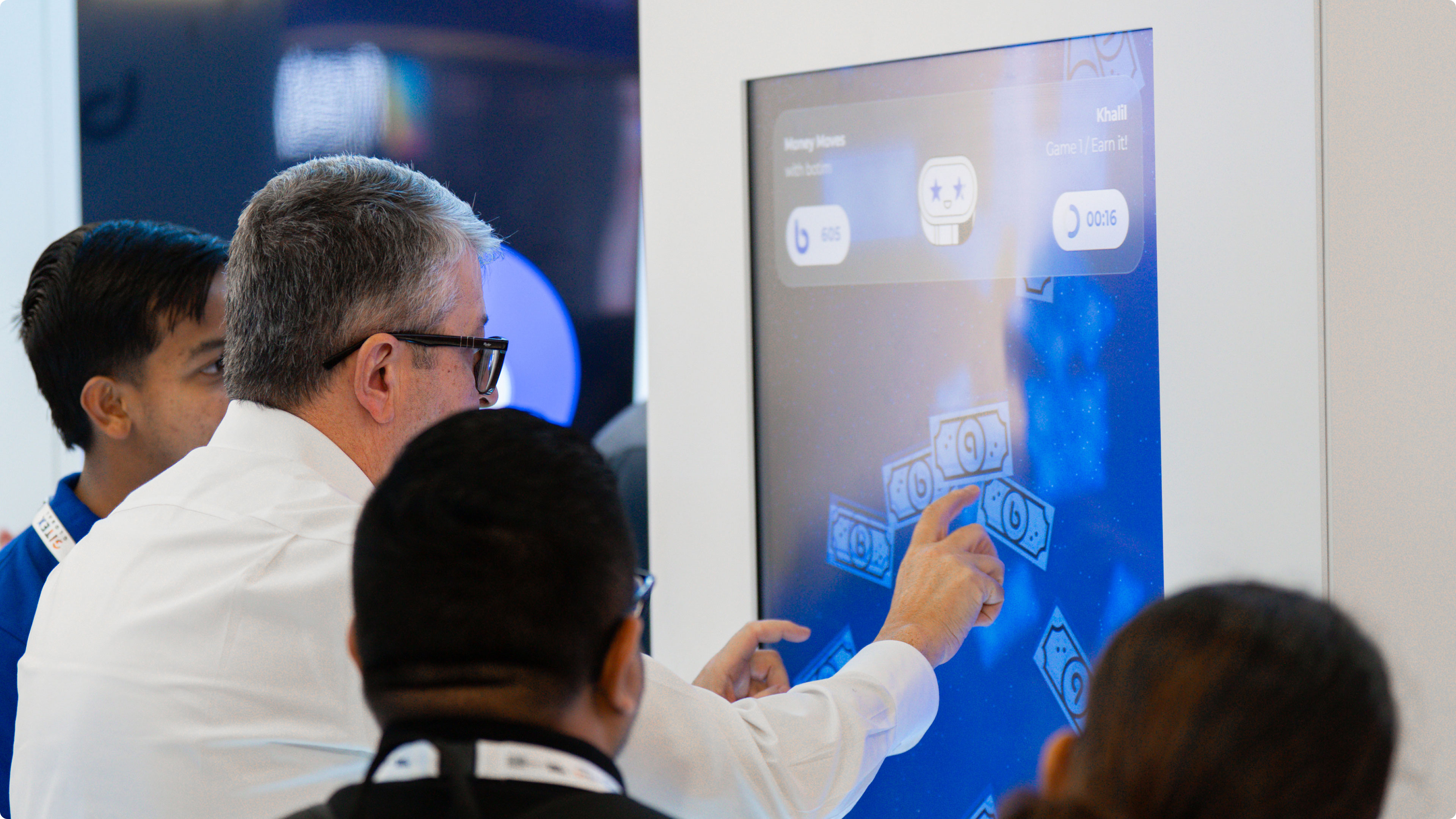
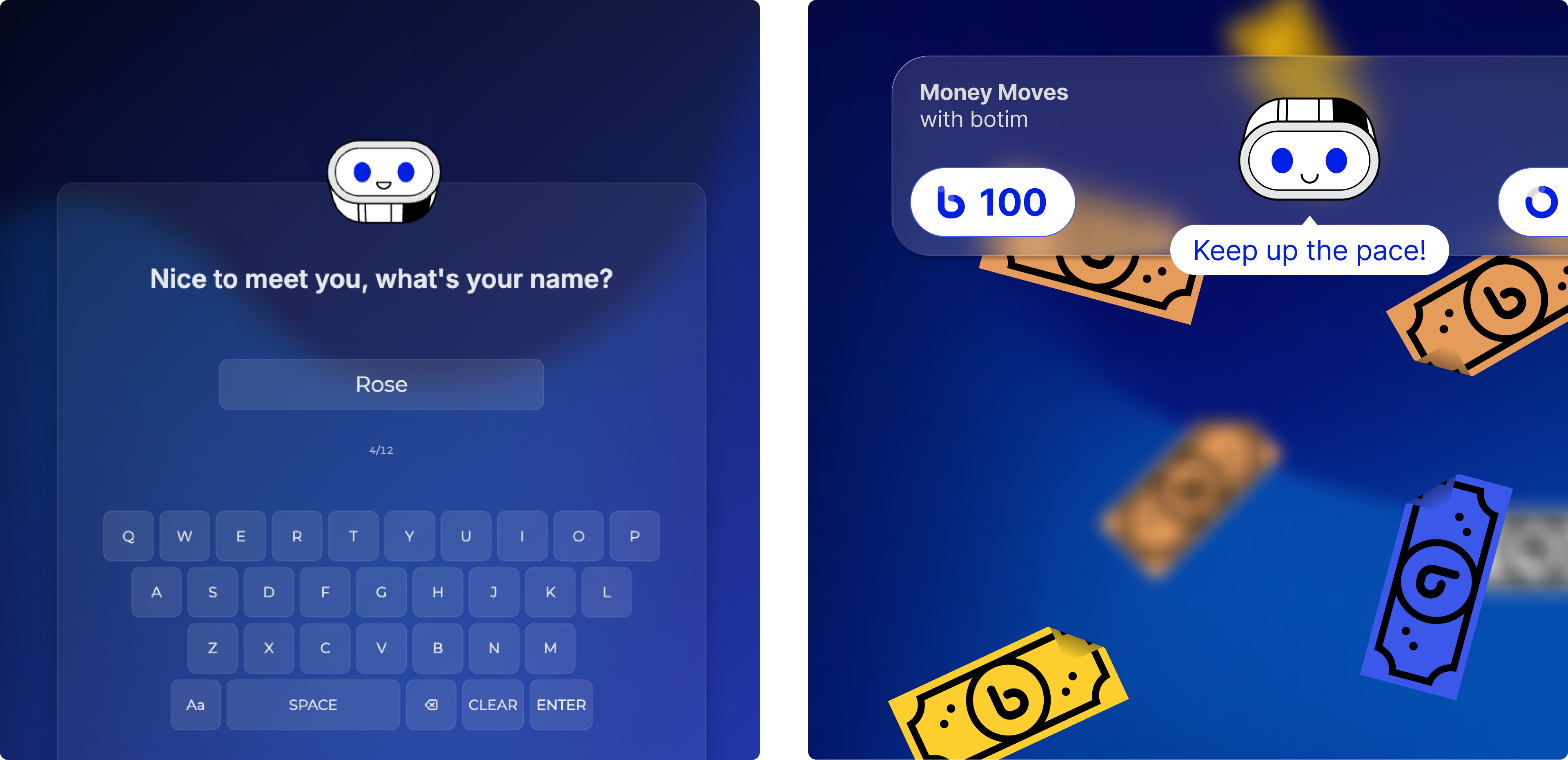
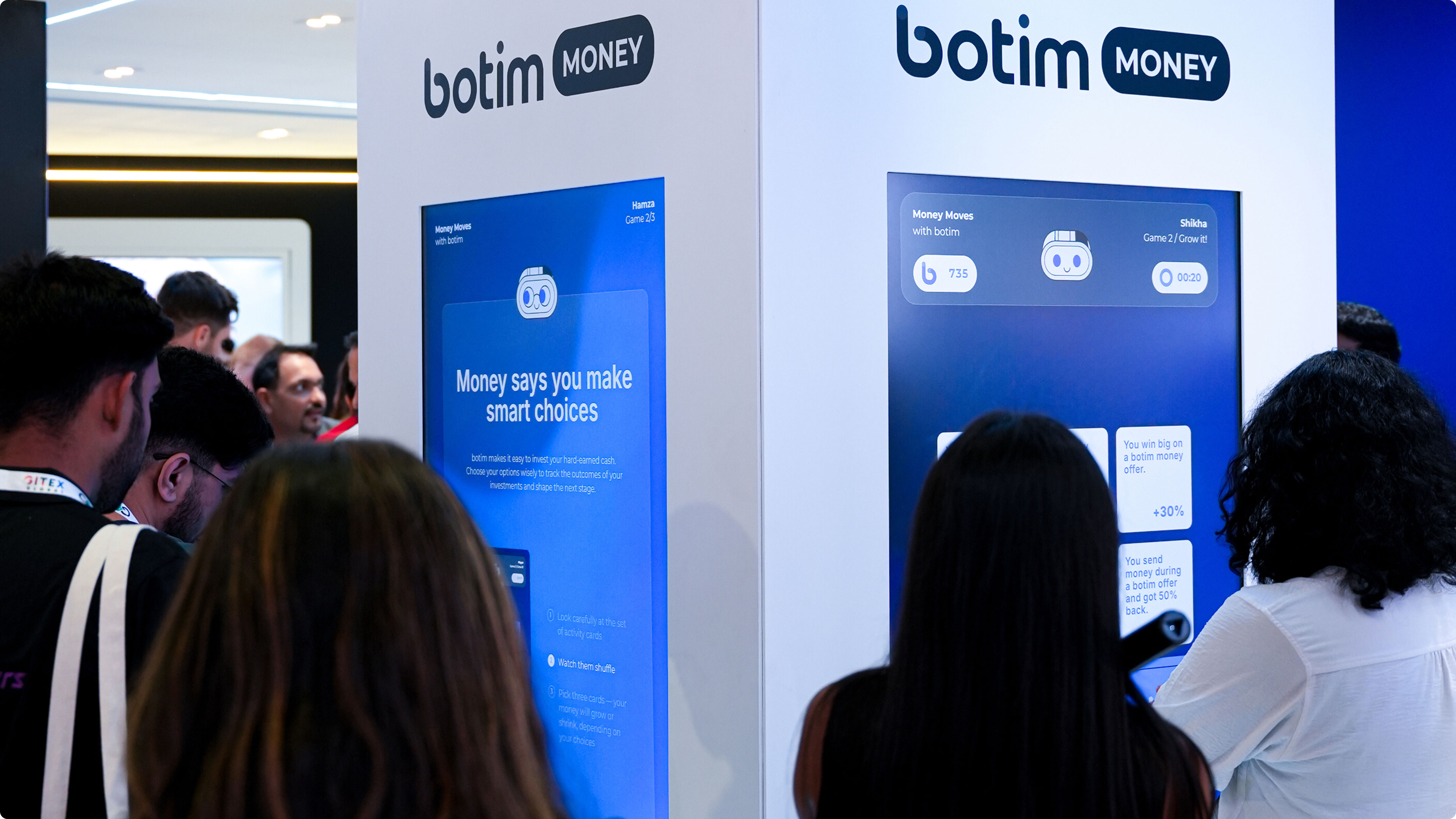
We have found games to be a great storytelling device. Recently we worked with consumer brand botim money – a UAE-based communications app that now allows users to manage their money. Together, we created a stand-out game for its booth at GITEX GLOBAL, the world’s largest tech and start-up show.
The brief was to create an experience that reveals how the app empowers people to earn, grow and manage their money in a way that felt instantly graspable to passers-by. We knew immediately that a game would cut through and tell this story well to a potentially overstimulated, time-poor audience.
Across three touch screen games, the experience shows, not tells, the value of using botim money. Players experience the botim story first-hand – and have fun doing it.
And it worked. The game had a steady queue of people waiting to play and was played by 1,883 players across the week-long exhibition. Crucially, the average play time was 2m 51s, precious time spent focused entirely on botim’s story.
Games aren’t just for events
Games at events are a natural fit. It’s a space where interaction and engagement rule. But botim money was not our first rodeo.
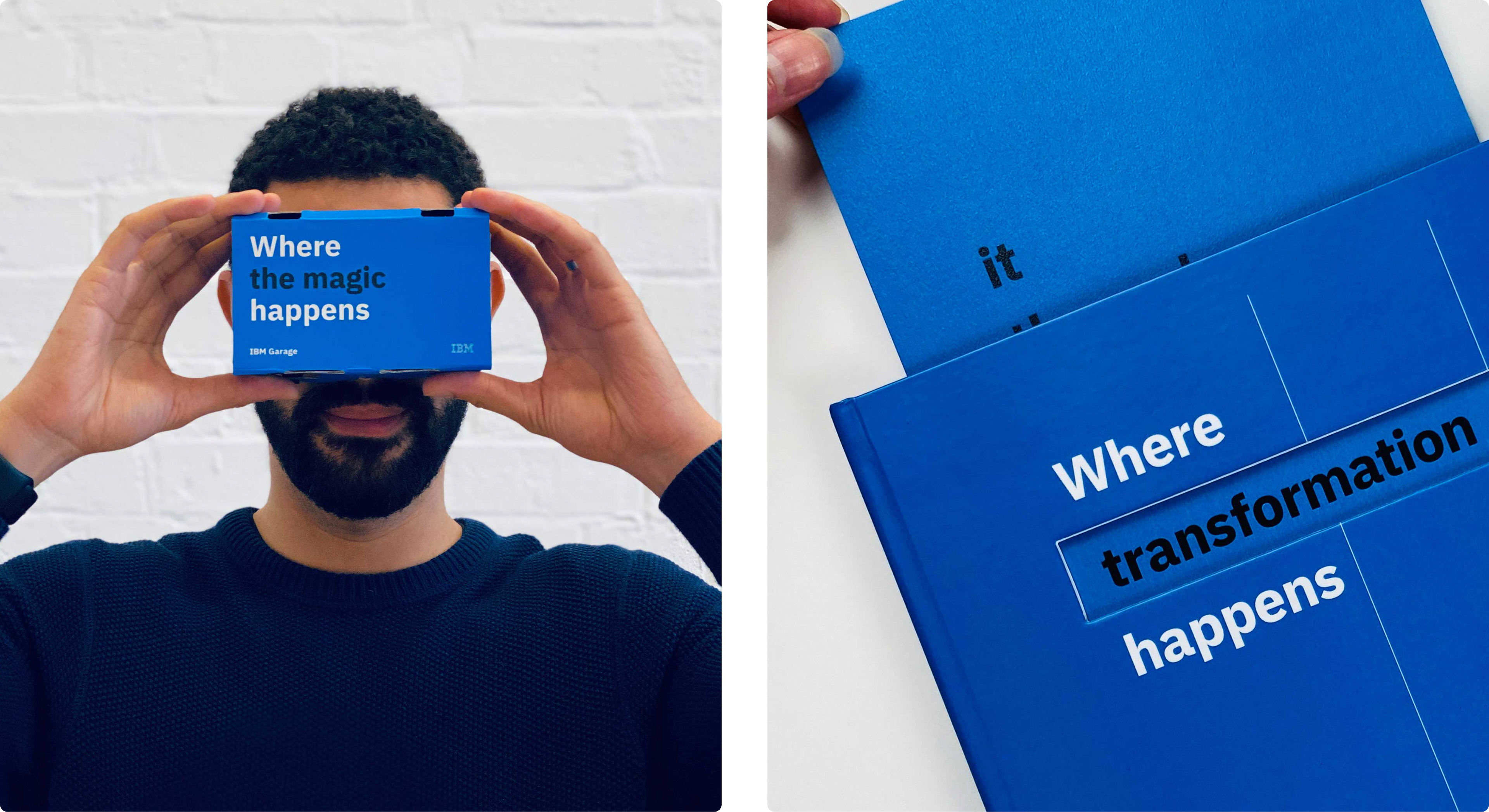
Back in 2018, we applied gamification to a direct mail campaign for IBM Garage. As part of this we created a coffee table book that we sent out to participants, which included interactive elements such as a 65-clue crossword and a 360-degree video that could be experienced via Google Cardboard (which was also part of the mailing) and the recipient's phone.
Rather than undermine IBM Garage’s offering, it was a living example of IBM’s commitment to innovation and experimentation. Because if that’s how IBM was promoting the Garage experience, surely the actual experience would be fun and experimental too?
Are you game?
We all know that when you want storytelling to stick, you need to stand out. And immersive, playful settings create memorable experiences that capture attention like no other medium; players have to actively engage with content to be able to play well.
B2B brands that are willing to show their playful side (within reason) aren’t taking a risk. This is an opportunity to confidently show not only how their brand operates, but that they care about creating positive experiences for their customers.
But, for now, it’s a competitive advantage many B2B brands are still ignoring. Are you ready to play?
'%3e%3crect%20width='1920'%20height='1439'%20fill='white'/%3e%3cpath%20d='M932.763%20993.915L-824.898%20993.915L-824.898%20444.823L932.763%20444.823L487.67%20-0.130875L1197.92%20-0.130884L1917.65%20719.369L1197.92%201438.87L487.67%201438.87L932.763%20993.915Z'%20fill='%23F45944'/%3e%3c/g%3e%3cdefs%3e%3cclipPath%20id='clip0_3367_2834'%3e%3crect%20width='1920'%20height='1439'%20fill='white'/%3e%3c/clipPath%3e%3c/defs%3e%3c/svg%3e)