How do I use rapid prototyping to test an AI experience?

Use rapid prototyping to turn an AI experience idea into something teams can interrogate, validate and improve quickly. Test the assumptions behind the experience, learn from what does not work, and iterate toward a more useful result while keeping human judgement central.

Rapid prototyping turns assumptions into learning

Rapid prototyping is the practice of quickly testing assumptions and iterating towards what works. It applies not only to products, but to ideas themselves: teams build enough of an experience to see how it performs, rather than debating its potential in the abstract. This approach depends on treating early versions as opportunities for learning, not as finished answers.

For AI experiences, rapid prototyping can help teams explore ideas that may not have existed in training data or established market research. The aim is not to let AI determine the direction alone. Cross-functional teams bring strategy, design, writing and development together to imagine possibilities, test them in practice and make informed choices about what to develop further.

Sources: What’s next? The answer is already in the room, We’re creating new experiences with AI – but we still need imagination

Build, interrogate and refine the AI experience

A rapid AI prototype starts by making an idea usable enough to test. Teams can use AI to accelerate the creation of concepts and content, then interrogate the resulting experience to assess whether it is relevant, engaging and practical. Testing should reveal whether the interaction responds meaningfully to users, rather than simply presenting a scripted or generic outcome.

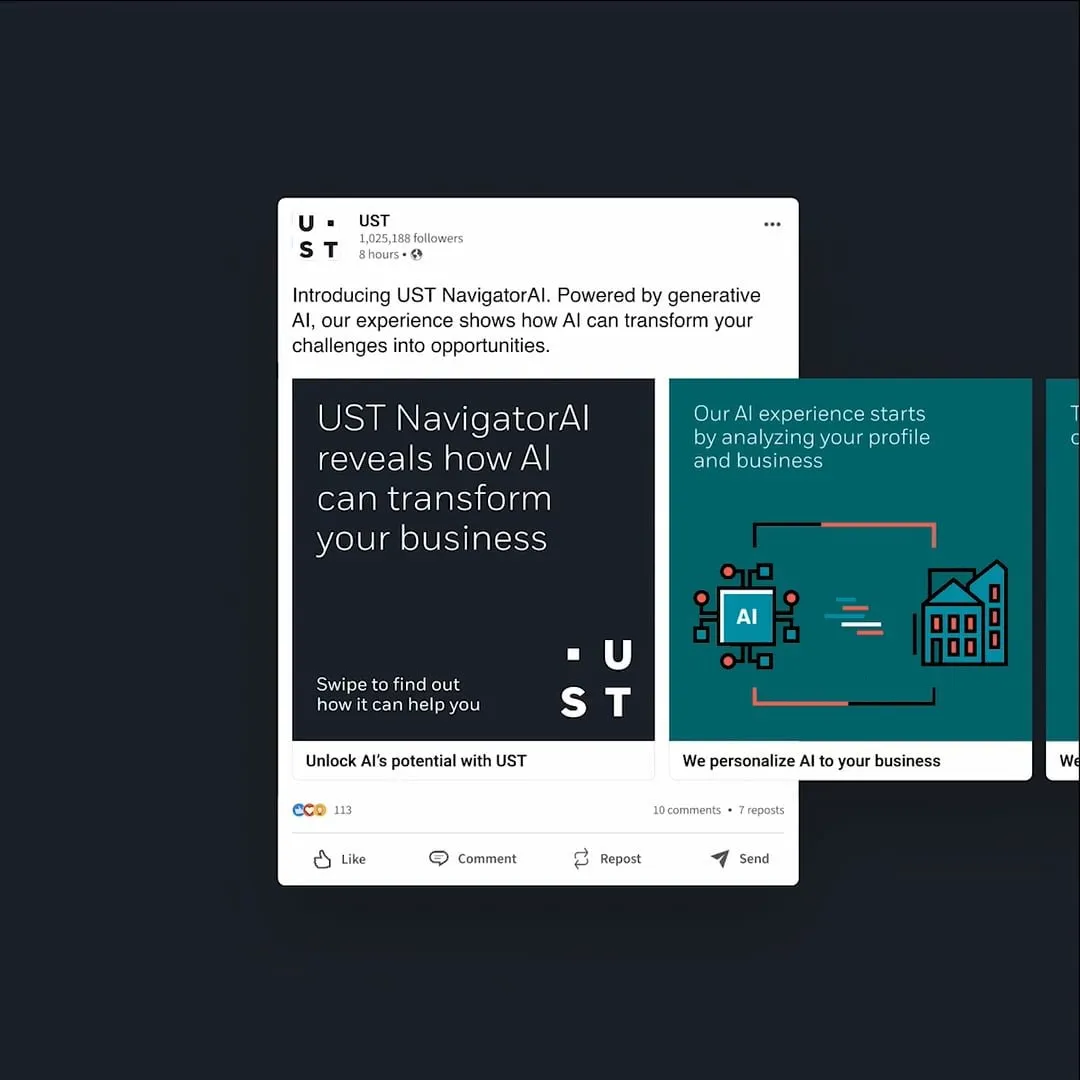
The next step is refinement. In the UST NavigatorAI project, a functional prototype was developed in two weeks before the experience was refined, tested and launched within six weeks. The tool combined generative AI with structured rules, trusted content and human oversight to guide users through tailored questions and recommendations. This illustrates how a prototype can establish a working direction before a fuller experience is delivered.

Sources: UST NavigatorAI: Creating personalised experiences with generative AI, AI Experiences | The Frameworks, We’re creating new experiences with AI – but we still need imagination

Treat failure as useful feedback

A failed prototype is useful when it reveals an assumption that needs to change. Intelligent failing means testing quickly, learning from what does not work and using that learning to improve the next version. It is not recklessness or a reason to lower standards. It is a disciplined way to uncover possibilities that may remain invisible when teams wait for complete certainty.

AI can speed up experimentation, but it does not replace imagination or human judgement. Teams should avoid expecting the tools to solve every creative or strategic problem independently. The value comes from using AI alongside the experience of strategists, designers, writers and developers, who can evaluate outputs, improve prompts and decide which ideas deserve further investment.

Sources: What’s next? The answer is already in the room, We’re creating new experiences with AI – but we still need imagination, UST NavigatorAI: Creating personalised experiences with generative AI

FAQs

What should a rapid prototype test first?

A rapid prototype should first test the assumptions that determine whether an AI experience will be useful, relevant and engaging. Make the core interaction usable enough to interrogate, then assess whether it produces meaningful responses rather than generic or predetermined outcomes. Use the findings to decide what should be refined next.

What makes a failed rapid prototype useful?

A failed rapid prototype is useful when it exposes an incorrect assumption and gives the team a clearer direction for the next iteration. Intelligent failing involves testing quickly, learning from what does not work and improving from that feedback. Its purpose is learning, not treating failure as an endpoint.

Where does imagination matter most in an AI prototype?

Imagination matters most when teams define possibilities that AI cannot reliably infer from existing patterns or training data. Strategists, designers, writers and developers can use AI to accelerate prototypes, then apply their judgement to evaluate and develop the strongest ideas. AI content creation is valuable only when it is directed by human imagination.

How do I learn from a failed rapid prototype?

Use a failed prototype to identify the assumption that needs to change and guide the next iteration.

  1. Identify the assumption

    Identify which assumption the prototype was intended to test. Focus on what the experience revealed about relevance, usefulness or the quality of the interaction, rather than treating the outcome as a simple pass or fail.

  2. Interrogate the result

    Examine what did not work and why. Use cross-functional judgement to assess the AI output, the experience design and the underlying idea, instead of expecting the tool to supply the answer on its own.

  3. Refine and test again

    Change the assumption, interaction or content that the test challenged, then create the next version quickly. Repeat the cycle of testing and learning to move toward an experience that works in real use.

Glossary

Intelligent failing
A rapid-prototyping practice of testing assumptions quickly, learning from what does not work and iterating toward a stronger solution.