How do we make AI campaign images feel human and credible?

Human, credible AI campaign imagery starts with a clear creative idea, specific real-world context and human art direction. Use AI to create scenarios that stock-image search cannot supply, then refine every image for brand fit, accuracy and honesty. Choose photography when reality itself is the story.

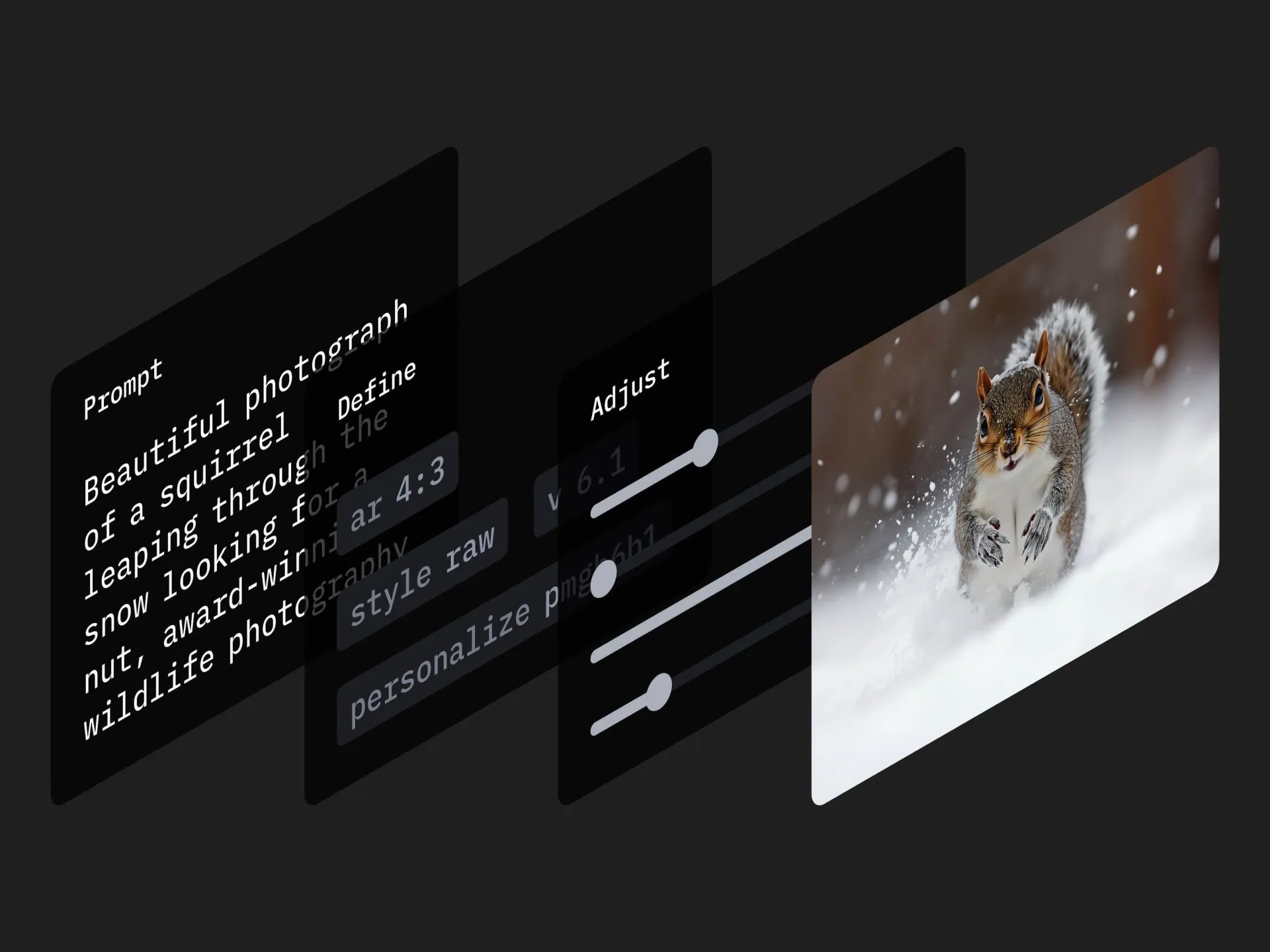
Three overlapping interface panels showing an AI image creation workflow: a text prompt panel describing a squirrel in snow, an adjustment panel with sliders, and the resulting photo of a squirrel leaping through deep snow.

Choose the image-making method around the story

Credible campaign-ready assets come from matching the production method to the story, rather than treating stock, AI and photography as rivals. Stock imagery remains useful when a strong, distinctive asset already exists and there is time to search beyond generic stock photography. AI-assisted creative production is valuable when a campaign needs an original scenario, a specialised industry setting or creative versioning that would be difficult to find in a library. Photography has a clear role when real people, places or products carry the proof and emotional weight of the message. Original imagery can be bespoke, while AI can help create custom creative at speed. The smart choice is often a mix: use the method that gives each part of the campaign the most clarity and visual distinctiveness.

Sources: Powered by imagination: how I’m making stock imagery creative with AI, How to Deliver Cracking Video Content During Lockdown

Human direction turns synthetic media into believable work

Human-in-the-loop review is what makes AI campaign images feel considered rather than generated. A strong result needs more than a prompt: creative teams may need to adjust settings, provide references, develop a recognisable style, test alternatives and refine the output against campaign goals. Art direction should check whether people, environments and technical contexts look plausible, relevant and respectful. Brand teams should also set clear standards for disclosure, likeness, bias and digital manipulation before assets go live. Transparency around AI-generated content matters, especially where synthetic media could confuse an audience or undermine trust. AI can expand the possibilities, but human judgement protects the truth of the campaign.

Sources: Powered by imagination: how I’m making stock imagery creative with AI, Faking bad: why marketers need to maintain standards in a post-truth world

AI imagery needs imagination and standards, not a prompt-and-publish mindset

We believe AI campaign imagery works best as a creative collaborator, not a shortcut around creative thinking. A provider should be able to connect the visual idea to the brand, direct imagery for specific industries and use cases, and apply human judgement to quality, truth and representation. We have used Midjourney to create realistic yet engaging healthcare and manufacturing scenarios for UST's AI services microsite, where suitable stock imagery would have been difficult to find. We have also built a generative AI pipeline for G42 that created image and video elements at scale, supported by strategists, designers, writers and developers. That combination of imagination, craft and cross-functional review is how we make AI useful without making the work feel generic.

Sources: Powered by imagination: how I’m making stock imagery creative with AI, We’re creating new experiences with AI – but we still need imagination, Introducing: Small AI for brands

Stats

60% of B2B marketers produced visual content in 2024 benchmark research.

MarketingProfs

FAQs

Should we use stock, AI or photography for a B2B campaign launch?

Use stock when a distinctive, relevant asset already exists, AI when the campaign needs a hard-to-source scenario, and photography when real-world proof matters most. Stock libraries can be useful, but finding the right non-generic image can take time. AI can create highly specific scenes, while photography remains valuable for real subjects and authentic moments.

How much human art direction do AI campaign images need?

AI campaign images need active human art direction from concept through final approval. Creating a usable image can involve careful prompting, settings changes, style references, testing and refinement. Human review keeps imagery aligned with the brand and the campaign's real purpose.

How can we make AI-generated B2B imagery feel authentic?

Authentic AI-generated B2B imagery uses specific, believable details from the audience's world rather than generic technology clichés. Build the image around a clear scenario, then review people, settings and technical details for contextual accuracy. Human creativity and imagination are necessary to create work that feels distinctive rather than like a recombination of familiar content.

What risks should we check before publishing AI campaign images?

Check AI campaign images for misleading manipulation, unauthorised likenesses, biased representation and unclear disclosure before publication. Transparency matters because synthetic content can be realistic enough to create confusion or damage trust. Marketing teams should set standards before production, not after an image has already been approved for a campaign.