How do I use AI across a large brand?

Use AI as a collaborator within a clear brand and customer strategy, rather than as a replacement for expert judgement. Large-scale AI transformation can reshape organisational functions over time, while smaller team-level applications can improve efficiency and accuracy. Focus AI activity on distinctive capabilities and build useful experiences around them.

What enterprise-level AI means for brands

Enterprise-level AI can describe AI used across a large organisation to optimise operations and reshape how functions work over time. This goes beyond deploying a single tool: it can involve reconfiguring multiple business functions within an AI framework, often through substantial institutional programmes with long delivery timelines. A separate, more focused approach is department-level AI, where teams use emerging digital tools to reduce costs, improve accuracy or increase efficiency against quarterly objectives. For brands and marketers, both approaches need more than access to technology. AI output requires collaboration with people who bring professional expertise, strategic judgement and an understanding of customer needs. The aim is not simply to generate more content or automate more activity, but to create experiences that align with brand values and serve audiences well.

Sources: Introducing: Small AI for brands

Use AI to make brand capability visible

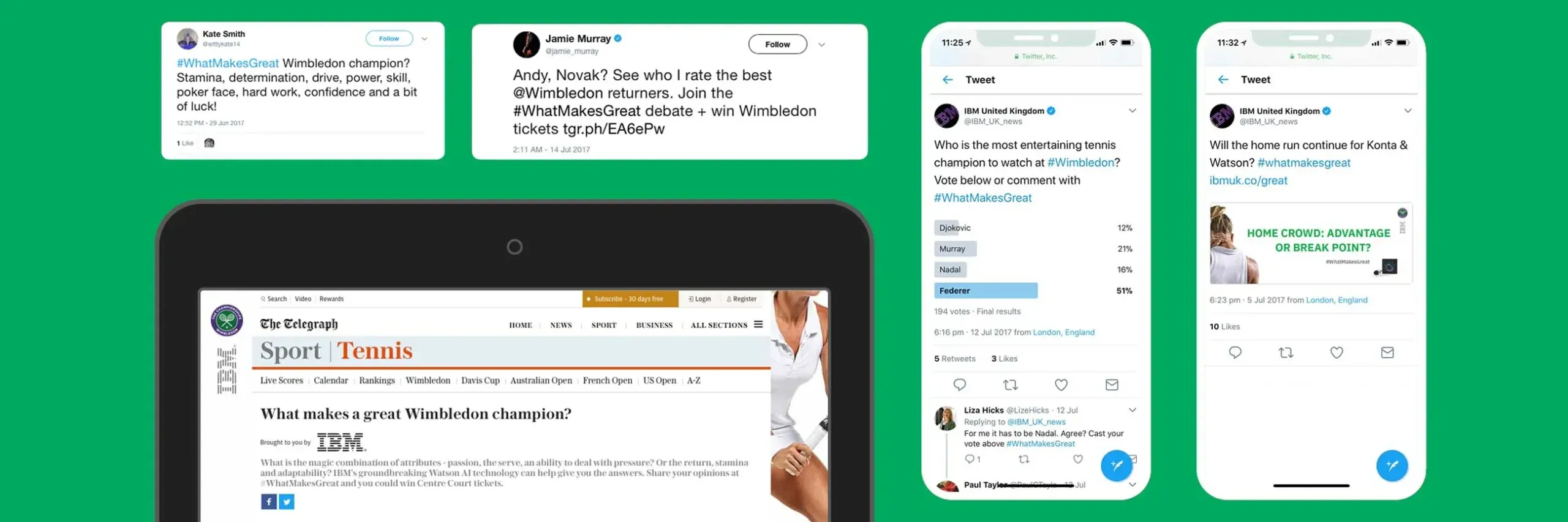
Enterprise-level AI can be brought to life through a real customer experience, particularly where a brand has a distinctive capability to demonstrate. IBM's partnership with Wimbledon illustrates this approach. In 2017, a campaign built around Wimbledon's "In pursuit of greatness" brand promise used IBM Watson to lead a debate around "What makes great?". It combined data captured through the IBM and Wimbledon partnership with insights from live social listening. The campaign showed AI as an active part of an audience-facing experience, rather than an unseen technical claim. IBM's broader role at Wimbledon has included innovations that enhance the fan experience, provide broadcasters with live data and offer deeper insights to the public and players. This gave the campaign a concrete connection to the role IBM played in the event.

Sources: IBM and Wimbledon: Ongoing Campaign Involvement, A game plan for success: how B2B brands can tap into the spirit of sport

Keep AI connected to strategy, expertise and customer need

AI should support a brand's strategy rather than determine it alone. Marketers still need to create experiences that reflect their values and deepen their understanding of what customers want and need. Expert involvement matters because access to generative AI tools does not by itself produce quality work, just as access to creative software does not make someone a designer. Large transformation programmes may be expensive and extend beyond a year, while team and department projects are more likely to be shaped by quarterly KPIs. In either case, a practical starting point is to identify one or two things the organisation can do better than anyone else. A new AI-enabled experience can then be built around those distinctive strengths, making the technology relevant to the brand and meaningful to its audience.

Sources: Introducing: Small AI for brands

Stats

FAQs

What should AI do during a brand campaign?

AI should help create an experience that demonstrates a brand's real capabilities and remains connected to customer needs and brand values. It can bring together available data, live insights and creative campaign activity, but expert judgement is needed to turn those inputs into quality work. In IBM's Wimbledon campaign, IBM Watson supported a public debate shaped by partnership data and live social listening.

What shows AI is helping a brand campaign?

AI is helping a brand campaign when it supports a meaningful experience and can be assessed through relevant campaign outcomes. For IBM's 2017 Wimbledon campaign, outcomes included unique landing-page visits, engagement, added media value, software trials and sales. The campaign also connected AI to a visible role in the Wimbledon experience, rather than presenting it as an isolated technology claim.

How do I keep AI involved in a brand campaign?

Keep AI useful by connecting it to a defined brand strength, expert direction and an audience-facing experience.

  1. Identify a distinctive strength

    Choose one or two things your organisation can do better than others. Build the AI activity around those strengths so it supports a credible and differentiated brand experience.

  2. Apply expert judgement

    Use AI in collaboration with people who understand the brand, its customers and the professional task at hand. Ensure the resulting experience remains aligned with brand values and customer needs.

  3. Measure campaign contribution

    Assess AI-supported activity through outcomes relevant to the campaign, such as visits, engagement, media value, trials or sales. Use those results to understand whether AI is contributing to an experience people respond to.