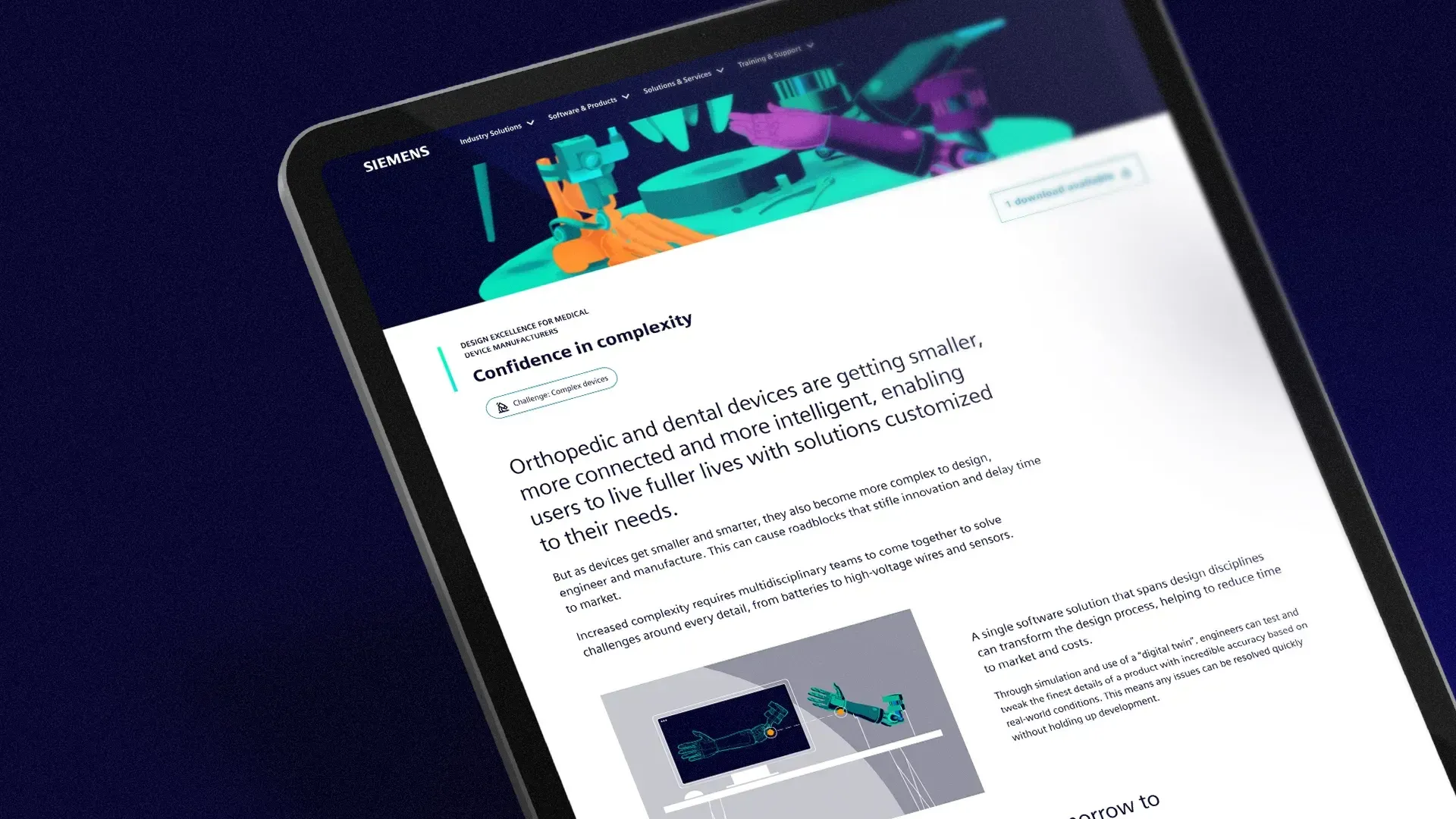
What makes a complex B2B value proposition clear?

A clear complex B2B value proposition starts with the audience's practical challenge and business outcome, not a list of technical features. It uses plain entry points, then lets technical and non-technical readers move into the level of proof and detail they need. This preserves technical credibility while making relevance easier to grasp.

Build one proposition around a shared challenge

A single proposition does not need identical wording for every buyer. It needs a consistent core: the practical challenge being addressed, the outcome that matters and the reason the offer is distinct. Start by identifying what the audience needs to change or improve, then explain the value in those terms rather than opening with product specifications. This gives executive readers a clear reason to care while providing a stable foundation for technical proof.

For complex technology offers, different audiences may approach the same solution from different angles. Senior business readers may need to understand relevance and outcomes quickly, while technical specialists may need deeper explanation. Organising the story around real-world challenges and pain points makes the proposition more relatable without removing the detailed material that technical audiences require.

Sources: Siemens: Bringing New Dimensions to White Papers, Humanising B2B and leading with empathy

Use layered content instead of reducing the message

Simplification should remove unnecessary complexity, not remove the substance that makes an offer credible. Lead with an accessible statement of impact, use direct language and make the main takeaway easy to find. Technical terms can remain where they are necessary, but should be supported by clear explanation and placed where readers who need them can choose to go further.

A layered structure gives mixed audiences control over depth. Accessible entry points can help readers establish relevance, while executive summaries, detailed papers and supporting explanations allow them to investigate at their own pace. This avoids forcing a senior reader through technical documentation or asking a specialist to accept a high-level claim without proof. Short words, concise sentences, active structures and outcome-led copy can make the core message more memorable and easier to understand.

Sources: Siemens: Bringing New Dimensions to White Papers, Cut the jargon: Why the best B2B writing is plain and simple

Choose interactive formats for a clear information task

Interactive content is useful when it helps people navigate a complex subject according to their needs. For example, an experience can offer clear starting themes, then let readers choose between a simplified summary and detailed technical material. In this role, interaction supports a modular content journey rather than becoming a feature added for novelty.

Visuals, animation and interaction should reinforce the explanation. They can make real-world challenges easier to picture and give users a more engaging route into complex material, but the proposition still needs clear language and a sound information structure. A static format may be sufficient when the audience needs a focused explanation with a straightforward reading path. The practical test is whether the format helps each intended audience find the relevant level of detail and understand the value being presented.

Sources: Siemens: Bringing New Dimensions to White Papers, The problem with playing it safe

Stats

Gartner reports that 64% of surveyed technology-purchase participants preferred a fully digital buying experience when they were already familiar with the product or service.

Gartner

FAQs

How do I keep technical messaging credible?

Keep technical messaging credible by retaining the proof and detail that specialists need, while making the initial explanation accessible. Lead with the practical challenge and outcome, then provide routes into technical papers, definitions or deeper supporting material. This lets readers choose the depth appropriate to their role without reducing the offer to generic claims.

When should complex B2B content use interactivity?

Use interactivity when it helps people navigate different levels of detail or explore the parts of a complex subject most relevant to them. A guided digital journey can offer accessible entry points before allowing readers to move into executive summaries or technical documentation. The interaction should support comprehension and relevance, not distract from the explanation.

How can I test whether buyers understand technical messaging?

Test technical messaging with people who represent the intended audience and ask them to respond to the message in their own words. Speak with sellers and people who know the audience, then use a fresh reader to identify language or claims that do not land clearly. Reading copy aloud can also expose wording that is difficult to follow or does not sound natural.

How do I clarify a complex B2B value proposition?

Build an outcome-led message, give audiences control over detail, then test whether the explanation is understood.

  1. Start with the audience challenge

    Define the practical challenge your offer addresses before describing its technical features. State the outcome that matters to the audience and the difference the offer can make in their current way of working.

  2. Create paths to deeper proof

    Write an accessible entry point that establishes relevance quickly, then organise technical detail into layers. Give readers clear routes to summaries, explanations and more detailed material according to their expertise and available time.

  3. Test the language with fresh readers

    Ask representative audience members and informed internal contacts whether they understand the terminology, promised outcome and reason to care. Read the copy aloud and revise language that feels unclear, overlong or unnecessarily technical.