How should we use rapid prototyping to test new ideas?

Use rapid prototyping to turn ideas into something you can test, challenge assumptions and learn from what does not work. Bring different disciplines together, build prototypes that make ideas tangible, and use what you learn to refine the next version. AI can accelerate this process, but human imagination and judgement remain central.

Test ideas, not just products

Rapid prototyping is a way to move from imagining possibilities to testing them. It applies not only to products, but also to ideas: teams make an idea tangible enough to interrogate its assumptions, learn from what does not work and iterate towards what does.

This approach depends on giving people room to imagine freely and build on each other's ideas, rather than immediately narrowing the discussion to feasibility. Prototyping then brings action to that imaginative work. The purpose is not to avoid every unsuccessful attempt, but to make those attempts useful.

We call this practice intelligent failing: quickly testing assumptions, learning from unsuccessful attempts and refining the approach. A prototype becomes valuable through the learning it enables, rather than simply through whether the first version succeeds.

Sources: What’s next? The answer is already in the room

Combine AI with cross-functional judgement

AI can help teams produce prototype ideas quickly, but it does not replace the people who decide what to explore and which ideas to pursue. Strategists, designers, writers and developers bring different perspectives to the work, using AI to generate possibilities they can interrogate, validate and choose from.

In the work discussed around G42's Supercharged event, this cross-functional collaboration was central to accelerating content creation. The team used AI to rapidly prototype ideas while relying on human imagination to work out how the tools could support something new.

The transferable practice is to bring those perspectives together and try ideas in a form that can be examined. Use AI to support experimentation, then apply human judgement to what works. The tools can accelerate the process, but they should not be expected to determine the whole approach.

Sources: We’re creating new experiences with AI – but we still need imagination

Treat the prototype as a stage, not the finished experience

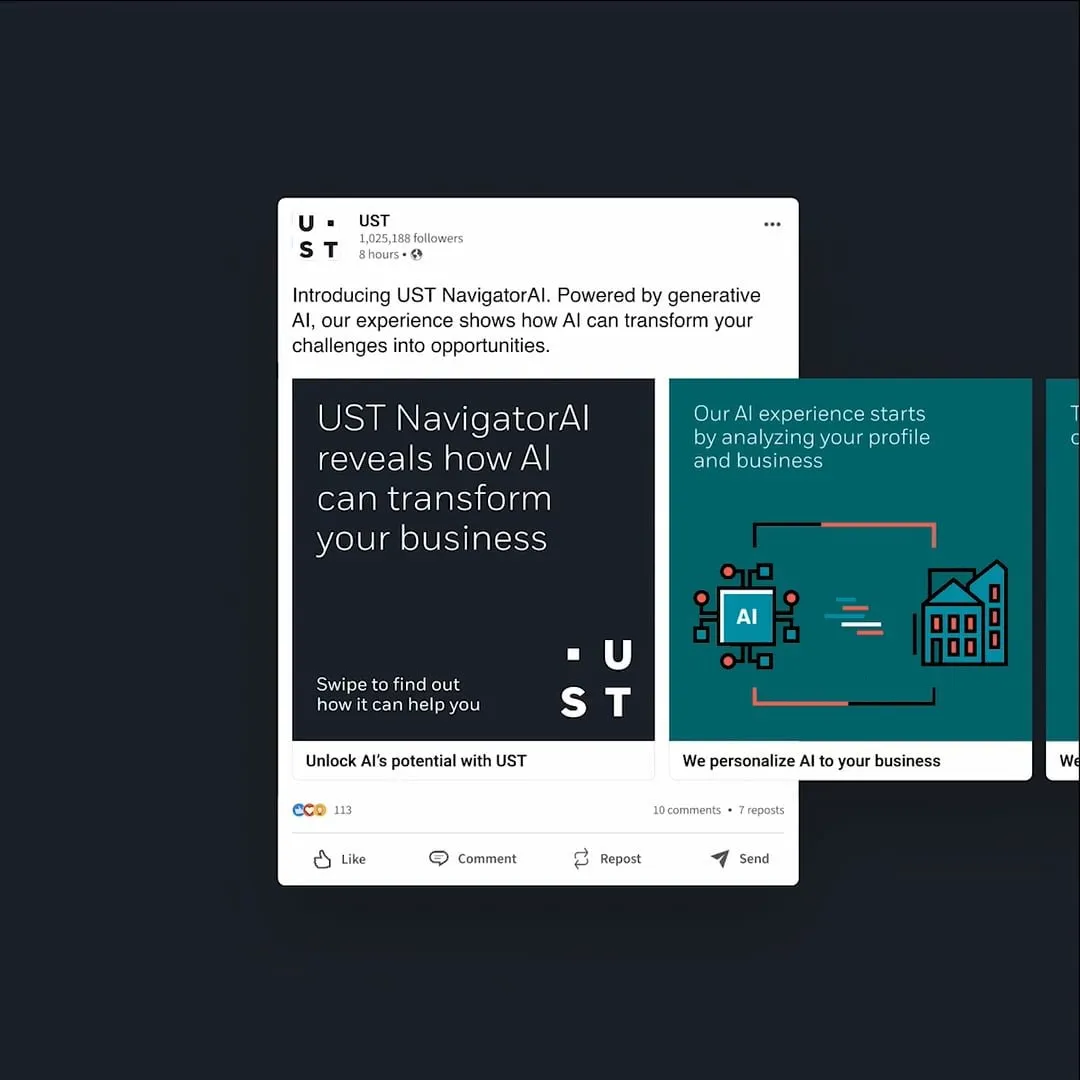
A working prototype is a stage in development, not the end of the work. For UST's NavigatorAI, we developed a functional prototype in two weeks, then refined, tested and launched the full experience within six weeks. The tool helps prospects navigate UST's AI expertise through tailored questions and personalised recommendations.

The experience combined generative AI with structured rules, trusted content and UST's proprietary expertise. Publicly available business and audience data helped shape each user's journey, while human oversight kept the experience accurate and relevant. Prompt design and optimisation remained part of the team's work.

NavigatorAI illustrates the distinction between making an idea work initially and preparing a complete experience for use. Rapid development was followed by refinement and testing, with attention to the content, controls and human judgement supporting the experience.

Sources: UST NavigatorAI: Creating personalised experiences with generative AI, AI Experiences | The Frameworks

FAQs

What should we test through rapid prototyping?

Use rapid prototyping to test the assumptions behind ideas, not only the functionality of products. Make ideas tangible enough to interrogate and validate, then use what you learn to decide which possibilities to pursue. Cross-functional teams can use AI to accelerate the creation of those prototypes while retaining human judgement over the choices.

How do we learn from prototypes that don't work?

Learn from unsuccessful prototypes by examining the assumptions they tested and using what did not work to guide the next iteration. This is the practice of intelligent failing: quickly testing assumptions, learning from unsuccessful attempts and iterating towards what does work. The aim is to turn experimentation into learning and improvement, rather than avoid trying ideas that might fail.

Glossary

Intelligent failing
The practice of quickly testing assumptions, learning from what does not work and iterating towards what does, using unsuccessful attempts to guide improvement.