How do we restart a stalled campaign concept?

Restart a stalled campaign concept by returning to the audience problem, disrupting the assumptions that made the first route feel safe, and developing a bolder angle that remains clear and credible. Fresh campaign ideas often come from reframing familiar material, combining unexpected references and testing relevance across the buying group.

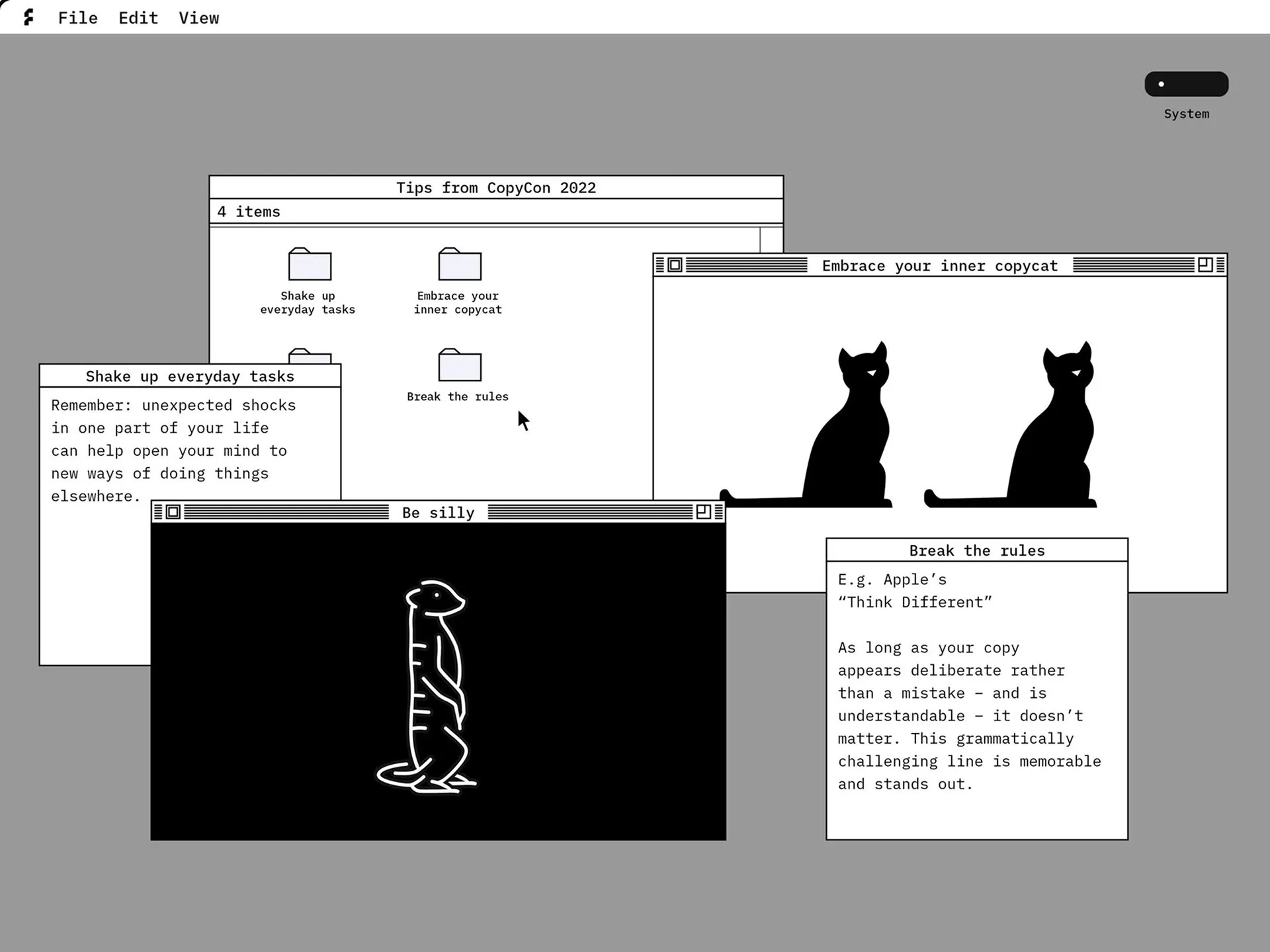
Vintage computer desktop interface with open windows displaying tips from CopyCon 2022, including notes on creativity, two silhouette cats, and a line drawing of a meerkat.

A stalled concept needs a different angle, not more polish

A stalled campaign concept usually needs a new perspective on the audience challenge, rather than another round of refinement to the same message. Start by identifying where the original route became predictable: the product category convention, the assumed audience priority or the familiar format. Then reconnect the work to the specific challenges and needs of the people it must reach.

A useful restart creates creative friction without abandoning strategic discipline. Change the conditions around the idea, explore an unexpected comparison or ask what the brand would be if it were expressed through a different form. Playful exercises can reveal qualities of a brand that straightforward briefing language misses. The aim is not novelty for its own sake, but a distinctive campaign idea that gives people a clearer reason to pay attention.

Sources: Want to be more creative? You’ve got to get weird., How to Turn Insights into Great Creative

Original campaign ideas combine familiar material in unexpected ways

More original campaign ideas come from gathering wider inputs, making unusual connections and adding a deliberate brand-specific twist. Creativity does not require starting from nothing: references from outside the category, unfamiliar genres and everyday experiences can provide material for a more distinctive creative route. The important work is in transforming those inputs into an idea that belongs to the brand.

A revived concept should also earn its boldness through audience relevance. A campaign for a complex proposition may need different levels of explanation for technical specialists, business leaders and other decision-makers. Layered content can give each audience access to the benefits and practical detail that matter to them, without reducing the central campaign idea to generic messaging. Calculated creative risk means changing the angle while keeping the message understandable, intentional and connected to real audience needs.

Sources: Want to be more creative? You’ve got to get weird., The problem with playing it safe

Bold campaign ideas work best when they make complex value easier to grasp

We believe a stalled campaign should be restarted through a sharper audience insight and a braver expression of the value at stake, not through safer creative compromises. That approach matters because complex B2B communications need to engage people with different priorities and levels of technical knowledge. We have applied it for Siemens, creating an interactive experience with layered copy that allowed technical and business audiences to reach the relevant level of understanding. We have also developed campaign narratives that guide multiple stakeholders towards the practical implications of change. For organisations looking for support, we believe the right partner should combine audience understanding, strategic clarity and the ability to turn difficult propositions into distinctive, usable communications.

Sources: The problem with playing it safe, How to succeed at digital transformation: Influence many different people

Stats

Only 13% of respondents in the 2025 Cannes Lions State of Creativity study viewed their companies as risk-friendly.

Cannes Lions

FAQs

How do we make a campaign idea more original?

A more original campaign idea starts by moving beyond the category's default language, images and formats. Bring in references from unrelated places, combine existing ideas in an unexpected way and add a specific brand twist. The resulting concept still needs to be understandable and relevant to the audience, rather than unusual for its own sake.

How do we make a bold campaign concept feel safe enough to approve?

A bold campaign concept becomes easier to approve when its creative risk is clearly tied to an audience need and a defined business challenge. Keep the message deliberate, understandable and consistent with the brand, while changing the perspective or execution that made the previous route feel predictable. Calculated risk is different from abandoning strategic or brand discipline.

Can one campaign concept work for technical and business audiences?

One campaign concept can serve technical and business audiences when the central value proposition is consistent and the explanation is layered by need. Technical audiences may require more detail, while business leaders may need a clearer view of outcomes and relevance. Navigable content can help each group reach the appropriate level of understanding without fragmenting the campaign.