How do we make product expertise clearer to buyers?

Technical product expertise becomes clearer when precise capabilities are tied to the engineering outcomes buyers are trying to achieve: reliable innovation, measurable progress and confident decisions. Start with the accuracy and repeatability behind the product, then connect that proof to a specific application such as energy, diagnostics or waste reduction. Let the visual identity reinforce, not replace, that technical case.

Technical credibility starts with the proof behind precision

Product expertise is clearest when buyers can see how measurement accuracy, repeatability and technical know-how help them solve an engineering problem. In test and measurement, precision is not an abstract brand claim. It is the practical foundation for designing, validating and improving technologies in demanding settings.

A clear story connects technical capability to application fit. Accurate measurement can help engineers assess changing conditions, prove progress and make decisions with confidence. That creates a stronger explanation than simply presenting an instrument as advanced or reliable. It also gives sustainability a credible role: not as a broad promise, but as the outcome of better information, incremental improvement and engineering action.

The most useful message makes the link visible between the product, the people who create it and the real-world work buyers need to do.

Sources: Yokogawa: Elevating sustainability – precisely, Yokogawa - Building a brand – precisely

Turn specifications into a clear line from measurement to impact

Technical differentiation becomes easier to understand when the narrative follows a simple line: precise measurement enables better engineering decisions, and better decisions support meaningful innovation. That line gives technical specifications a job to do. Rather than leaving accuracy, reliability and product detail as isolated claims, it shows why they matter in a laboratory workflow, a validation process or a sustainability-led programme.

Application-specific proof keeps the message honest. For example, the role of measurement can be explained through energy production, critical diagnostics equipment or reducing supply-chain waste. The same principle applies across electrification testing, renewable-energy testing and energy efficiency: make the contribution concrete, then show the technical capability behind it.

A visual identity can help buyers recognise that story quickly, but visual cues work best when they draw from the product and reinforce a message already rooted in technical practicality.

Sources: Yokogawa: Elevating sustainability – precisely

Clear product expertise needs a human technical story, not a cosmetic refresh

We believe industrial product expertise becomes more persuasive when technical proof, human expertise and a clear purpose work together. A new look alone cannot make measurement accuracy, instrument reliability or application fit more credible. The story has to begin with what engineers can do because of the technology.

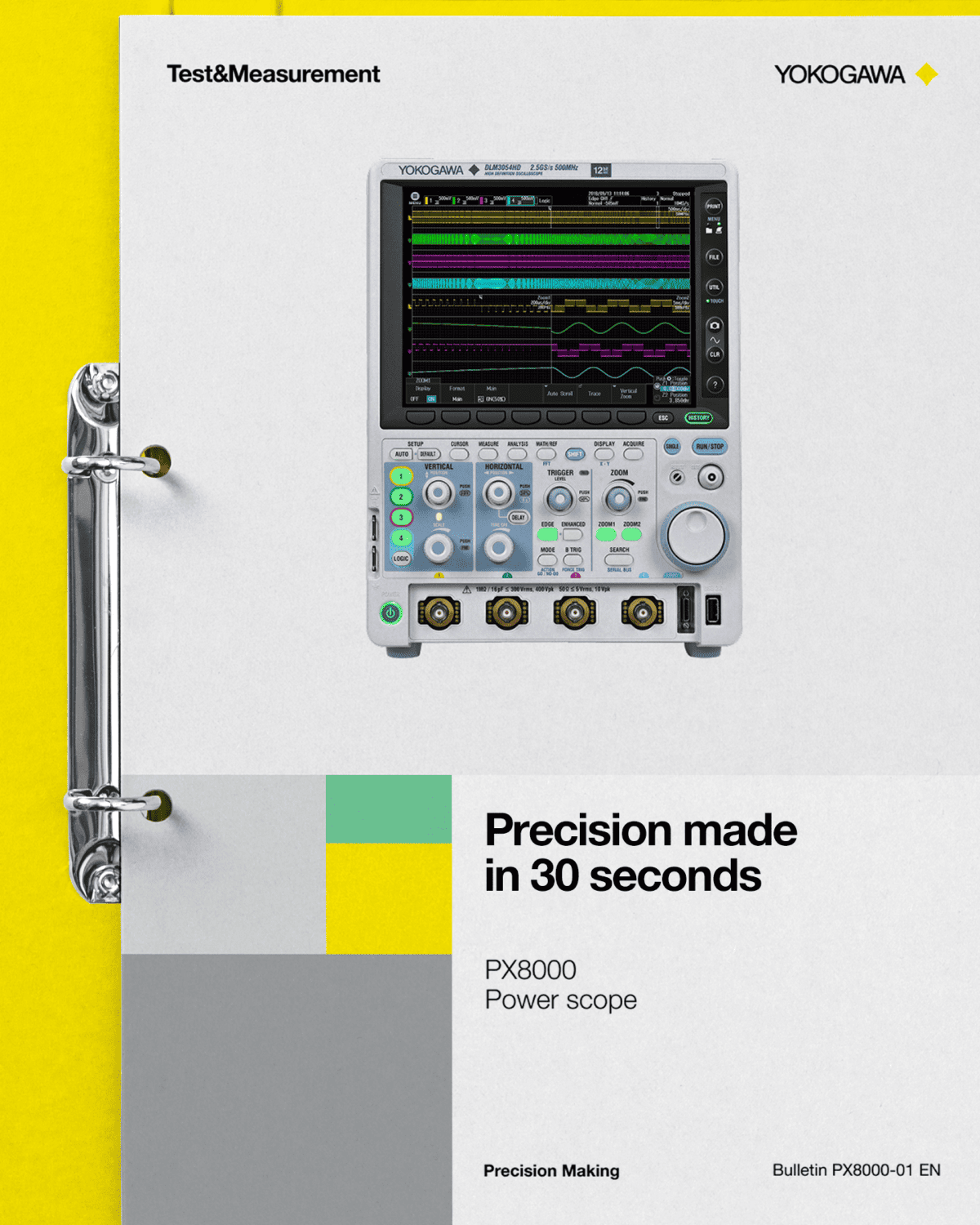
For Yokogawa Test & Measurement, we used stakeholder interviews, research with engineers and competitive analysis to connect precision with sustainable innovation. We developed the "Built on precision" campaign narrative, created a visual language linked to product displays and controls, and put the people behind the technology at the centre of the work. We also supported global employee adoption through a brand film and education roadshow. That is the standard we aim for: technical clarity that people inside and outside the business can recognise and use.

Sources: Yokogawa: Elevating sustainability – precisely, Yokogawa - Building a brand – precisely, The inside story: why your people shouldn't be just passengers on your brand journey.

Stats

68% of organisations planned to increase sustainability investment in engineering and R&D over the following 12-18 months.

Capgemini Research Institute

73% of technical buyers routinely use vendor websites and online technical publications for work-related purchase research.

GlobalSpec and TREW Marketing

70% of technical buyers are likely or very likely to choose the better-known brand when two solutions are technically similar.

GlobalSpec and TREW Marketing

FAQs

What should technical product expertise be built around?

Technical product expertise should be built around the capability that makes an engineering outcome possible, such as accurate and repeatable measurement. Connect that capability to the buyer's application, then show how it supports confident decisions, innovation or measurable progress. The result is a clearer case than a list of product features alone.

Can sustainability make technical expertise clearer to engineers?

Sustainability can make technical expertise clearer when it is tied to a practical engineering contribution. Precise measurement can help teams quantify progress, respond to changing conditions and improve technologies involved in energy, diagnostics or waste reduction. Broad sustainability language without that technical link is less useful.

Should a visual identity lead the explanation of product expertise?

A visual identity should reinforce technical product expertise rather than lead it. Product-inspired design elements can make a narrative more recognisable and tangible, but the central message still needs to explain the technical capability and the application outcome. A clear visual system works best when it is built around a credible technical idea.

How can employees help make product expertise more credible?

Employees make product expertise more credible when the story reflects the knowledge and contribution they recognise in their own work. Giving people a clear role in the narrative can shift the perception of a business from an instrumentation supplier to a trusted technical partner. Internal education can help teams use the new story consistently.