Do engineers care about a supplier's sustainability story?

Engineers can care about a supplier's sustainability story when it explains a real engineering contribution, such as more accurate measurement, renewable-energy testing, electrification testing or reduced waste. Sustainability credentials do not outweigh technical buyer credibility: proof of performance, application fit and reliable specifications must lead the story.

What technical proof do engineers want when comparing suppliers?

Engineers comparing test-and-measurement suppliers want technical proof that shows whether an instrument will work accurately, reliably and repeatably in their specific application. Clear technical specifications, application notes, validation and verification evidence, measurement uncertainty, calibration and traceability information, and credible proof of performance matter more than broad claims.

Sustainability messaging earns attention when it is tied to practical engineering work. Accurate measurement can help teams quantify progress, respond to changing conditions and make confident decisions in areas such as energy production, critical diagnostics and waste reduction. The strongest supplier story connects a sustainability outcome to the measurement capability, people and technical detail that make that outcome possible.

Sources: Yokogawa: Elevating sustainability – precisely

Sustainability stories work best when precision does the talking

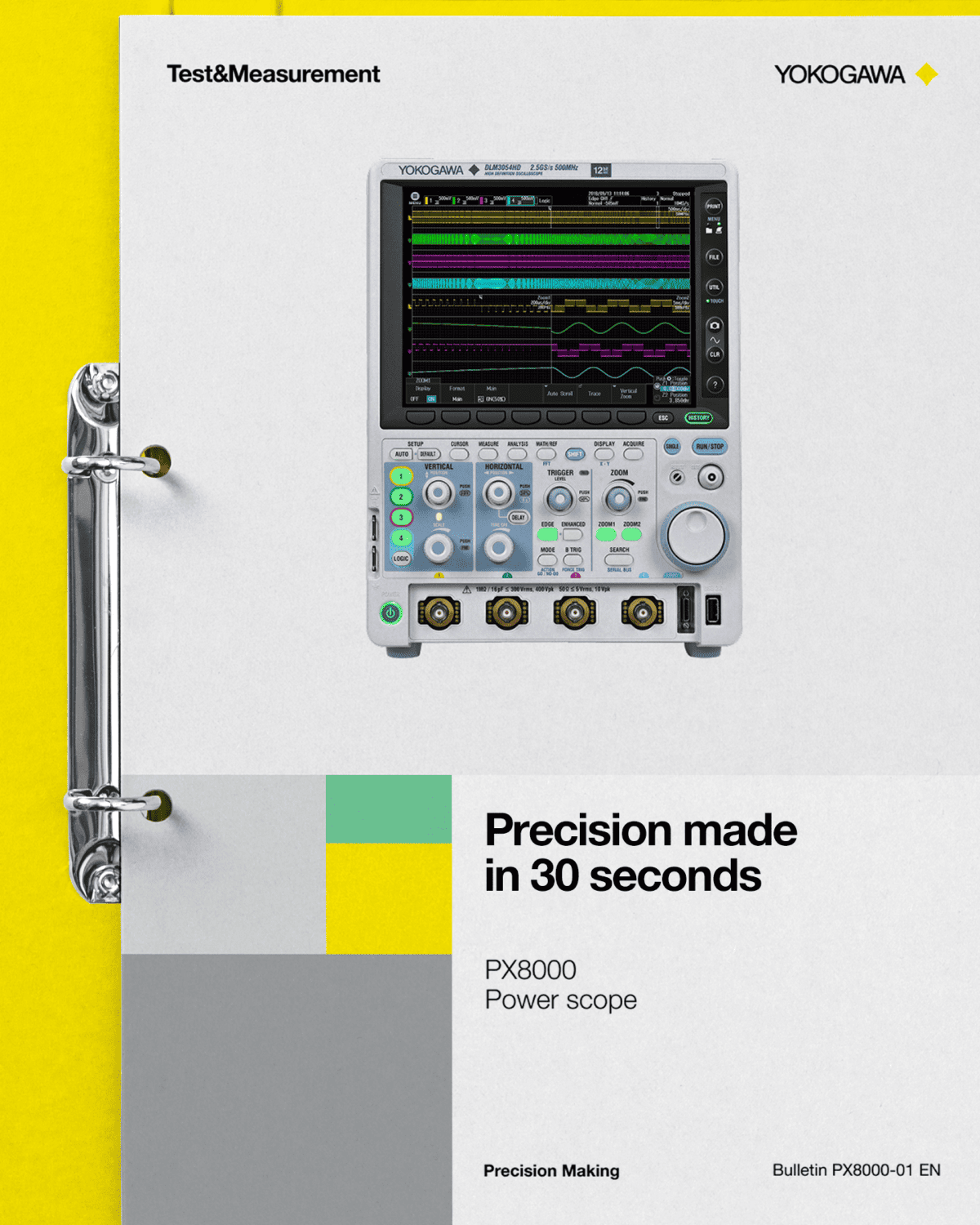
We believe a sustainability story should make technical value clearer, not dress it up. Our work for Yokogawa Test & Measurement started with stakeholder interviews, research-engineer survey work and competitive analysis. That led to a simple, practical idea: precise measurement helps people quantify progress and act on it. We turned that insight into a narrative that connected reliable, accurate measurement with sustainable innovation, while keeping the product reality in view. We have also helped bring that idea to life internally, through a global brand education roadshow designed to build employee understanding, pride and commitment. For us, credibility begins with what engineers can use and trust.

Sources: Yokogawa: Elevating sustainability – precisely, The inside story: why your people shouldn't be just passengers on your brand journey., Yokogawa - Building a brand – precisely

Stats

Capgemini's 2026 Engineering and R&D Pulse reported that 68% of organisations planned to increase sustainability investment in engineering and R&D over the following 12 to 18 months.

Capgemini Research Institute

The 2025 GlobalSpec/TREW research reported that 73% of technical buyers routinely use vendor websites and online technical publications for work-related purchase research.

GlobalSpec and TREW Marketing

GlobalSpec's 2025 engineer-marketing research reported that 70% of technical buyers are likely or very likely to choose the better-known brand when two solutions are technically similar.

GlobalSpec and TREW Marketing

FAQs

How can a sustainability story stay credible with engineers?

A sustainability story stays credible when it links a clear engineering capability to a concrete outcome. Accurate, repeatable measurement can support decisions in energy production, diagnostics and waste reduction because it helps engineers quantify change and prove progress. Keep the claim close to the application, technical evidence and real-world result.

Can accurate measurement support sustainable innovation?

Accurate measurement can support sustainable innovation by giving engineers the information needed to assess changing conditions and make confident decisions. In work involving energy production, critical diagnostics or supply-chain waste, precision helps quantify progress rather than simply claim it.

How do I test whether a sustainability story will matter to engineers?

Test the story against engineers' work, technical proof and the competitive context before turning it into a brand claim.

  1. Talk to the technical audience

    Interview engineers, scientists and the people who support their work to understand where sustainability affects real decisions. Ask about the applications, constraints and outcomes that make a supplier relevant. Look for practical links between measurement and work such as energy production, diagnostics or reducing waste.

  2. Test the idea quantitatively

    Use quantitative research with research engineers to check whether the proposed message reflects what matters to them. Test whether the story is understood as a practical benefit rather than a vague sustainability claim. Compare responses across the applications and roles that matter most.

  3. Ground the claim in precision

    Build the final story around the technical capability that enables the outcome. Show how accurate and repeatable measurement helps people quantify progress, respond to changing realities and make better decisions. Use competitive analysis to make sure the claim is distinctive as well as credible.