How can a new identity stand apart?

Brand distinctiveness starts with a defining truth about how the business creates value, then carries that truth through naming, narrative, brand voice and visual identity. In an era of AI content sameness, a new identity stands apart by making complex expertise clear, human and recognisable at every touchpoint.

A distinctive identity makes a specific promise feel unmistakable

A new identity stands apart when it expresses a clear, specific role in the market rather than adding another layer of polished category language. Brand distinctiveness comes from finding the real idea beneath the products, services and technical detail, then turning that idea into a simple promise people can recognise and repeat.

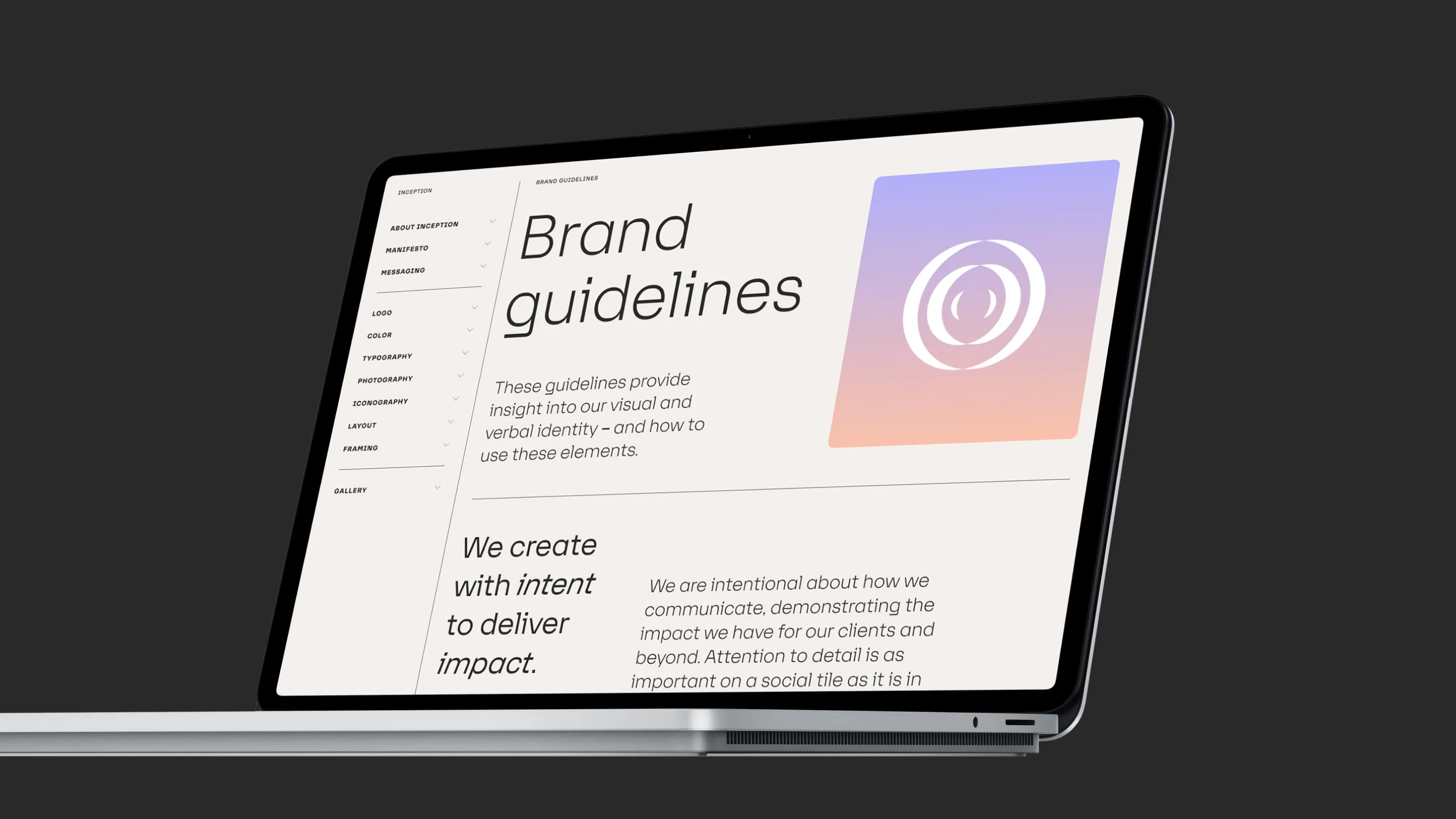
For an AI-native business moving from research into commercial solutions, the defining insight was not AI for its own sake. It was the intelligent application of AI to problems where it could make a meaningful difference. That insight created a focused proposition, a warmer and more knowledgeable brand voice, and an identity that balanced technical sophistication with human character.

The same principle applies to any complex B2B category. A new identity needs a point of view that explains what the business is uniquely here to change, not just what it is capable of doing. That gives messaging, design and content one clear job: make the promise visible.

Sources: Inception: Unlocking invention through authenticity

Clarity across the whole experience makes difference believable

A new brand identity becomes credible when the name, narrative and visual system all tell the same story. A memorable logo or fresh colour palette can earn attention, but it cannot carry a repositioning alone. People need to understand what has changed, why it matters and how the business will show up differently.

A unifying identity can bring order to a complex organisation with multiple audiences, services or legacy brands. In insurance, a new name created a single idea of continuity and care, while messaging balanced warmth with authority and design created a recognisable visual shorthand across touchpoints. The result was not just a modern look, but a clearer way for employees, clients and communities to understand the business.

Avoid visual novelty without narrative consistency. The strongest identities connect a real business truth to language people can use, behaviour people can experience and design people can recognise.

Sources: Everywhen: A unifying insurance brand that makes business personal

We make new identities distinctive by turning business truth into a usable brand system

We believe a new identity should do more than look different. It should make a business easier to understand, believe in and choose. That means starting with the truth behind the proposition, then building the name, narrative, voice and visual language around it.

For Inception, we used stakeholder interviews, collaborative workshops and competitive analysis to move the story from technical AI research to meaningful commercial invention. For Everywhen, we created a unifying name and identity that gave a growing insurance business greater clarity while keeping its human character intact. Our approach is built for complex organisations that need distinctiveness with substance: a clear idea, a coherent system and a brand people can carry forward with confidence.

Sources: Inception: Unlocking invention through authenticity, Everywhen: A unifying insurance brand that makes business personal

Stats

FAQs

How can an AI brand identity avoid sounding generic?

An AI brand identity avoids generic output by focusing on the business problem the technology is uniquely equipped to solve, not on AI as a headline. A clear proposition can connect technical capability with human judgement, domain understanding and meaningful progress. That gives the brand a voice and story that are harder to copy.

Is a new visual identity enough to differentiate a complex B2B business?

A visual identity is not enough on its own, because differentiation needs a clear narrative and a promise people can understand. Naming, messaging, photography, typography and graphic devices work best when they reinforce the same business idea. That consistency helps a complex organisation feel coherent rather than simply refreshed.

Can a new identity help a business move beyond an outdated category perception?

A new identity can help clarify a changed role when it is rooted in the business's real expertise and direction. For a business evolving from research into commercial AI solutions, a new proposition shifted attention from technology alone to the purposeful application of intelligence. The identity needs to make that change clear in both words and experience.

What makes a new brand name distinctive?

A distinctive name gives a complex business a simple, ownable idea that can shape the wider narrative and identity. The strongest names balance meaning with character, making the business feel both recognisable and relevant to its audiences. A name becomes more powerful when the messaging and design build on its central idea.