Should our booth use a game or a live demo?

Choose a booth game when participation can reveal the buyer problem, product value and consequence of a decision. Choose a live demo when buyers need to inspect technical detail, ask specialist questions or validate fit. The strongest event experience often combines both: a game creates attention, then a human conversation adds clarity.

Use participation to make product relevance visible

A booth game works best when the interaction makes a complex product proposition easier to understand, not when it simply creates exhibition-floor engagement. A good game gives attendees a realistic challenge, asks them to make a choice and reveals the outcome, so product value becomes something they experience rather than a claim on a screen. That makes interactive product storytelling useful for unfamiliar technology, operational change or solution selling.

A live technical demonstration is the stronger choice when the buyer needs to see the product itself, explore its detail or test whether it fits a specific requirement. For many complex B2B booths, the clear answer is not game versus demo as a hard split. Use the game to earn attention and build message retention, then offer a product specialist-led demonstration for buyers who want depth. The format should follow the learning job, not the latest event trend.

Sources: Why it pays to play in B2B

Keep the game anchored to a real buyer challenge

A booth game explains a product clearly when every choice maps to a real-world problem, trade-off or outcome the buyer recognises. Start with what is keeping the audience up at night, then frame the interaction around practical challenges rather than abstract features. The product should provide the logic behind the game, including the information, dependencies or consequences that shape each decision.

Keep the experience simple enough to join quickly, but offer layers of technical detail for people with more time or expertise. A score can make progress visible, but it should not become the main point. The useful outcome is a conversation about why a choice mattered and how the product helps. That protects serious B2B brand credibility while making product learning more active and memorable.

Sources: Humanising B2B and leading with empathy, Why it pays to play in B2B

A game should earn attention by making the value clearer

We believe a booth game should never be entertainment bolted onto a complex B2B story. It should make the audience participate in the challenge the product is built to solve, then give them a clear route into deeper conversation. That is how playful interaction can remain credible, useful and commercially relevant.

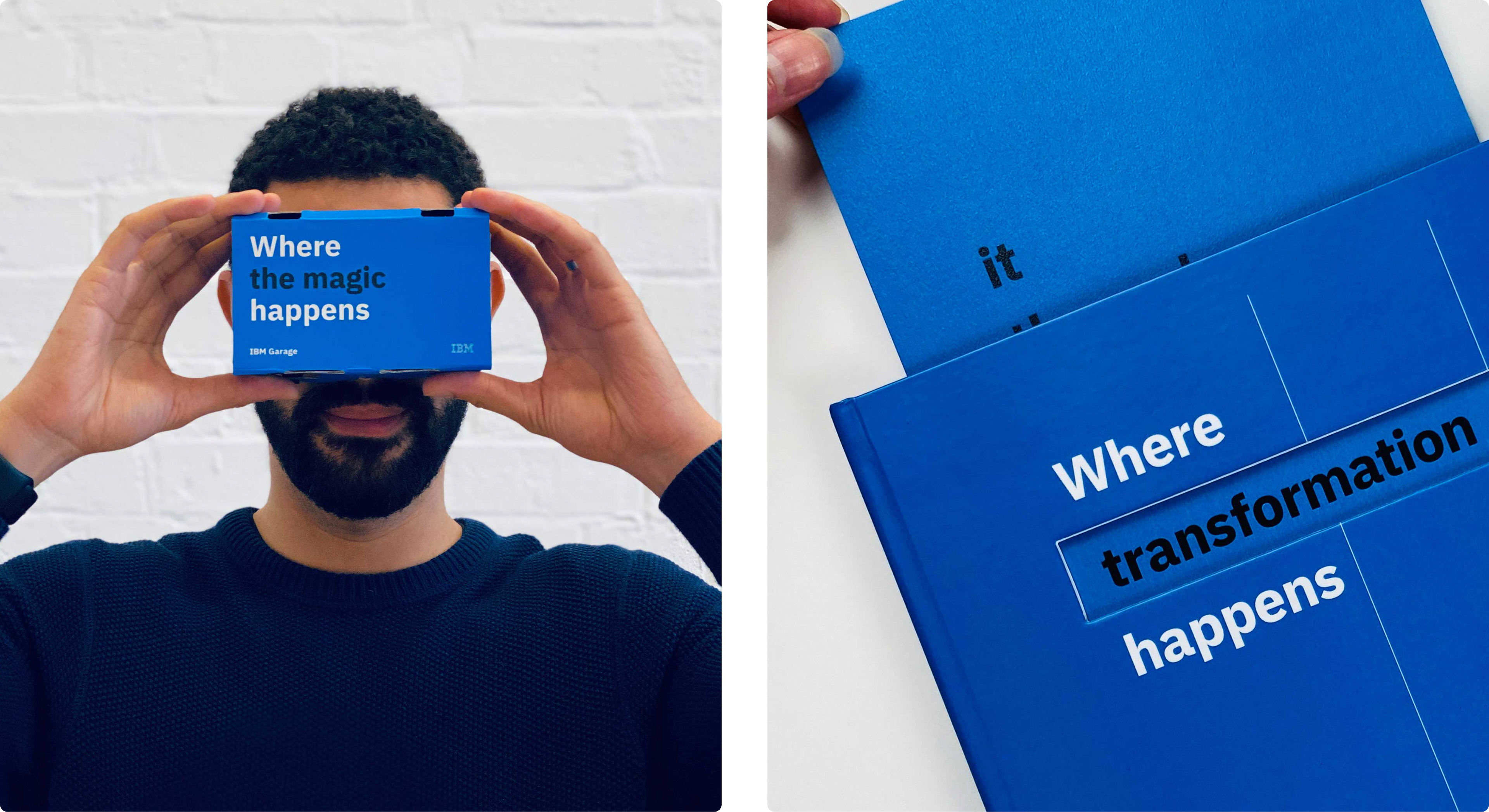
We have used gamification to turn complex ideas into active experiences. For IBM Garage, we created a direct-mail experience with a 65-clue crossword and a 360-degree video. For botim money, we applied game-based thinking to event engagement. Our approach starts with audience insight, shapes a simple narrative around practical challenges and builds in the right level of detail, so the experience helps people understand rather than merely stop by.

Sources: Why it pays to play in B2B, Humanising B2B and leading with empathy

Stats

A 2026 systematic review of 119 peer-reviewed marketing articles found that gamification research focuses more on engagement and behavioural intention than on actual behaviour.

Negi and Kulkarni

FAQs

How do we make a booth game explain our product clearly?

A booth game explains a product clearly when the player must solve a real buyer problem using the same logic the product provides. Build each decision around a practical challenge, show the consequence and connect the result to product value. Offer different layers of detail so newcomers can grasp the core idea while technical buyers can explore the nuance.

Will a booth game make a serious B2B brand seem less credible?

A booth game can support serious B2B brand credibility when the play serves useful learning rather than distraction. Decision-based interactions can be informative as well as playful, especially when they show the consequences of realistic choices. Keep the tone, challenge and information level appropriate to the audience and product.

How should we measure whether an interactive booth worked?

Measure whether attendees understood the product story and whether the interaction led to useful follow-up, not only booth traffic or dwell time. Track the message attendees associate with the brand, the quality of conversations and the progression of qualified opportunities after the event. Engagement is valuable, but it is not the same as buyer understanding or commercial action.

How do I design a booth game that explains a complex product?

Build the interaction around a buyer challenge, make the product logic visible and create a clear path to deeper learning.

  1. Choose one buyer challenge

    Identify the practical problem the audience needs to solve, rather than beginning with product features. Speak to sellers and people close to the audience to understand why the issue matters. Use that challenge as the starting point for the game.

  2. Turn choices into consequences

    Ask players to make decisions that reflect the real trade-offs in the buyer's world. Show what each choice changes, including the outcome, risk or opportunity. Link the explanation back to the product value at every key moment.

  3. Make depth easy to reach

    Give attendees a quick route through the core story, then offer more detail for people who need it. Prepare product specialists and supporting material for deeper conversations. The game should open the door to learning, not replace it.