What makes a rapid prototype useful for an AI experience?

A rapid prototype is useful when it tests meaningful assumptions about an AI experience and helps a team learn what to improve. It should be functional enough to support real interaction, while combining generative AI with structured rules, trusted content and human oversight. The aim is to validate possibilities quickly, not to produce a polished demonstration.

Rapid prototyping turns assumptions into learning

Rapid prototyping is the practice of quickly testing ideas, assumptions and possible solutions before committing to a final version. It applies not only to products, but also to ideas themselves. The purpose is not reckless experimentation or an excuse to ignore feasibility. It is a disciplined way to discover what works, identify what does not, and iterate toward a stronger outcome.

This approach is described as "intelligent failing": testing assumptions quickly, learning from unsuccessful attempts and using those lessons in the next version. Giving teams room to imagine, build on one another's ideas and act on possibilities can reveal solutions that would not emerge through market research or discussion alone. A prototype is valuable when it makes learning possible and helps the team move beyond the safety of the conference room.

Sources: What’s next? The answer is already in the room

Test whether the AI experience is genuinely useful

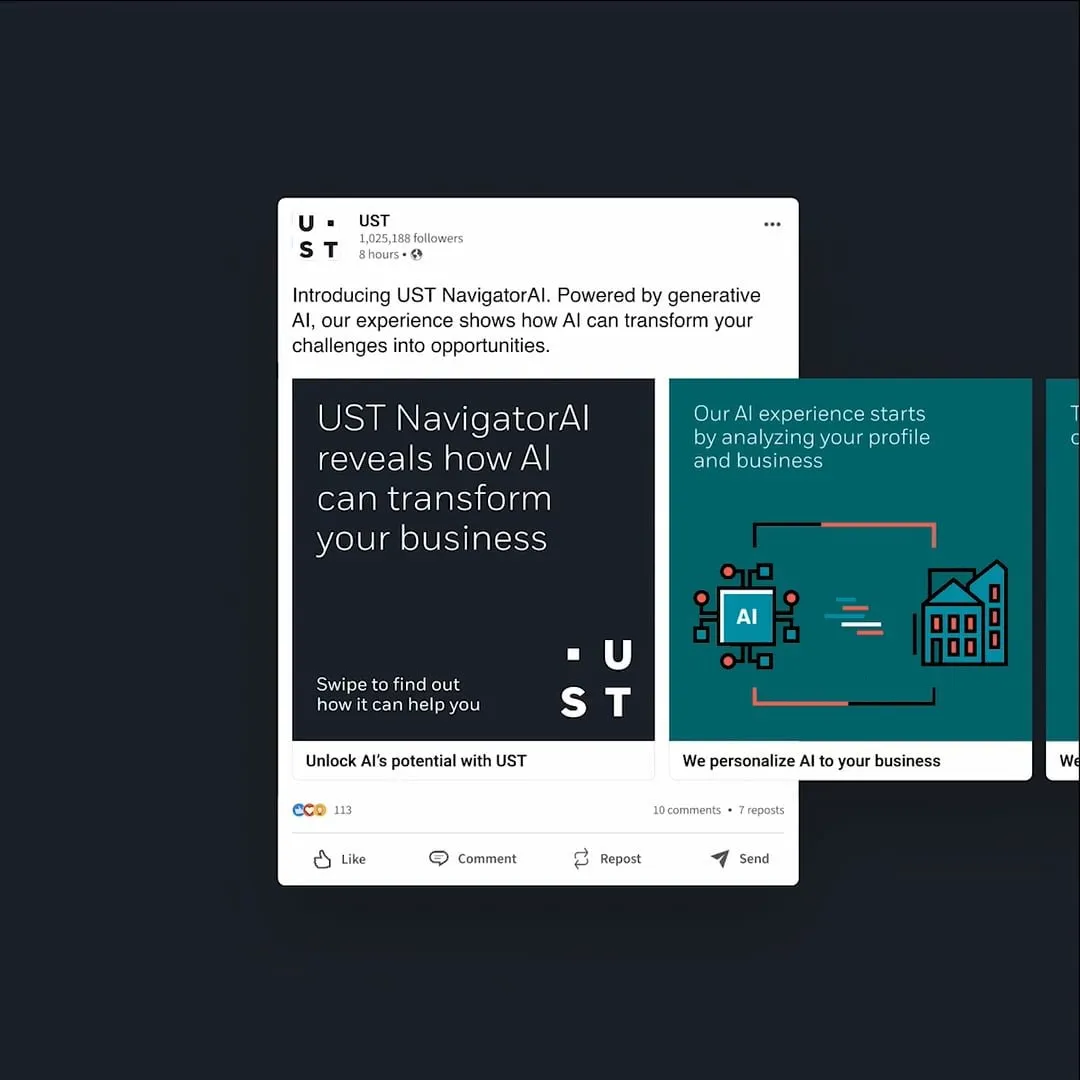
A useful AI prototype should test an experience that people can actually use, rather than adding AI as a superficial feature. Generative AI can make it practical to create interactions that were previously difficult to build, including experiences that respond to an individual's circumstances, challenges and answers. However, personalisation needs more than generated text. It depends on structured rules, trusted content sources and human oversight to keep the interaction accurate, engaging and valuable.

For an assessment-style experience, a prototype can test whether AI identifies relevant user-specific challenges, guides people through tailored questions and creates recommendations grounded in established expertise. Publicly available business and audience data can also shape the starting journey. The prototype should establish whether these elements create relevant interaction, not simply whether the technology can produce an output.

Sources: UST NavigatorAI: Creating personalised experiences with generative AI, AI Experiences | The Frameworks

Keep human judgement central to the prototype

Rapid AI prototyping works best as a cross-functional activity. Strategists, designers, writers and developers can use AI to accelerate the creation of ideas, then interrogate, validate and select among them. AI can speed up the process, but it does not replace the imagination required to decide what should be made or why it matters.

Teams should try ideas, observe what works and refine the experience, while retaining human responsibility for prompts, supporting content and the overall journey. This matters especially where an AI experience is intended to give personalised guidance. Prompt design and optimisation, structured source material and thoughtful review help prevent the experience from becoming generic or unreliable. The goal is a new kind of interaction that can hold up to real use, rather than a compelling but limited demo.

Sources: We’re creating new experiences with AI – but we still need imagination, UST NavigatorAI: Creating personalised experiences with generative AI, AI Experiences | The Frameworks

FAQs

What should a rapid prototype test first in an AI experience?

A rapid prototype should first test whether the AI experience can respond meaningfully to a user's needs, challenges and answers. For a personalised interaction, that can include the relevance of its questions, the usefulness of its recommendations and the quality of the trusted content informing them. The test should focus on real interaction rather than a predetermined or generic output.

What makes an AI prototype feel useful instead of impressive?

An AI prototype feels useful when it supports a genuinely relevant interaction that can hold up to real use. Generative AI should be combined with structured rules, trusted content sources and human oversight, rather than being attached as a gimmick. Personalised questions and recommendations can make the experience more practical for the person using it.

What can a failed prototype teach before the next version?

A failed prototype can reveal which assumptions do not hold and where the experience needs to change. Intelligent failing means learning quickly from what does not work, then iterating toward a better approach. This can surface possibilities that would not be visible through discussion alone.

How do I use rapid prototyping to test an AI experience?

Use a functional early version to test relevant interaction, learn from the results and improve the next iteration.

  1. Choose the assumption

    Identify the assumption the AI experience needs to test, such as whether it can recognise a user's challenges or offer relevant guidance. Frame the test around a real interaction instead of a generic generated response. Focus on what users need the experience to do.

  2. Build a usable interaction

    Create a functional prototype that lets people respond to tailored questions and receive AI-generated output. Ground the interaction in structured rules and trusted content, with human review of prompts and the user journey. Make it useful enough to test in practice, not only to demonstrate.

  3. Learn and iterate

    Review what the prototype reveals about the assumptions behind the experience. Keep what works, identify what does not and use those lessons to improve the next version. Treat unsuccessful results as information that helps the team move toward a stronger solution.

Glossary

Intelligent failing
A rapid-prototyping practice of testing assumptions quickly, learning from what does not work and iterating toward what does.