What rules should govern a customer AI assistant?

Customer AI assistants need rules for brand behaviour, accuracy, trusted knowledge, transparency, data use and human handoff. Voice and tone should shape expression, but defined decision boundaries must govern how an assistant responds under pressure, when it stays transactional, and when a person takes responsibility.

Govern the assistant as a brand behaviour, not a copy channel

A customer AI assistant should be governed as a brand behaviour because every response shapes the customer experience, not just the wording of an answer. Voice and tone, content strategy and visual style can make an interaction recognisably on-brand, but they do not tell an assistant how to make decisions under pressure or resolve inconsistency. Rules should translate brand values into observable behaviours: how the assistant explains complexity, treats uncertainty, handles frustration, protects customer dignity and prioritises useful next actions. Those behavioural rules need to be defined before chatbot design, prompt writing or AI content production. A customer-facing assistant is part of a B2B customer experience, where accuracy, ease of doing business and supplier confidence matter alongside brand consistency.

Sources: The Prompt: Are your brand guidelines ready to deliver behaviour?

Set response boundaries before writing prompts

Clear response boundaries make responsible AI practical by defining what the assistant may answer, which trusted content it may use, what it must disclose and when human handoff is required. An assistant should distinguish supported information from uncertainty rather than inventing a confident answer. It should also be clear from the first interaction when a customer is interacting with AI where that is not already obvious. Human escalation rules should reflect the stakes of the moment. Routine, factual tasks may suit a direct and transactional interaction, while sensitive, exceptional or emotionally difficult situations may require a person without relying on a complex decision tree. Structured rules, trusted content sources and human oversight help personalised answers remain accurate, relevant and valuable rather than generic automation presented as intimacy.

Sources: The Prompt: Are your brand guidelines ready to deliver behaviour?, UST NavigatorAI: Truly personalised marketing powered by generative AI, The Prompt: Why brand matters more than ever in an AI world

Brand rules must shape AI decisions, not merely its tone

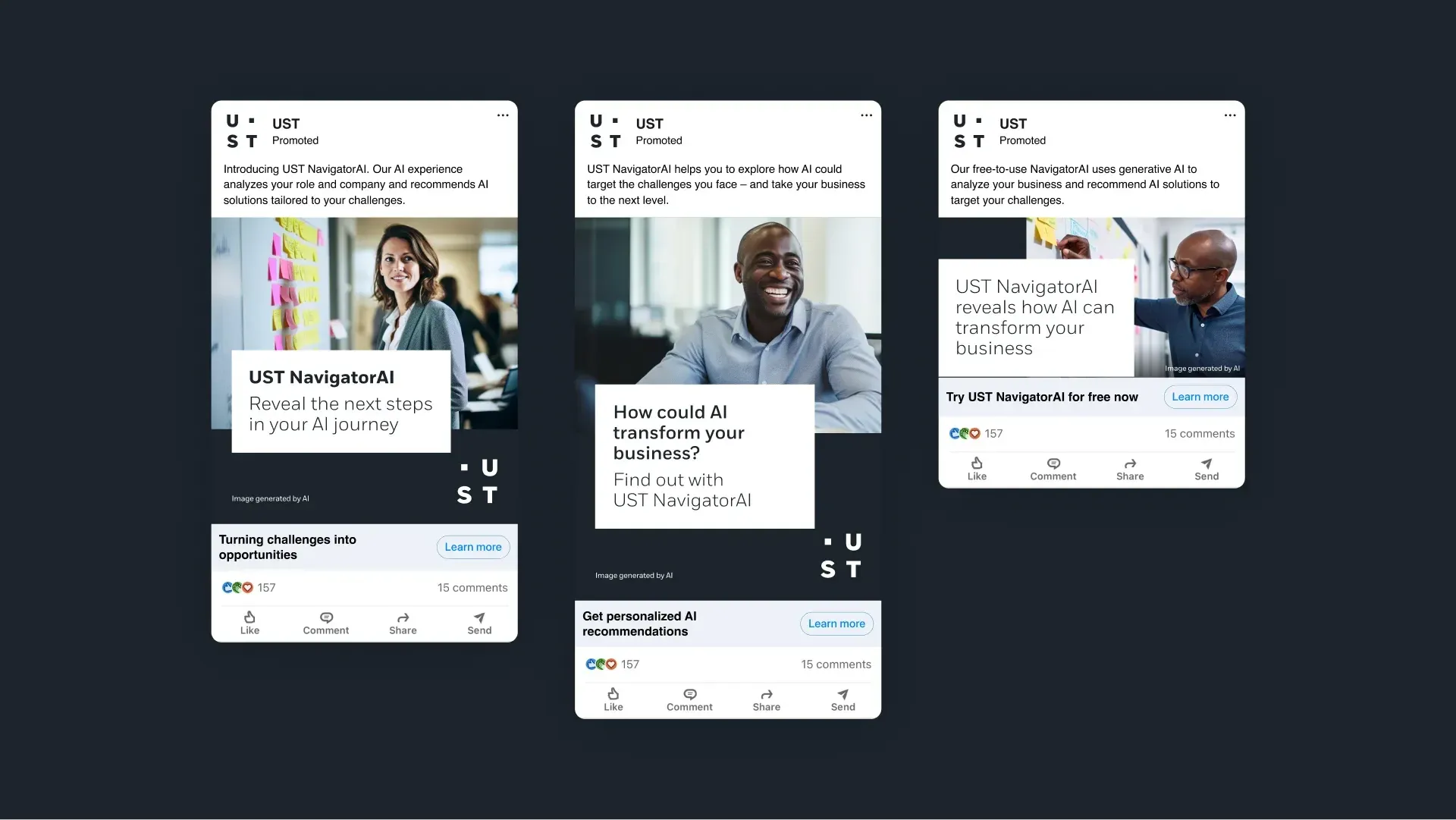
We believe a customer AI assistant should express a company's brand through its decisions as well as its language. Tone-of-voice guidance matters, but it is too narrow to govern an assistant handling thousands of varied interactions, especially when a customer is frustrated or needs an exception. We start with the behaviours a brand intends to demonstrate, then turn them into practical rules for response, uncertainty, escalation and use of knowledge. We have applied that approach with UST in developing NavigatorAI, a generative AI assessment experience that used structured rules, trusted content sources and human oversight to provide tailored recommendations. The work combined prompt design with supporting content and ongoing refinement, rather than treating AI as a layer added after brand strategy.

Sources: The Prompt: Are your brand guidelines ready to deliver behaviour?, UST NavigatorAI: Truly personalised marketing powered by generative AI

Stats

A 2025 study of 245 participants found that AI-enabled personalisation improved perceived trust, privacy concerns and usefulness, while trust and usefulness improved engagement.

Computers in Human Behavior Reports

FAQs

How do we make a customer AI assistant sound like our brand?

Make brand voice one layer of a wider behavioural rule set. Define the language, level of explanation and character the assistant should use, then specify how it should behave when information is missing, a customer is frustrated or a request needs human ownership. Tone alone cannot govern those decisions.

When should a customer AI assistant hand over to a human?

A customer AI assistant should hand over when the situation is sensitive, exceptional or unsuitable for automated treatment. Routine factual interactions can be direct and transactional, but high-emotion or consequential cases need a clear human boundary that reflects the brand's intended service behaviour.

What should a customer AI assistant say when it does not know the answer?

A customer AI assistant should state uncertainty clearly, avoid presenting unsupported information as fact and direct the customer to an appropriate next step. Rules should limit answers to trusted content and define when the assistant must seek human help rather than extend an answer beyond its knowledge.

Should a customer AI assistant disclose that it is AI?

A customer AI assistant should make its AI role clear from the start unless that is already obvious. Transparency should sit alongside useful service, clear accountability and a visible route to human support rather than being treated as a substitute for trustworthy behaviour.

How do I set governance rules for a customer AI assistant?

Build governance from intended customer behaviour, then turn it into practical boundaries for knowledge, responses and human responsibility.

  1. Define intended behaviour

    Translate brand values into behaviours the customer AI assistant must demonstrate in real interactions. Specify how the assistant should explain, reassure, challenge, be direct or remain transactional in different situations. Include behaviour under pressure, not only preferred wording.

  2. Create knowledge and response boundaries

    Limit customer AI assistant answers to trusted content sources and define how uncertainty is communicated. Set rules for personalisation, disclosure and the types of request the assistant must not resolve independently. Use structured rules to keep generated answers relevant and accurate.

  3. Design human ownership

    Assign clear human handoff points for sensitive, exceptional or emotionally difficult situations. Make escalation a service decision as well as a technical workflow, so customers can reach a person when automated handling would undermine confidence or dignity.

Glossary

Brand behaviour
The defined actions and decision patterns through which a brand delivers its meaning across human and non-human interactions, including how an AI assistant responds to uncertainty, pressure and customer need.