How do we get strategy and creative working together?

Strategy and creative work best as one team when a clear strategic platform gives creative people a strong direction and real room to explore. Start by defining the business challenge, uncovering useful insight, and agreeing the message before developing the verbal identity, visual identity system, campaign or digital experience.

A clear strategic platform gives creativity somewhere to go

Strategy turns a broad request for a brand refresh, website or sales deck into a clear business challenge that creative work can solve. That means getting specific about the audience, the change the organisation needs to make, and the insight that makes the message worth hearing.

The strategic platform is not a creative handover document. It is the shared foundation for designers, writers and developers to build from. When the foundation is clear, creative teams can make bolder choices without losing the plot. A visual identity, brand narrative and campaign idea should all express the same underlying position, rather than competing for attention.

The work may begin with stakeholder discussions and desk research. More complex B2B brand repositioning can call for market analysis, competitive audits, social listening, persona development and customer journey mapping. The depth should match the challenge, not follow a fixed formula.

Sources: Where logic meets magic: why strategy underpins every great idea

Build the message and the new look from the same idea

A joined-up brand narrative and visual identity system come from one central idea, expressed in words, typography, colour, imagery and design choices. Aligning the new look and message means testing whether every element helps the audience understand the same promise, personality and position.

Verbal identity should set out what the organisation stands for and how it speaks. Visual identity should give that meaning a recognisable, flexible form across channels. Sometimes the strongest creative answer is visual storytelling. Sometimes clear language and typography need more space to do their job. The right balance depends on what will resonate with the audience.

A messaging system and corporate brand identity become useful when they work across the business, not only in a launch presentation. Consistency does not mean making every asset look identical. It means making each expression feel like it belongs to the same story.

Sources: Wates: Building a brand with care, legacy and leadership, Designing an authentic emotional connection, Teledyne Healthcare: Bringing multiple brands under one roof

Do not let a polished asset stand in for a real decision

A beautiful creative execution cannot fix an unclear positioning problem, so the hardest decisions need to happen before design becomes the centre of attention. A request for a new logo or campaign may be valid, but it may also be a signal that the audience, proposition or business ambition has not yet been properly articulated.

Keep strategy and creative teams close throughout the project, rather than treating strategy as an opening phase and creative as the production phase. Strategists can protect the insight behind the work, while creative teams can challenge whether the strategy is distinctive enough to become memorable. That healthy tension helps ideas stay both imaginative and commercially useful.

A strong final concept should be explainable in plain English: what truth it is built on, what it helps the audience understand, and why the creative choices belong to the strategy. If that link is hard to explain, the work needs another look.

Sources: Where logic meets magic: why strategy underpins every great idea

We make strategy the springboard for creative ideas, not the paperwork before them

We believe strategy and creative should challenge each other from the start. A strong strategic platform gives creative teams freedom, because it makes the business challenge, audience insight and direction clear. We do not see a new logo, website or sales deck as a strategy in its own right.

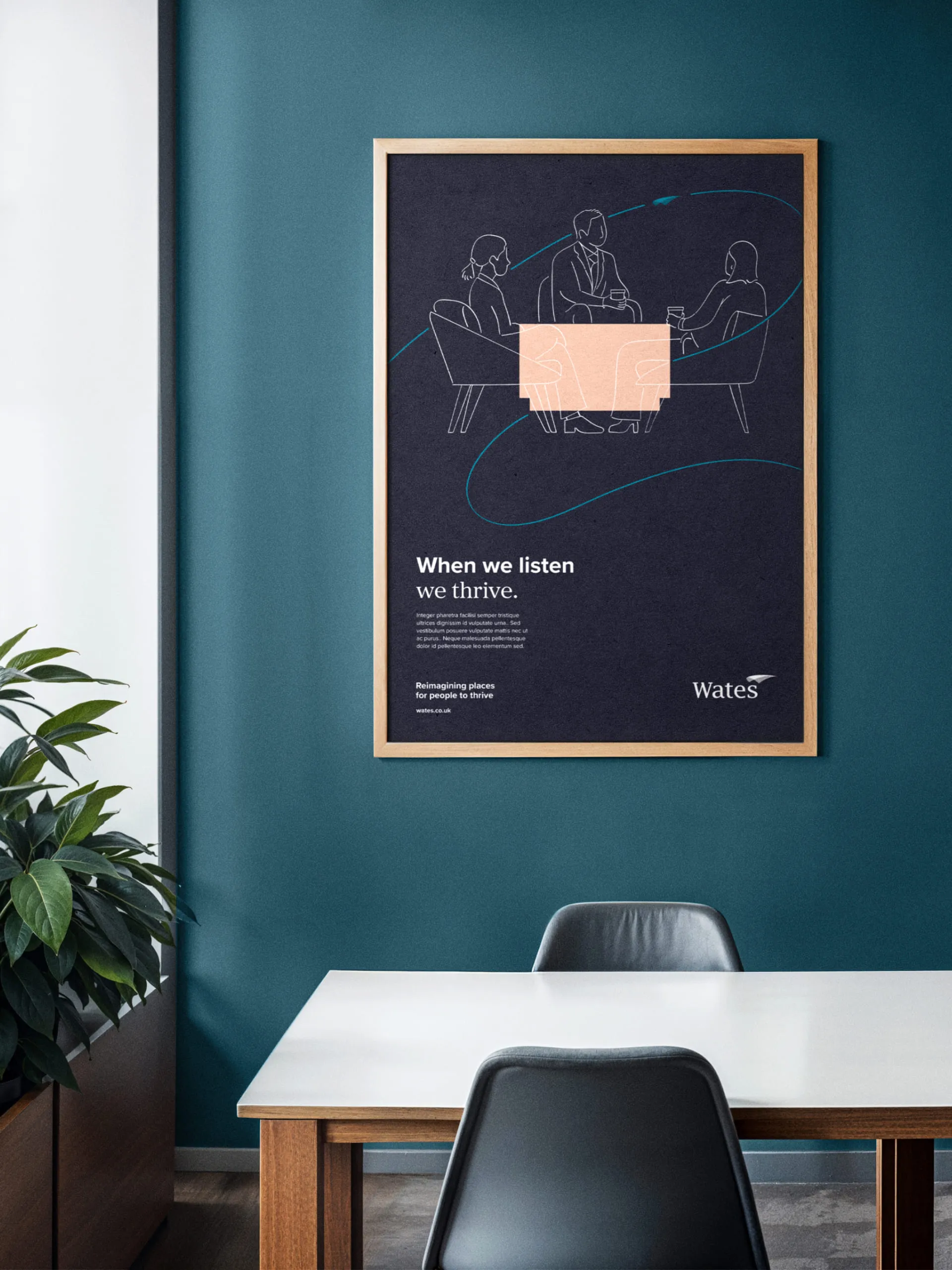
Our work starts by getting to the core articulation of the challenge, through stakeholder discussions, research and the level of analysis the situation needs. Then we use that foundation to help writers, designers and developers create work with purpose. For Wates, we shaped a clear messaging system and refreshed visual identity that brought greater consistency to how the business tells its story, while helping define a stronger market position. We also stay close to the creative concept, grounding bold ideas in the truths uncovered together.

Sources: Where logic meets magic: why strategy underpins every great idea, Wates: Building a brand with care, legacy and leadership

Stats

FAQs

Where should strategy and creative collaboration start?

Strategy and creative collaboration should start with a shared articulation of the business challenge, not with a preselected asset. Stakeholder discussions and research can uncover the insight that gives the creative team a meaningful direction. The strategic platform then becomes a practical foundation for writers, designers and developers.

How do we align a new look and message?

Align a new look and message by making both expressions answer to the same brand idea. Messaging, typography, colour, imagery and visual storytelling should each help audiences recognise the organisation's purpose and position. A flexible visual system can create consistency without making every piece of communication feel the same.

Should a brand refresh begin with a logo or campaign idea?

A brand refresh should begin with the underlying business and audience challenge, because a logo or campaign is not a strategy by itself. The right creative output becomes clearer once the organisation has defined the direction, insight and message it needs to express. That process can reveal that the original request needs refining.

How much research does a B2B brand repositioning need?

A B2B brand repositioning needs enough research to make the strategic direction credible and useful. A focused brief may need stakeholder discussions and desk research, while a move into a new market or audience can require market analysis, competitive audits, social listening, personas and customer journey mapping. The scope should follow the complexity of the decision.