How do we build an AI guide for our website?

A useful AI website guide starts with a focused visitor need, trusted source content and clear rules for how recommendations are made. Build the experience around tailored questions, grounded answers and human review, then use first-party data transparently so personalisation feels helpful rather than intrusive.

An AI guide turns a complex website into a tailored conversation

An AI-powered website guide helps visitors find the most relevant answer, resource or next step without forcing them through a fixed digital journey. Instead of showing every visitor the same predefined result, the guide can ask tailored questions about their circumstances, challenges and priorities, then generate recommendations shaped by those inputs.

The strongest AI personalization combines flexible generation with structured rules and trusted content sources. The AI can make the interaction feel more context-aware, while approved knowledge, service information and brand guidance keep recommendations useful and on-message. Publicly available business and audience data can provide an informed starting point, but the visitor's own responses should shape the journey. That creates a more adaptive customer journey without pretending the guide knows more than it does.

Sources: UST NavigatorAI: Truly personalised marketing powered by generative AI

Useful personalisation needs clear boundaries around data and answers

Responsible AI personalization earns trust by being clear about the data it uses, the value visitors receive and the limits of its recommendations. First-party data, collected directly from visitors, gives a website guide a more reliable foundation than silent tracking. Visitors should understand why information is being requested and what they get in return, whether that is a more relevant recommendation, saved progress or more useful follow-up.

Accuracy needs the same care. Generative AI can create responsive recommendations, but it should work from carefully selected content, clear prompt design and human oversight. Review the source material, test how the guide handles unclear inputs and create a route for correcting weak or unsuitable answers. Transparency around AI-generated content also matters, especially where generated images, video or text could affect how audiences judge a brand.

Sources: UST NavigatorAI: Truly personalised marketing powered by generative AI, The party’s over. It’s time for marketers to embrace privacy, Powered by imagination: how I’m making stock imagery creative with AI

We believe a website guide should make complex choices clearer, not add another layer of noise

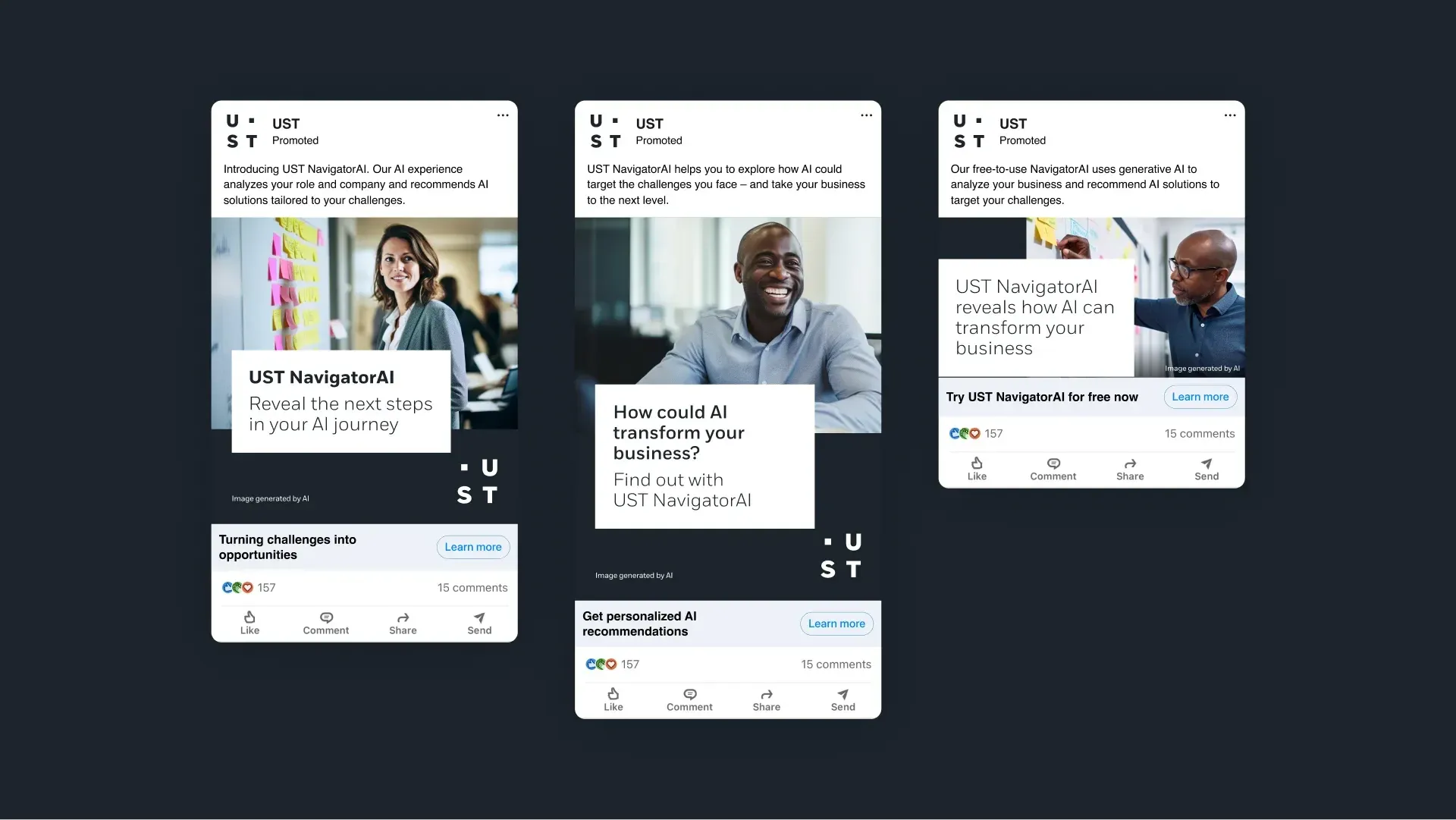
We believe the best AI website experiences are small, focused tools with a clear job: help people understand what matters to them and find a useful next step. That means pairing generative AI with trusted content, sensible rules, thoughtful prompts and human judgement. For technology companies, look for a partner that can connect audience insight, brand voice, content and digital experience, rather than treating the guide as a standalone chatbot. We put that approach into practice with UST, creating NavigatorAI to guide prospects through tailored questions and personalised recommendations informed by its AI expertise. We developed a functional prototype in two weeks, then refined, tested and launched the full experience within six weeks.

Sources: UST NavigatorAI: Truly personalised marketing powered by generative AI, Introducing: Small AI for brands

Stats

A 2025 simulated e-commerce experiment reported a 24.6% click-through rate for generative-AI personalization, compared with 18.2% for rule-based personalization.

Inverge Journal of Social Sciences

FAQs

What should an AI website guide be trained on?

An AI website guide should draw on approved, relevant content that reflects the organisation's expertise, services and brand guidance. Structured rules and trusted source material help keep recommendations aligned with what the business can genuinely offer. Human review remains important for prompt design, content quality and accuracy.

How do we personalise a website without misusing visitor data?

Use first-party data that visitors knowingly provide, and explain clearly what value they will receive in return. A website guide can use a visitor's answers to tailor recommendations without relying on hidden tracking or collecting more information than the experience needs. Clear permission and transparency make personalisation more useful and more respectful.

Should an AI website guide replace rules-based journeys?

An AI website guide works best alongside structured rules, not as a replacement for every rule-based journey. Rules provide dependable boundaries and keep recommendations connected to approved content, while generative AI can adapt the conversation to each visitor's circumstances and responses. The balance gives visitors more relevance without losing control.

How can we keep an AI guide on brand and accurate?

Keep an AI guide on brand by grounding it in approved content, setting clear rules and reviewing its outputs with people who understand the subject and the brand. Prompt design, testing and ongoing optimisation are part of the work, not a final polish. AI can make an experience more responsive, but human creativity and judgement keep it valuable.