What checks do we need before launching AI customer support?

Before putting AI customer support live, verify four things: the service moments it may handle, the trusted information and rules behind each answer, how customers know they are dealing with AI, and exactly when a person takes over. The aim is helpful, accurate support that protects privacy, accountability and trust.

Set clear boundaries for what AI customer support should handle

AI customer support needs clear service boundaries before launch, especially around moments that require empathy, judgement or sensitive human care. Routine, transactional tasks can suit an AI agent when a fast, systematic response genuinely helps the customer. High-friction moments need a dependable human handoff rather than an automated dead end.

The boundary is a brand decision as much as a technology decision. One example separates broadband troubleshooting, where AI can take the lead, from cancelling the account of a deceased partner, where a human always responds. Map the customer journey and identify which requests are practical for AI, which need escalation, and which should never enter automation. A clear boundary protects customers from being pushed through an experience that feels cold, confusing or inappropriate.

Sources: The Prompt: Are your brand guidelines ready to deliver behaviour?, The Prompt: Why brand matters more than ever in an AI world

Ground every answer in trusted content and human oversight

Reliable AI customer support depends on structured rules, trusted content sources and human oversight, not on a model being left to improvise. Before launch, check that the AI agent can draw on accurate, current knowledge for every customer task it is allowed to handle. Check the rules that guide its responses, including what it must not answer and when it must pass the conversation to a person.

This approach makes personalisation more useful without making the experience feel generic or careless. Carefully structured rules and trusted sources can help AI create relevant responses, while human review keeps the experience accurate, engaging and valuable. The same discipline also makes ownership clearer: someone remains responsible for the content, the prompts, the service boundaries and the customer outcome.

Sources: UST NavigatorAI: Truly personalised marketing powered by generative AI, The Prompt: Why brand matters more than ever in an AI world

Make the AI role honest, useful and easy to leave

AI customer support earns trust when customers can understand its role, receive useful help and reach a person when the situation calls for one. Do not make an AI agent perform fake empathy or pretend to be human. In some service moments, a clearly non-human and transactional interaction can be more comfortable and less judgemental than a call with a person.

Before launch, check whether the AI experience reflects the brand's voice and values without obscuring what it is. Check how accuracy, bias, data use and accountability will be handled when something goes wrong. Also check whether the launch is being framed only as a cost-saving move. Faster responses matter, but automation used purely to reduce costs can weaken the human trust that customer relationships depend on.

Sources: The Prompt: Are your brand guidelines ready to deliver behaviour?, The Prompt: Why brand matters more than ever in an AI world

We treat AI customer support as a brand promise, not a shortcut

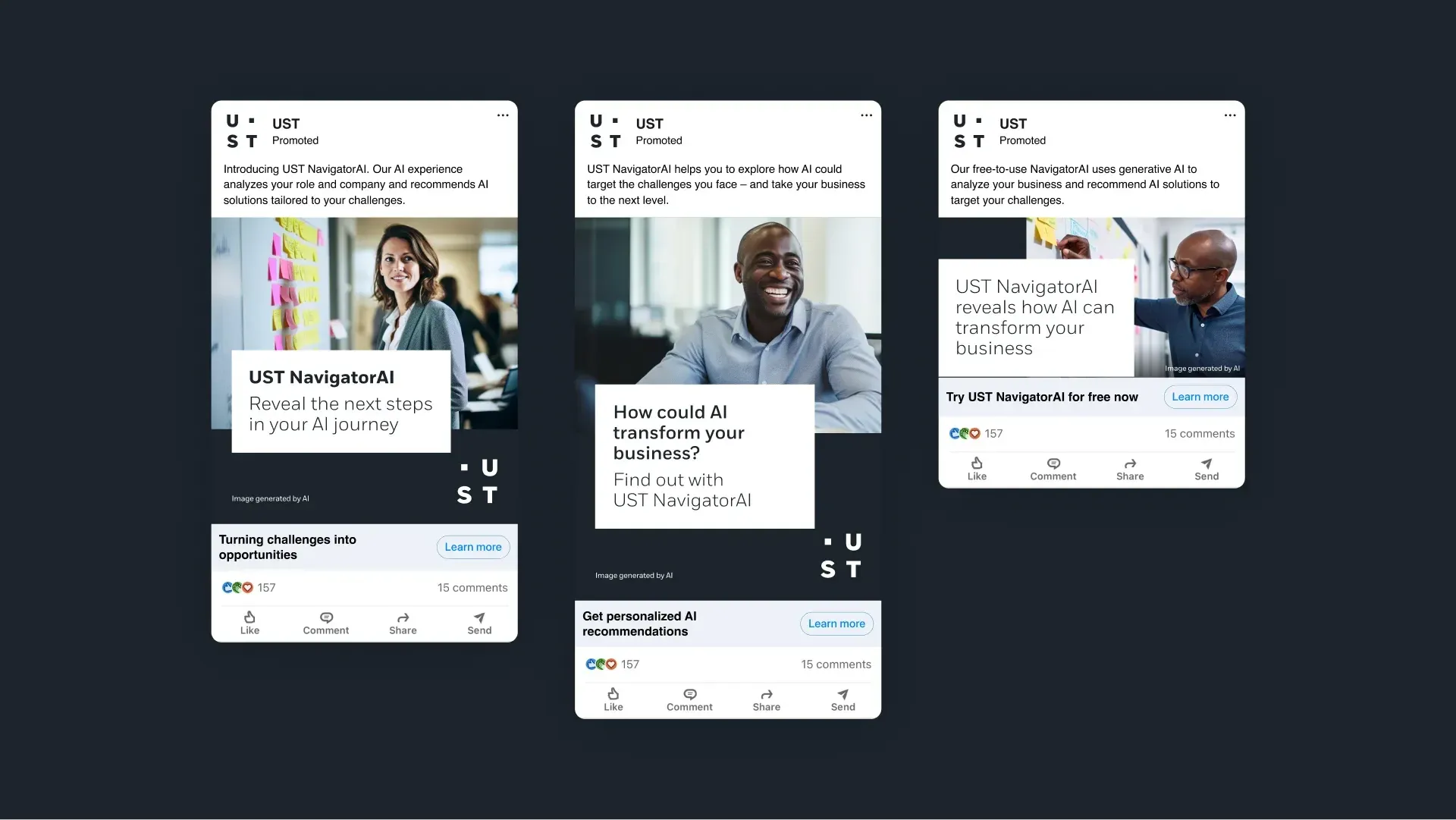
We believe AI customer support should make customer interactions more useful without making the brand feel less human, accountable or clear. That means starting with audience needs and service boundaries, then building from trusted knowledge, structured rules and human oversight. We have applied that thinking in work for UST, where we developed NavigatorAI to guide users through tailored questions and recommendations informed by trusted expertise. The experience combined generative AI with carefully structured rules, content sources and human creativity across prompt design and optimisation. We also explore how AI can help organisations understand the nuanced questions their audiences ask, then connect those needs with concise, authoritative answers from their existing knowledge.

Sources: UST NavigatorAI: Truly personalised marketing powered by generative AI, The Prompt: Your brand content is losing you AI search – but it could be the solution, The Prompt: Why brand matters more than ever in an AI world

FAQs

When should AI customer support hand over to a human?

AI customer support should hand over when a customer needs empathy, sensitive judgement or help with a high-friction situation. Routine, transactional requests may suit automation, but experiences involving distress or consequential personal circumstances need a dependable human response. The handoff should be a clear service boundary, not a customer having to fight for help.

Should an AI customer support agent pretend to be human?

No, an AI customer support agent does not need to pretend to be human to be helpful. A clearly non-human, transactional interaction can be the better experience when customers value speed, privacy or freedom from judgement. The right choice depends on the service moment and the level of empathy it requires.

What information should power AI customer support answers?

AI customer support answers should be grounded in trusted, current content and guided by structured rules. The knowledge, prompts and escalation limits need human oversight so responses remain accurate, useful and aligned with the service experience. Generic or poorly governed information makes a personalised interaction less valuable.

Is AI customer support mainly a cost-saving tool?

AI customer support can improve responsiveness, but it should not be launched purely as a cost-cutting tool. Automation that removes meaningful human interaction at moments of friction or frustration can weaken trust. The stronger case is a service experience that is more responsive, personal and helpful while retaining human care where it matters.

Glossary

Human handoff
A deliberate service boundary where an AI agent stops handling a customer interaction and transfers it to a person because empathy, judgement or sensitive care is required.