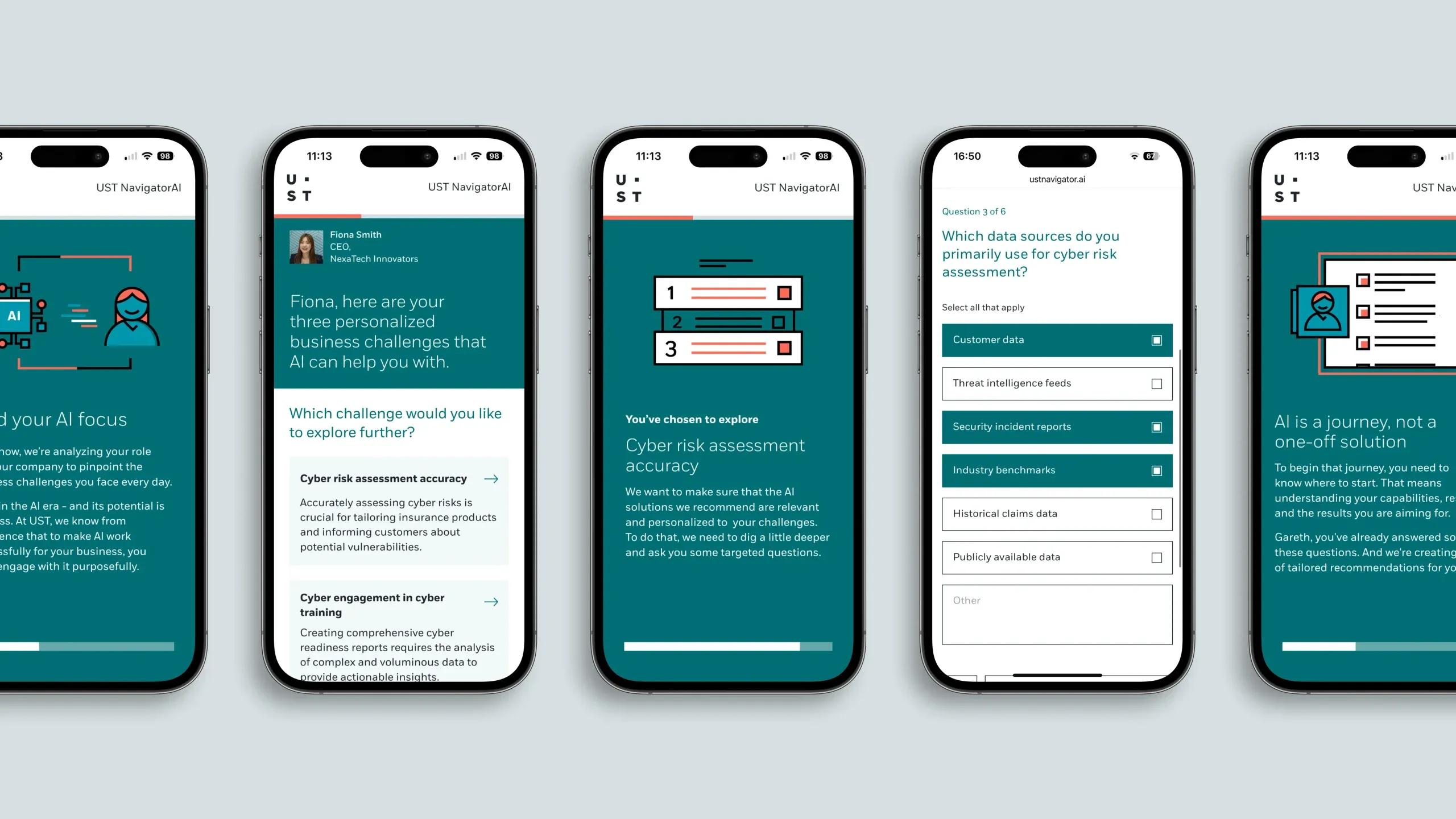
Personalisation depends on useful responses and consistent behaviour
Creating a personalised AI experience means deciding how an interaction should respond to someone's circumstances while expressing the brand through its actions. The difficulty is balancing flexible, individually relevant responses with accuracy and consistent behaviour. Tone of voice alone cannot determine how an AI should act or when a person should take over. Before development, define the audience need, the value the interaction should provide and the behaviours that should guide it. Decide where a systematic response is appropriate and where human involvement matters. Personalisation works best when audience understanding and brand purpose shape the experience, supported by trusted content, structured rules and human oversight.
The Frameworks applied this combination in UST NavigatorAI, using generative AI to create content around each user's circumstances, challenges and responses rather than presenting predetermined outcomes. Publicly available firmographic and demographic data provided an initial layer of relevance, while subsequent responses shaped the content dynamically. UST's proprietary AI expertise helped keep recommendations aligned with its services. Carefully structured rules and trusted content sources gave the AI boundaries, with human oversight maintaining accuracy and value throughout the journey. The work brought together several dimensions of personalisation: making the starting point relevant, adapting as users contributed information and keeping recommendations connected to what the business could offer.
Sources: UST NavigatorAI: Creating personalised experiences with generative AI, I am challenging: James, The Prompt: Are your brand guidelines ready to deliver behaviour?