How do I grow an audience beyond one campaign?

Audience growth beyond a single campaign depends on building a clear brand story for a defined audience, then sustaining it through relevant content, activation and measurement. Campaigns can grow website traffic, social followings and engagement when they connect business value with audience interests. Ongoing activity gives that story repeated opportunities to reach and move the right people.

Build audience growth around a clear business story

Audience growth is more than generating attention for a campaign launch. It means giving a defined audience a reason to notice, understand and continue engaging with a brand over time. For UST, the audience was C-suite decision-makers in a crowded digital transformation market. The campaign built on the brand message, "Together we build for boundless impact", and framed UST's work in a distinctly human way. Its creative platform focused on the idea that UST's impact is felt through interactions and partnerships. A clear story can make complex business capability more accessible, while keeping the audience focused on what a brand enables. The work also used real client and partner stories to move specific relationships forward rather than treating audience growth as a mass-reach exercise.

Sources: UST: Building a brand for boundless impact, Account-Based Marketing | The Frameworks

Connect timely activation with audience interest

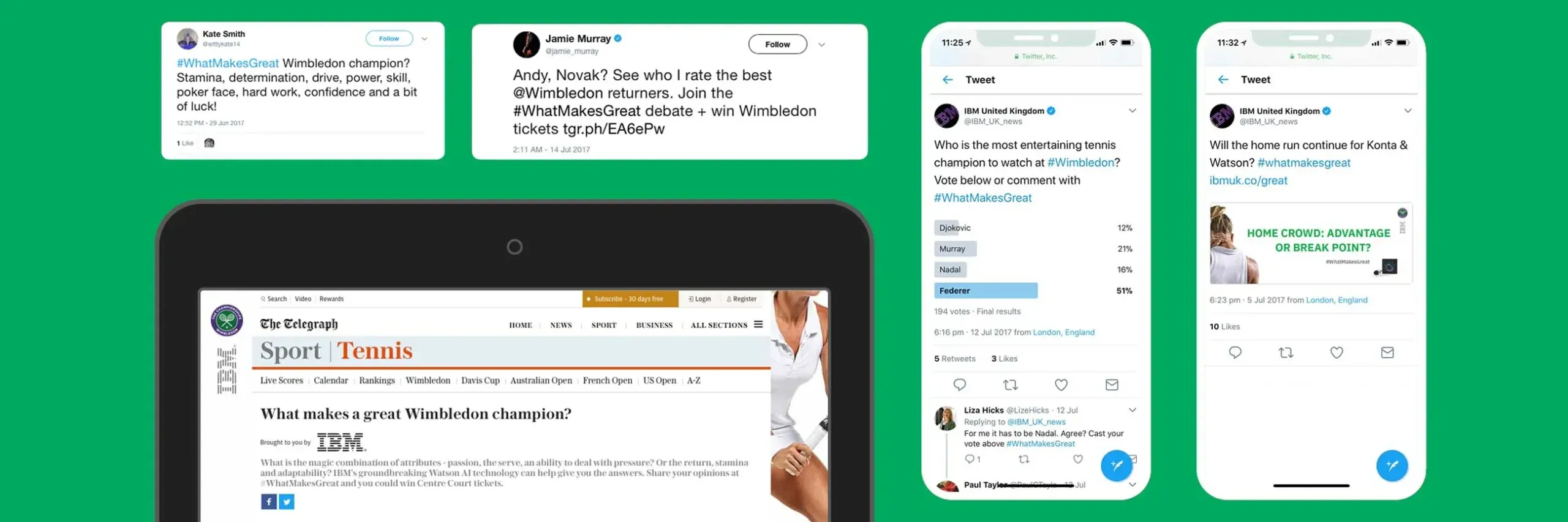
Campaign activity can grow an audience when it gives people a relevant reason to engage at the moment their interest is highest. IBM's long-running Wimbledon partnership created an opportunity to tell an enduring business story through an event with substantial public attention. In 2017, the campaign used the tournament's "in pursuit of greatness" promise to explore what makes great, combining IBM partnership data with Watson-informed live social listening. This connected enterprise AI capability to a live cultural conversation. In 2013, a short-form video explained IBM's role in the Wimbledon experience by showing how integrated cloud, analytics, mobile and social media solutions capture and communicate match details. Different formats served the same broader purpose: making IBM's contribution understandable and shareable for audiences following the tournament.

Sources: IBM and Wimbledon: Ongoing Campaign Involvement

Measure growth across traffic, engagement and relationships

Audience growth can be assessed through more than one result. Website visits indicate whether campaign activity is bringing people to owned channels, while social following and engagement show whether messages are being noticed and shared. UST reported a year-on-year increase in website traffic and LinkedIn following following its Boundless campaign. Since launch, traffic to UST.com also tripled, while nearly half of people familiar with UST said their opinion of the business had improved over the previous year. IBM's Wimbledon activity similarly combined reach and commercial indicators, including landing-site visits, engagements, software trials and sales. Looking across these measures helps distinguish temporary visibility from growth that supports stronger awareness, consideration and action.

Sources: UST: Building a brand for boundless impact, Account-Based Marketing | The Frameworks, IBM and Wimbledon: Ongoing Campaign Involvement

Stats

FAQs

What should an audience growth plan focus on first?

An audience growth plan should first define the audience and the business story that matters to them. UST focused on C-suite decision-makers and translated its brand message into a campaign about human, boundless impact. The plan can then use relevant stories and activation to make that value clearer over time.

What brings the right people to a website?

Relevant campaign messaging and activation can bring the right people to a website. UST used a global brand campaign aimed at C-suite decision-makers, while IBM connected its business story to Wimbledon through content, data and live social listening. Website traffic should be considered alongside engagement, audience sentiment and actions such as trials when those measures are available.

How do I plan an ongoing audience growth campaign?

Plan around a defined audience, a clear brand story and measures that show whether attention is becoming meaningful engagement.

  1. Define the audience and objective

    Identify the relationships the campaign needs to move forward and the awareness or engagement objective it should support. Keep the audience specific enough for the message and activation to be relevant.

  2. Create a focused campaign story

    Build the campaign around a clear brand message that explains the value audiences should recognise. Use stories that make complex capability more human and understandable.

  3. Activate and assess the response

    Use timely content and activation opportunities to create reasons for audiences to engage. Assess website traffic, social growth, engagement and other available actions to understand the campaign's contribution.