What should a quantitative survey reveal about bold design's business value?

A quantitative survey can show how marketers and decision-makers view bold design, the barriers to investing in it, and the business conditions that shape creative choices. It can also reveal differences between groups, such as senior leaders and other marketing decision-makers. Used alongside qualitative and market research, it can test whether a brand idea has relevance in a specific context.

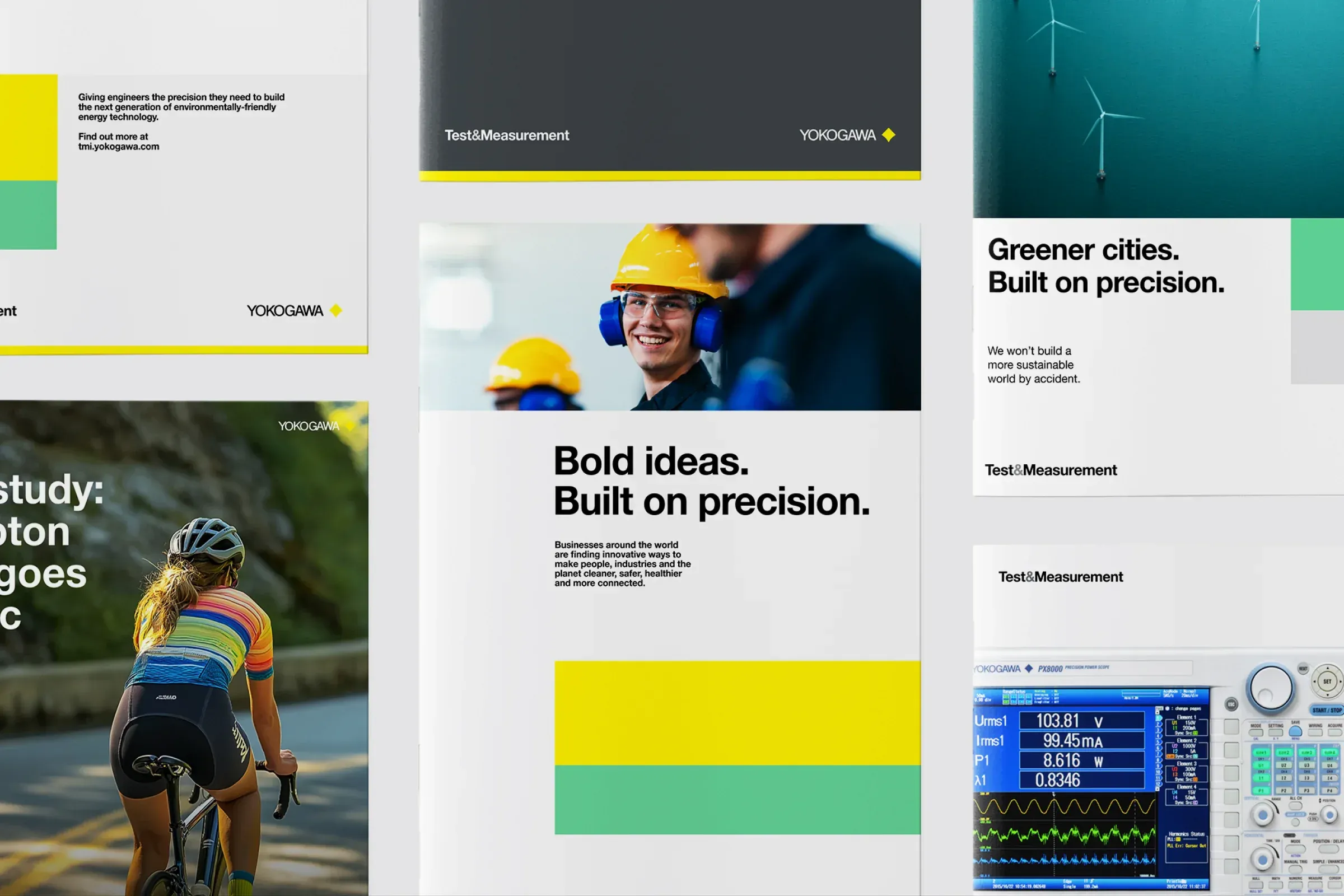
Yokogawa Test & Measurement brochures and adverts laid out together, including covers reading Bold ideas. Built on precision. and Greener cities. Built on precision.

What quantitative surveys can reveal

Quantitative surveys gather responses at scale to identify patterns in attitudes, confidence and reported business outcomes. For bold design, they can test whether marketers see audience engagement as becoming harder, whether investment is adequate and whether decision-makers view creative risk differently. In one survey of 150 B2B marketers, nearly three-quarters agreed that engaging B2B audiences had become harder over the previous 12 months. The findings also showed a marked difference by seniority: fewer CMOs shared that view than directors and managers. A survey can therefore move a discussion beyond individual opinions by showing where agreement exists, where views diverge and which concerns may be preventing more ambitious creative decisions.

Sources: How to Inspire Decision-Makers to Be Bold, Why bold design is good business

Use quantitative research alongside context

A quantitative survey is most useful when it addresses a defined strategic question and is interpreted with other forms of research. Yokogawa used stakeholder interviews, a global quantitative survey across four markets, competitor research and desk research to test whether its Precision Making platform could credibly extend into sustainability. This combination identified that customers wanted a partner with a clear sustainability vision, while showing that precision was already capable of carrying that meaning. The survey contributed scale and comparative evidence, while interviews and wider market research provided context for the result. For bold design, the same principle helps distinguish a broad attitude from the reasons behind it and from the competitive environment in which a brand needs to stand out.

Sources: Research and insights

Interpret boldness as a business decision

Research on bold design should account for the organisational conditions surrounding creative choices. Boldness does not have to mean being controversial. It can mean telling a brand story in a memorable way that connects with people. Yet safe decision-making can become the default when budget holders view new approaches as a risk, particularly when marketers are trying to reach audiences overwhelmed by online messages. Survey results can reveal these pressures, but they should not be treated as an instruction to pursue boldness for its own sake. The practical value lies in identifying whether a brand has a clear audience challenge, whether decision-makers share the diagnosis and whether the organisation is prepared to invest in a consistent creative experience.

Sources: Why bold design is good business, How to Inspire Decision-Makers to Be Bold

Stats

FAQs

Why do decision-makers avoid bold ideas?

Decision-makers may avoid bold ideas because unfamiliar approaches can be viewed as a risk, especially by budget holders. In difficult conditions, organisations can default to safe decisions even when repeating familiar activity fails to engage the audience they want to reach.

Why do companies stop coming up with new ideas?

Companies can stop generating new ideas when imagination is not a priority and resistance to change takes hold. More imaginative businesses make time and resources available for creativity, explore emerging scenarios and create conditions in which people feel safe sharing ideas.

What matters most when creative decisions face time pressure?

The available findings do not identify one factor as most important under time pressure. They do indicate that organisations should avoid treating safe decisions as the automatic response to difficult conditions, and should stay focused on whether creative work can engage the intended audience.

How do I plan a quantitative survey on bold design?

Plan the survey around a clear creative decision, relevant respondent groups and interpretation that includes the wider market context.

  1. Define the decision

    Start by defining the business or brand question that bold design needs to answer. Focus the survey on attitudes and barriers that can inform that decision, such as audience engagement, investment or perceived creative risk.

  2. Choose relevant respondent groups

    Include respondents whose roles and perspectives are relevant to the decision. Compare groups where appropriate, because seniority and discipline can produce substantially different views of the same marketing challenge.

  3. Interpret results in context

    Read survey findings alongside qualitative, competitor and desk research. This helps connect broad response patterns to the audience, market and brand meaning that shape a creative decision.