How do I make an event booth useful for judging complex technology?

Make the booth a practical route to understanding, not a layer of spectacle. Give visitors a clear reason to engage, let them explore the value at an appropriate level of detail, and ensure experts can answer technical questions. Measure the quality of the interaction and the follow-up it creates, not just footfall.

Design the experience around a clear product story

A complex technology booth needs to help visitors grasp why the offer matters before asking them to absorb technical detail. Start by reducing the proposition to the customer problem, the relevant outcome and the distinctive role of the technology. This does not mean removing sophistication. It means creating an accessible entry point that gives people a reason to explore further.

For G42 at GITEX 2024, The Intelligence Grid was represented as a 3D navigable city. The experience showed visitors how G42 and its portfolio companies were contributing to AI as a super-utility. The approach gave people a way to explore a broad, technical proposition through a coherent visual model rather than a collection of isolated claims. A booth experience is useful when its format makes the product story easier to investigate and discuss.

Sources: We’re creating new experiences with AI – but we still need imagination, A new chapter – and a new Frameworker

Give visitors control over depth and interaction

Complex B2B audiences are rarely one audience. Technical specialists may need detail, while commercial decision-makers may first want to understand relevance, business value and potential fit. A useful event experience should allow both groups to progress without forcing everyone through the same explanation.

Interactive content can provide this structure. Siemens Digital Industries Software used accessible entry points organised around campaign themes, then allowed users to choose between detailed technical papers and executive summaries. This layered approach preserved technical depth while giving users control over how far they went. At an event, the same principle can combine a concise explanation, self-guided exploration and an expert-led conversation. The role of interaction is not to entertain for its own sake, but to help visitors test relevance and decide what they need to know next.

Sources: Siemens: Bringing New Dimensions to White Papers, Humanising B2B and leading with empathy

Use games only when they demonstrate the proposition

Gamification can be credible when the activity directly demonstrates how a product or service helps its users. It becomes less useful when the game is disconnected from the proposition, replaces explanation or gives visitors no meaningful way to continue their evaluation.

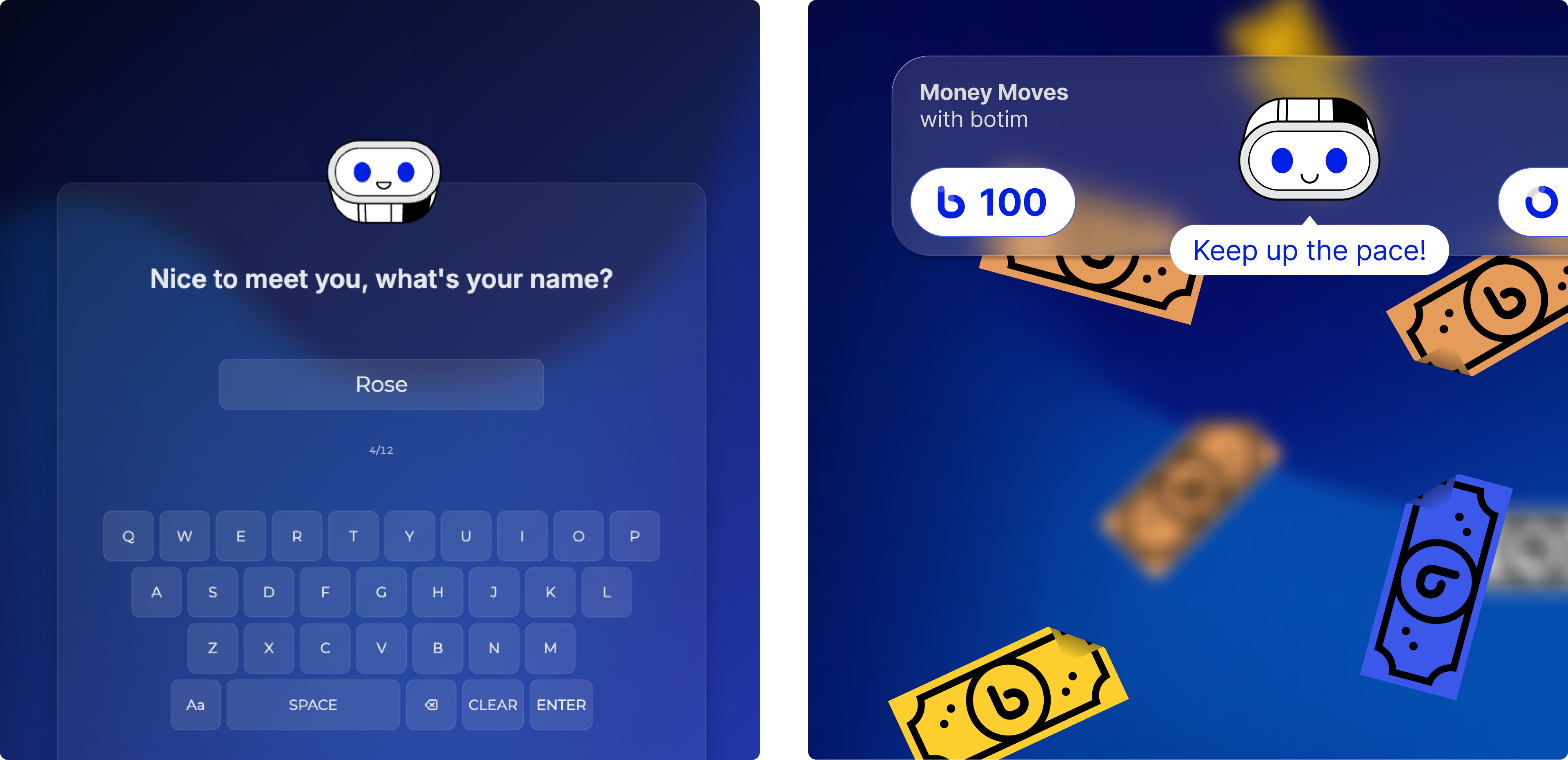
For botim money at GITEX GLOBAL, three touch-screen games were designed to show how the app enables people to earn, grow and manage money. The format was intended to let passers-by experience the story first-hand, rather than simply receive a message. The reported result was sustained attention to the product story, not just participation. For unfamiliar technology, the test is straightforward: can a visitor explain the value they encountered after taking part? If not, the interaction may be attracting attention without improving understanding.

Sources: Why it pays to play in B2B

Connect engagement data to useful sales conversations

A booth should create information that helps the next conversation, not simply record attendance. Interactive tools can provide a value exchange: visitors receive a useful result, recommendation or personalised view, while the organiser learns about their needs, priorities and level of interest.

Calculators, assessors and configurators can each support this exchange. A calculator can produce an answer from business inputs, an assessor can return a report based on targeted questions, and a configurator can let people explore a tailored product or service. Hiscox used a cyber exposure calculator to help organisations understand cyber risk and the monetary value of their exposure, while gaining a security profile of prospective customers. At an event, the same logic can turn participation into a more informed follow-up, provided visitors receive something relevant in return.

Sources: Everyone’s a winner: exchanging value in B2B marketing

Stats

Event Marketer reported that 66% of exhibitors considered onsite engagement their most important event metric.

Event Marketer

FAQs

What makes a technology booth experience credible to buyers?

A technology booth experience is credible when it helps visitors understand the proposition without concealing the technical substance. Provide a clear value story, relevant ways to explore the offer and access to people who can answer detailed questions. An activity should demonstrate the product value rather than operate as a disconnected attraction.

What should visitors be able to test at a technology event?

Visitors should be able to test the part of the proposition that helps them judge relevance to their own needs. This may be a scenario, a personalised assessment, a configuration choice or a practical demonstration of how the technology creates value. The interaction should return something useful to the visitor, rather than only collecting their information.

What do self-guided buyers need from a technology booth?

Self-guided buyers need an accessible starting point and the freedom to choose how much detail to explore. Layered content can offer a quick explanation for business audiences while retaining technical material for specialists. Clear routes into deeper content help visitors investigate at their own pace without reducing a complex offer to vague claims.

What helps buyers judge whether technology fits their organisation?

Buyers can judge fit more effectively when the experience connects the technology to a real organisational challenge and gives them a tailored result or route to expert discussion. Assessors, calculators and configurators can turn generic claims into a more specific view of needs, exposure or possible options. The resulting information can also make later sales conversations more relevant.

Which event measures show lead quality after an event?

Lead quality is better indicated by the information a visitor shares, how they interact with the experience and whether that information supports a relevant follow-up. Track the choices, inputs and completed outcomes that reveal a prospect's challenge or interest, then connect them to subsequent conversations. Footfall alone cannot show whether an interaction created a useful commercial opportunity.

How do I plan a hands-on product demonstration for an event?

Plan the demonstration as a short, layered experience that helps visitors understand value, explore relevance and reach the right expert.

  1. Define the value to demonstrate

    Identify the customer problem, the outcome the product enables and the one point visitors should remember. Express the proposition in clear language before deciding on screens, games or physical formats. Keep technical detail available, but do not make it the only entry point.

  2. Create a practical interaction

    Build an activity that lets visitors explore a scenario, answer questions, make choices or receive a useful result. Make sure the interaction reveals how the product works or why it matters. Avoid mechanics that are entertaining but unrelated to the proposition.

  3. Plan the next level of conversation

    Give visitors a route from self-guided exploration to deeper content or a subject-matter expert. Capture only information that helps provide a more relevant follow-up. Review interaction patterns after the event to improve both the experience and later conversations.