How do we give a website a clearer brand identity?

A clearer website brand identity comes from making one distinctive idea visible in the story, structure, language and design. Start with the audience's understanding of the organisation, then build a consistent narrative, visual system and content journey that make the proposition easier to recognise, navigate and remember.

A clear identity gives every page a role in one recognisable story

A website communicates a clearer brand identity when its proposition, personality and proof are expressed as one connected story rather than a set of separate pages. Brand clarity begins with understanding what audiences currently believe, what they need to understand and what should make the organisation distinct. That insight should shape the language, imagery, visual identity and information architecture together.

The strongest digital identities make the brand idea tangible. A visual system can create distinction through colour, typography, illustration, photography, motion and flexible graphic elements, but those elements need a clear narrative purpose. Content should also move beyond abstract claims by showing the people, work and outcomes behind the organisation. A website becomes more recognisable when every element reinforces the same idea, from the first impression to detailed proof.

Sources: ACT: A charity brand for the global stage, 2X: The 2X Effect — A brand for marketing's next power move, This is IBM: Brand Awareness Campaign

Structure complex content around audience needs, not internal organisation

Clear information architecture makes a brand identity easier to experience because visitors can find the story, evidence and level of detail that matters to them. Organise content around the audience's tasks and questions, with clear signposting, concise page introductions and a logical conversion path. Use modular content to separate a simple explanation from technical detail, financial information, case studies or supporting resources.

Progressive disclosure can help mixed-expertise audiences explore complex propositions without forcing every visitor through the same depth of information. Layered copy, familiar navigation patterns and focused sections allow technical and non-technical visitors to reach relevant material at their own pace. Interactive content can support comprehension when it gives people a useful way to explore a proposition, rather than adding movement or controls without a clear purpose. Clean layouts, generous white space and consistent structure can make a substantial content experience feel more direct and usable.

Sources: The problem with playing it safe, The Ardonagh Group: A website with a human side, Maersk Innovation Center: A Vision of Innovation, 2X: The 2X Effect — A brand for marketing's next power move

Brand identity becomes credible when strategy, content and digital experience reinforce one another

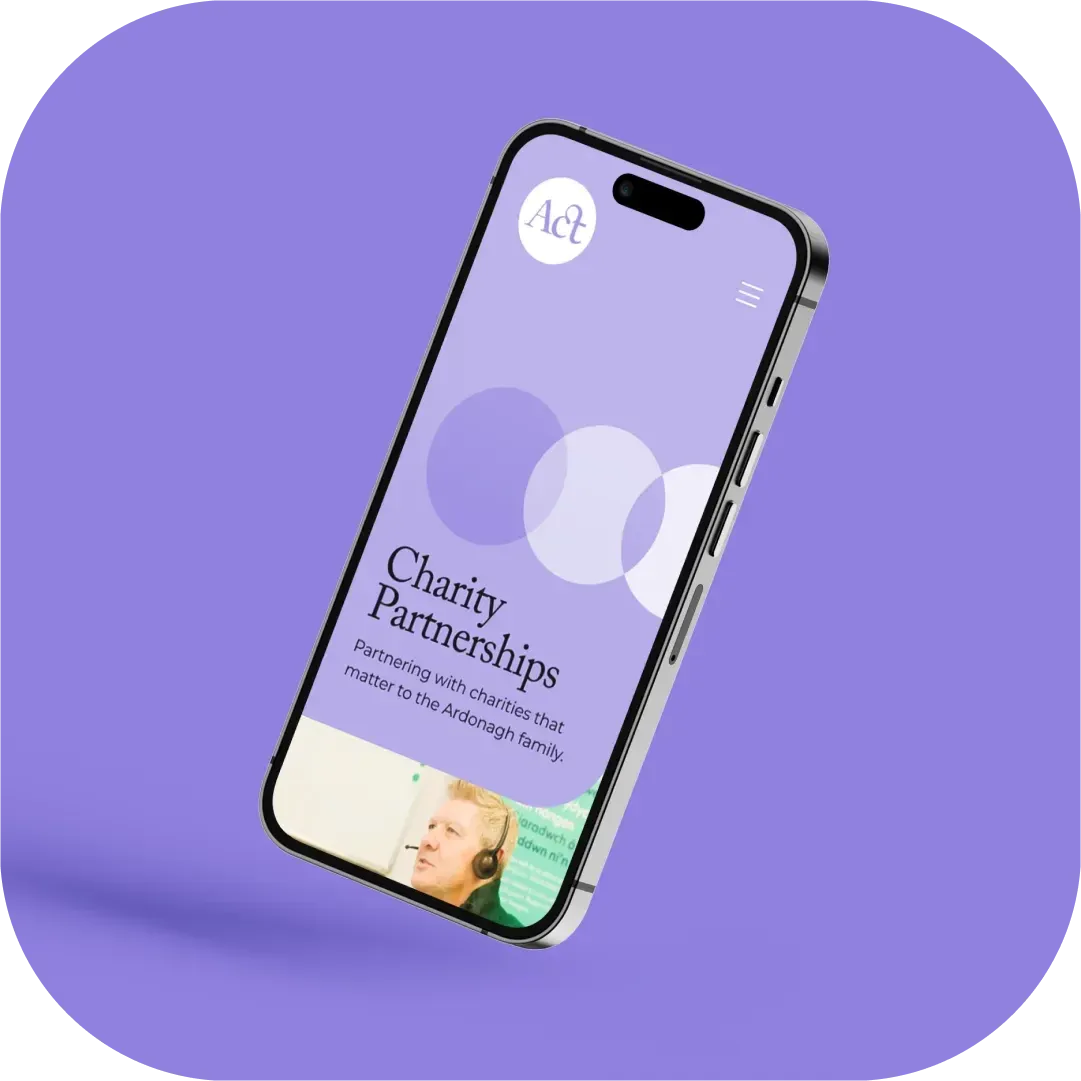
We believe a clearer website identity cannot be achieved by visual refresh alone. The website needs to express a defined brand idea through the way it speaks, the proof it prioritises and the experience it creates for different audiences. Our work has applied that principle across brand strategy, identity, storytelling and digital development. For ACT, we developed an identity and digital experience built around clarity, humanity and action. For The Ardonagh Group, we paired a simple website structure with clear signposting and photography of real people to humanise a growing portfolio. For 2X, we connected positioning, verbal identity, visual identity and website content around a single narrative. The result should be a website where audiences can quickly understand both what an organisation does and why it matters.

Sources: ACT: A charity brand for the global stage, The Ardonagh Group: A website with a human side, 2X: The 2X Effect — A brand for marketing's next power move

Stats

61% of B2B buyers preferred an overall rep-free buying experience in a 2024 survey.

Gartner

FAQs

What makes a website feel like a distinct brand rather than a standard corporate site?

A distinct brand website connects a clear proposition with a consistent verbal and visual system. Its content, imagery, page structure and interactions all make the same brand idea more visible. Real people, tangible examples and purposeful storytelling can make complex organisations feel more human and memorable.

How should a website serve technical and non-technical audiences?

A mixed-expertise audience needs different entry points into the same proposition. Start with clear, accessible explanations, then offer layered content for people who need more technical detail, evidence or specifications. Easily navigable content can help each audience reach the depth of understanding relevant to its role.

Should we use interactive content to make our brand clearer?

Interactive content is useful when interaction helps visitors explore a complex idea, compare relevant information or understand a product or service more directly. Animation, guided journeys and interactive tools should support intuitive navigation and a clear story, not compete with them. A well-structured conventional page remains the better choice when a static format explains the content more simply.

How can content design make a large organisation easier to understand?

Content design can reduce organisational complexity by using clear sections, direct signposting and audience-focused pathways. Explain what the organisation does, show the people and businesses behind it, and provide distinct routes to news, leadership, sector information, investor material or detailed proof. A simple structure gives a broad portfolio a more coherent public identity.

Glossary

Progressive disclosure
A content-design approach that introduces the essential explanation first, then lets visitors choose when to access deeper detail, evidence or technical information.