How do we match our brand voice to our visual identity?

A coherent brand voice and visual identity come from one shared brand idea, expressed through complementary language, design and behaviour. Build the verbal and visual system together, test whether each element communicates the same promise, then give teams practical assets and rules that preserve distinction across every customer and employee touchpoint.

One brand idea should guide words, design and behaviour

Brand coherence starts with a shared idea that gives corporate identity, message hierarchy and distinctive brand assets a common purpose. Brand voice should express the same character, priorities and promise that audiences see in colour, typography, imagery, motion and layout. A restrained visual identity needs language with comparable discipline, while a bold, energetic design needs copy that can carry the same confidence without becoming noisy.

The goal is not to make every element identical. Verbal and visual expression should complement one another, with either words or design stepping back when the other needs space. A clear brand platform can connect positioning, narrative and creative choices, helping teams recognise whether a new message, campaign or asset belongs to the same organisation. Consistency matters because the brand is experienced through the full pattern of communications and interactions, not through a logo or a tone-of-voice document alone.

Sources: No creator is an island, The Prompt: Being known is no longer enough in an AI world, Strategy is complex, but winning brands keep it simple

Build verbal and visual expression together, then make it usable

A matched brand voice and visual identity emerge through an iterative partnership between writers and designers, rather than a sequence in which one discipline merely decorates the other. Start with stakeholder insight and the brand idea, then develop language, imagery, graphic devices and content formats in parallel. Each creative decision should make the intended meaning more recognisable, whether the brand needs to feel more human, more authoritative, more innovative or more direct.

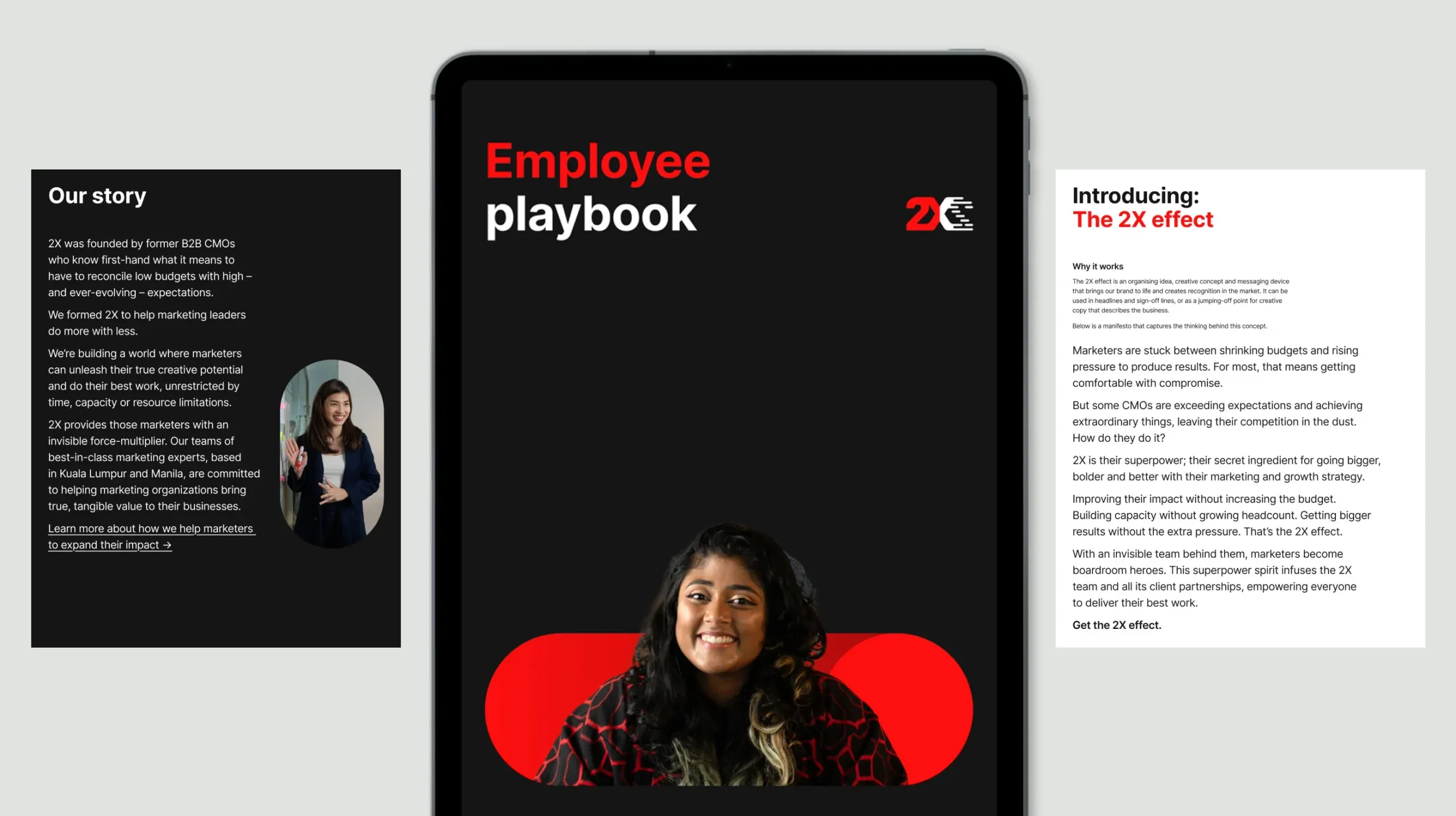
Test the system in real customer touchpoints, including websites, sales materials, campaigns, social content and internal communications. A new brand identity stands out when its visual cues and language are both distinctive and consistently associated with the same proposition. Give teams templates, examples and reusable assets so local markets and business units can adapt communications without losing the core message. Internal playbooks and social templates can help a system scale beyond its initial launch.

Sources: No creator is an island, 2X: The 2X Effect — A brand for marketing's next power move, WellSaid: Shaping the voice of an ethical AI leader

Brand voice becomes credible when design and language are made from the same strategic idea

We believe brand voice and visual identity should be developed as one creative system, not handed between separate teams as a finished brief. The strongest work gives writers and designers room to shape the central idea together, so the language, imagery and graphic choices make the same promise in different ways. We have applied that approach for Tata Technologies, pairing graphic patterns, vibrant colour and human-led photography with language focused on the real-world impact of engineering. For 2X, we carried one narrative from brand platform to positioning, logo trail lines, messaging and employee playbooks. When choosing a partner, look for strategic, verbal and visual capability that can connect the brand idea to practical assets used across channels and teams.

Sources: No creator is an island, 2X: The 2X Effect — A brand for marketing's next power move

FAQs

How can we tell whether our brand voice and visual identity are out of alignment?

Misalignment appears when copy, design and customer experiences communicate conflicting levels of confidence, personality or value. An understated visual aesthetic paired with busy, flowery language is one clear example. Review representative website pages, sales materials, campaigns and internal communications against the intended brand idea to identify where the system sends mixed signals.

How do we make a new brand identity stand out?

A new brand identity stands out when distinctive visual cues and verbal choices are tied to a focused proposition that audiences can recognise and remember. Build the identity around a single creative hook, then express that idea through language, design, content and activation assets. Consistency should reinforce a recognisable meaning rather than flatten every communication into the same execution.

Should writers or designers lead a brand identity project?

Writers and designers should develop the identity in partnership from the beginning. A stakeholder insight may inspire the verbal identity, or a visual direction may reveal the right language, so neither discipline should be limited to responding to the other's finished work. Iteration between both teams helps create a balanced expression of the brand idea.

How do we keep brand voice consistent across business units and channels?

Brand consistency needs practical assets that help teams apply the shared idea in their own communications. Use reusable templates, examples and playbooks for common touchpoints, while allowing enough flexibility for relevant local or audience-specific expression. The underlying narrative, visual language and message priorities should remain connected across the system.