What should a survey ask to show why leaders avoid bold design?

A survey should examine leaders' attitudes to investment, creative risk, audience engagement and the business impact of safe decision-making. It can also compare views across seniority and disciplines to identify where confidence or resistance differs. The findings can show whether low investment and cautious choices are limiting marketing effectiveness.

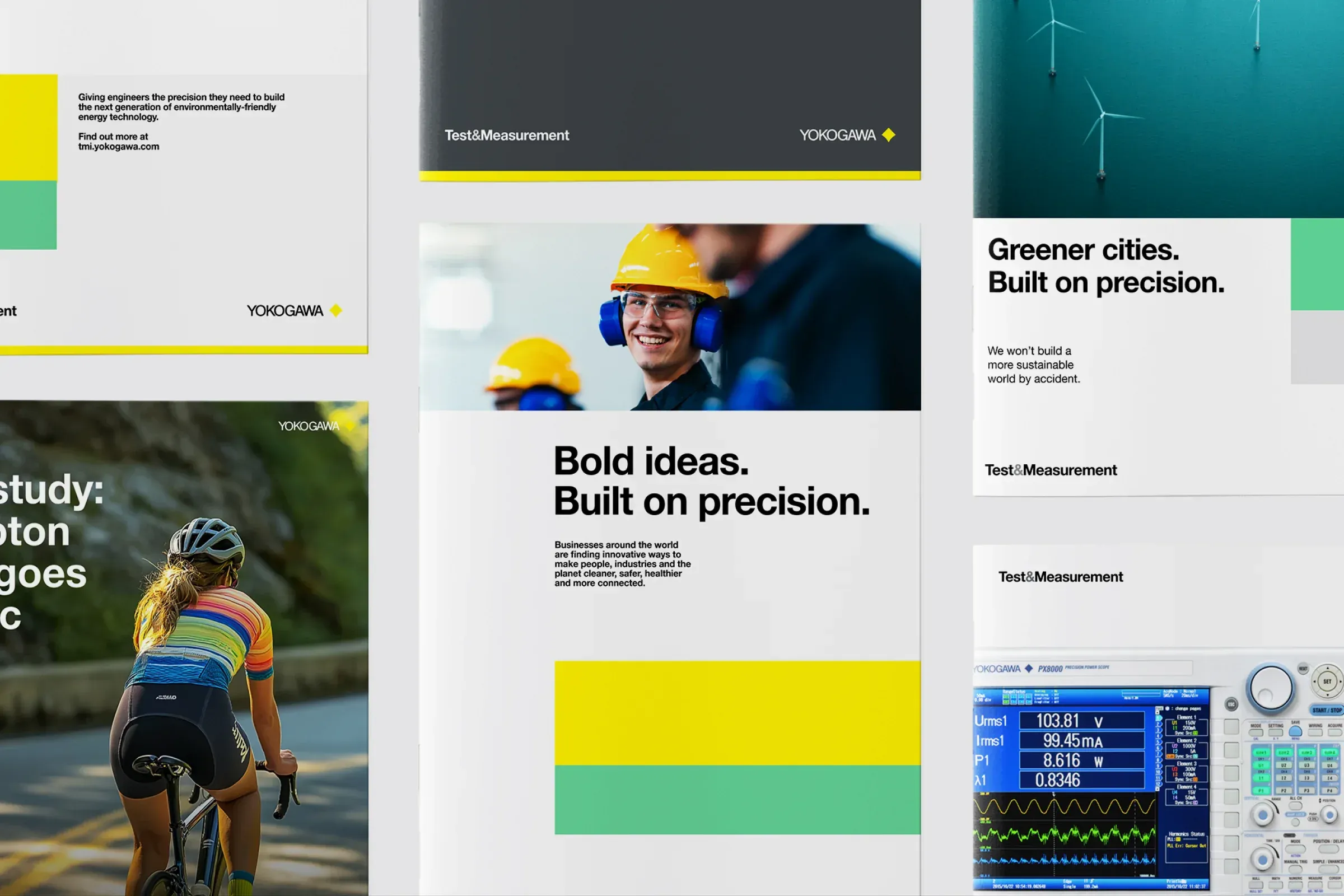
Yokogawa Test & Measurement brochures and adverts laid out together, including covers reading Bold ideas. Built on precision. and Greener cities. Built on precision.

Use quantitative surveys to measure attitudes and patterns

Quantitative surveys gather structured responses from a defined group so that attitudes, priorities and reported outcomes can be compared. For bold design, useful questions focus on whether marketers have sufficient investment, whether underinvestment affects their effectiveness, and whether engaging B2B audiences has become more difficult. A survey can also reveal differences between groups. In research with B2B marketers, CMOs were less likely than other directors and managers to say that capturing customer attention had become harder. This matters because a single overall result can hide disagreement between the people setting strategy and the people responsible for delivering it. Survey findings should therefore connect views on creative boldness with practical issues such as budgets, engagement and decision-making.

Sources: Why bold design is good business, How to Inspire Decision-Makers to Be Bold

Test the business case, not just preferences

A useful survey about bold design should test the conditions that shape leaders' choices. Ask whether respondents see conservative content as a lower-risk option, whether budget-holders support trying new approaches, and whether repeated safe decisions are helping brands engage their intended audiences. Questions can also connect investment with perceived marketing effectiveness, rather than treating design as a matter of taste alone. The available research indicates that many B2B marketers report limited marketing budgets and believe that lack of investment affects their effectiveness. It also describes safe decision-making as a common response in difficult conditions, particularly when board-level budget-holders are unconvinced about change. These measures can identify both the perceived barriers to boldness and the organisational decisions behind them.

Sources: Why bold design is good business, How to Inspire Decision-Makers to Be Bold

Combine survey findings with the decision context

A quantitative survey is most useful when it answers a focused strategic question and is interpreted alongside other forms of research. For Yokogawa, the work included 24 stakeholder interviews, a global quantitative survey across four markets, competitor research and desk research. Together, these inputs examined whether the existing Precision Making platform could credibly extend to sustainability. The research found that customers wanted a partner with a clear sustainability vision and that precision could carry that meaning. This illustrates how survey data can quantify market views while interviews and contextual research clarify what those views mean for a brand proposition. For bold design, the same principle helps separate a reported preference for safety from the commercial or organisational reasons that sustain it.

Sources: Research and insights

Stats

FAQs

What business results can a survey link to bold design?

A survey can link attitudes to bold design with reported marketing effectiveness, audience engagement, investment levels and confidence in taking creative risks. It can also compare those responses with broader indicators such as resilience, opportunity readiness, revenue growth and performance against rivals when the survey measures those outcomes. Survey results describe reported relationships and perceptions, so they should be interpreted alongside the wider business context.

Why do decision-makers choose safe ideas over imaginative ones?

Decision-makers may choose safe ideas because new approaches are viewed as a risk, especially when budget-holders are not convinced of the need for change. In difficult conditions, organisations can default to repeating familiar choices even when those choices fail to engage the intended audience. Research on imagination also identifies resistance to change as a barrier when imaginative working is not a priority.

When is a survey the right way to test the value of bold design?

A survey is appropriate when an organisation needs to measure views at scale, compare groups and test whether attitudes to creative investment, risk and engagement follow a pattern. It is particularly useful when a strategic proposition needs validation across markets or audiences. It can be strengthened by stakeholder interviews, competitor research and desk research that explain the context behind the numbers.

How do I plan a survey about the business value of bold design?

Plan the survey around the decisions, attitudes and outcomes that determine whether bold design is supported in practice.

  1. Define the decision to test

    Start by identifying the business question behind the survey, such as whether limited investment or cautious decision-making is reducing marketing effectiveness. Frame questions around specific issues including budget, engagement, creative risk and support for change. This keeps the survey focused on decisions leaders can act on.

  2. Compare relevant groups

    Survey the people whose views shape or deliver creative decisions, then compare responses by seniority or discipline where relevant. Look for differences between strategic leaders and those closer to day-to-day marketing delivery. Group comparisons can reveal where confidence, caution or resistance is concentrated.

  3. Interpret results with context

    Use the survey findings alongside interviews and market research when a decision requires more than a numerical result. Quantitative responses can show the scale of an attitude, while other research can explain why it exists and what it means for a proposition. Present the combined insight in terms of the business decision it informs.