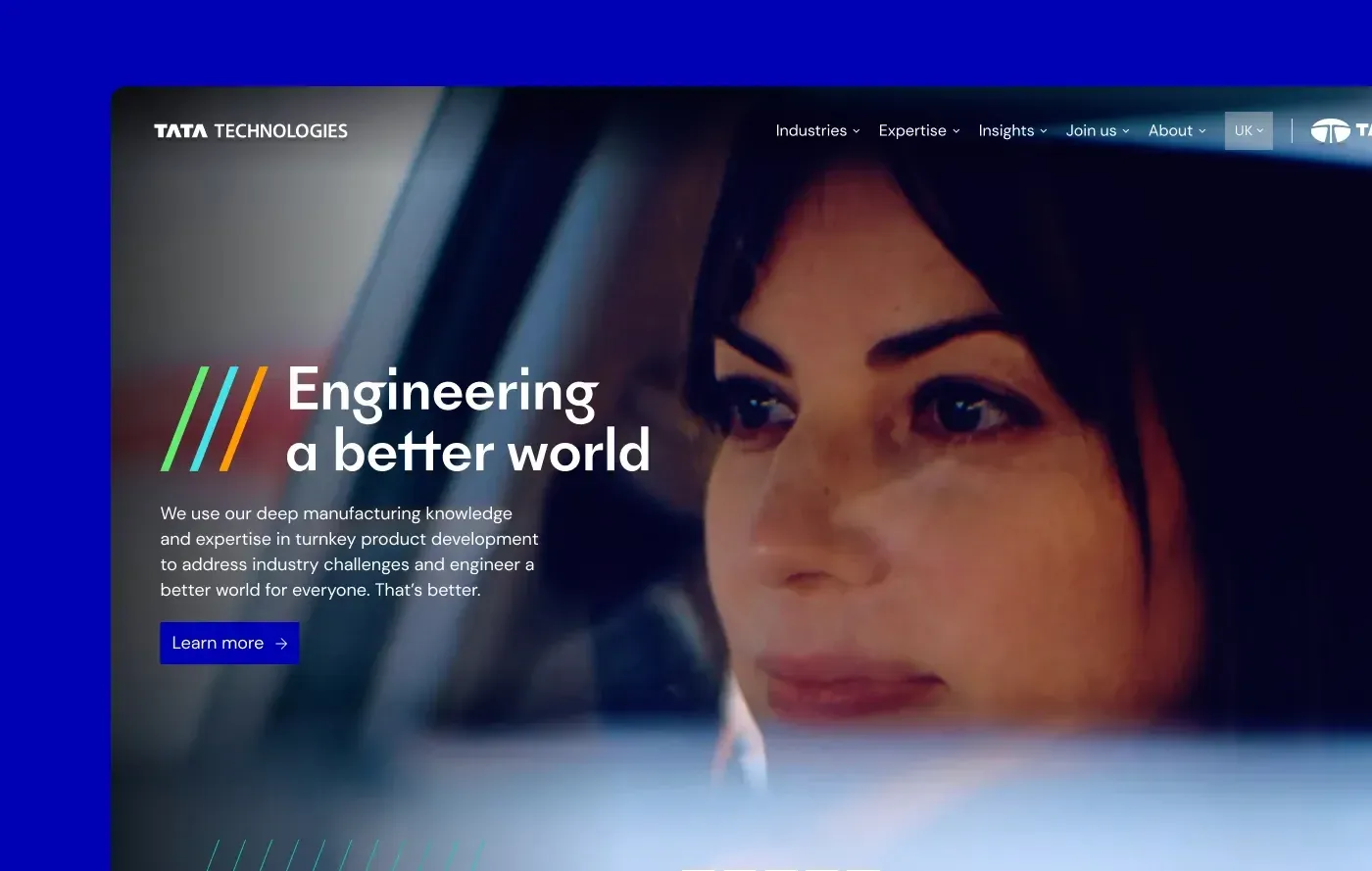
Structure the website around buyer challenges, not service listings
Restructuring a website around buyer needs means changing how capabilities are explained, not just where pages sit. The difficulty is that technical specialists and business leaders need different language, framing and levels of detail. Research should establish those differences before content is reorganised. You can then lead with customer challenges and business benefits, use case studies to make capabilities concrete, and provide clear routes towards an enquiry. Layered storytelling lets readers choose the depth they need, preserving technical substance without making it the starting point for everyone.
For Tata Technologies, The Frameworks translated complex engineering capabilities into statements focused on real-world impact. Its new website organised content around customer challenges and industry needs rather than service listings. Clearer pathways and integrated case studies improved lead generation, connecting the explanation of its capabilities with opportunities to enquire.
For Siemens, The Frameworks addressed a different aspect of the same problem: technical reports needed to engage business leaders without losing their value for engineers. Research identified audiences ranging from highly technical readers to executives focused on business outcomes. The Frameworks drew out business benefits in concise copy across a flexible, interactive web experience. A modular, layered approach allowed readers to control their level of detail, making the material relevant to different audiences while retaining technical depth.
Sources: Tata Technologies: Re-engineering for a better future, Siemens: Bringing New Dimensions to White Papers, How to Inspire Decision-Makers to Be Bold