How should video fit into an integrated B2B campaign?

Video should support a single campaign narrative, not operate as an isolated asset. Build a hero film around the central story, then create shorter and adapted pieces for external communications, internal audiences and sales enablement. Use documentary interviews, archive material, motion graphics and post-production selectively to make complex subjects clearer and more engaging.

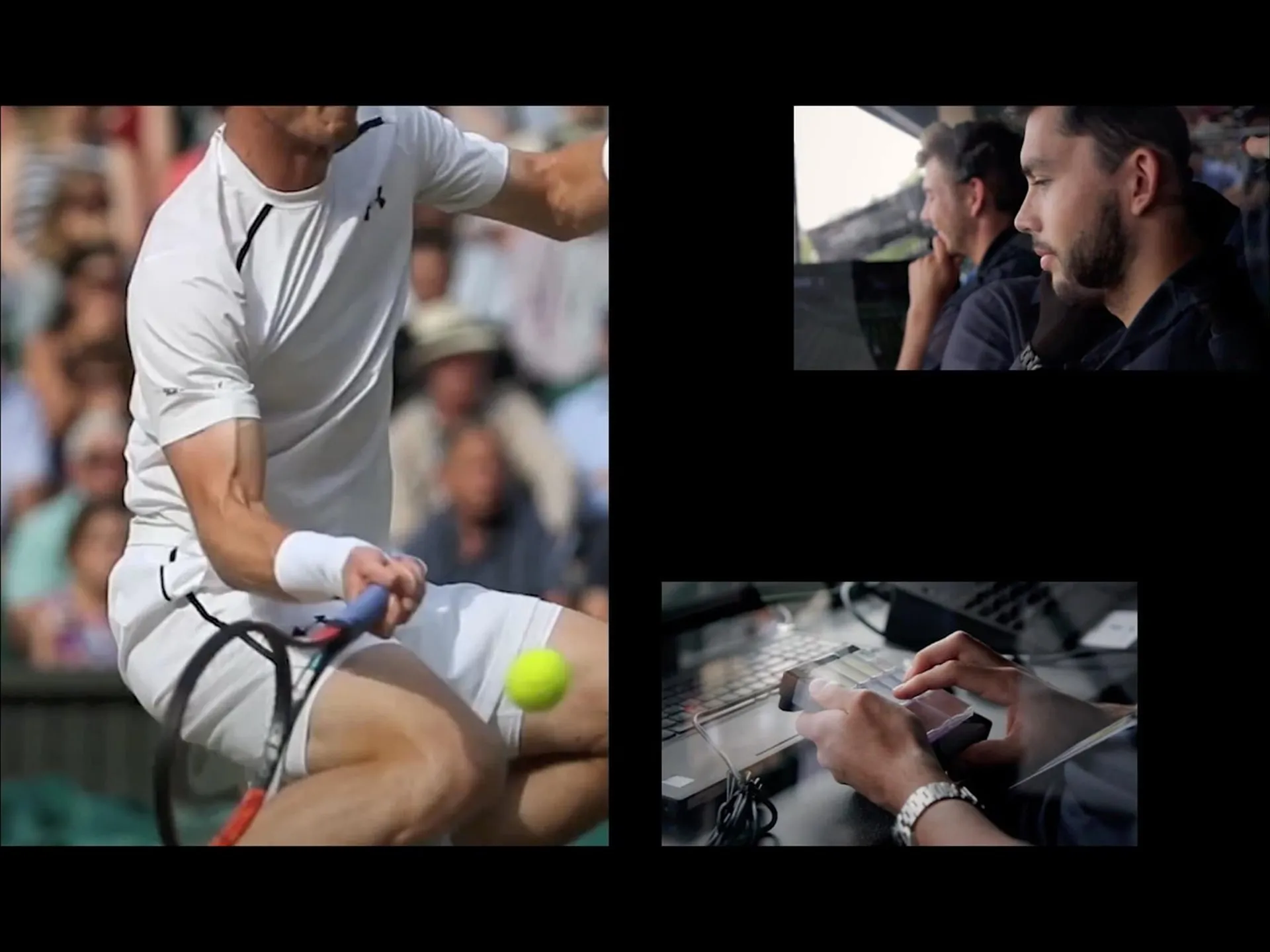
Triptych showing a tennis player in white swinging at a ball during a match on the left, an operator watching a screen in the top right, and close-up hands using a specialized controller near a laptop in the bottom right.

Make video part of the campaign narrative

The strongest role for video in a B2B campaign is to carry a clear story that connects the campaign's themes, people and proof points. A documentary-style hero film can provide that narrative centre, particularly when the story needs authentic voices from people close to the work. Shorter assets can then focus on individual aspects of the same story, giving different audiences a relevant entry point without losing the overarching message.

An integrated campaign can use video for internal and external communications as well as sales enablement. In one campaign, a hero documentary and five short-form films were developed around a technology partnership, using interviews and archive footage to explore different aspects of the same narrative. This approach gives teams a coherent suite of assets rather than a single film with limited reuse.

Sources: How we navigated lockdown to deliver a suite of video content for Wimbledon and IBM, Match point: how The Frameworks created an integrated Wimbledon and IBM campaign in two weeks

Choose the video format for the communication job

Different B2B stories call for different production approaches. Documentary-style video is useful when first-hand testimony and authentic voices are central to the message. Interview-led films can help explain the people, decisions and context behind a partnership, transformation or complex service. A short human-centred film can also give customer success material a more memorable format than a long written case study alone.

Motion graphics can be particularly useful for abstract, technology-driven or algorithm-based concepts. Kinetic text, character animation, 3D motion graphics and adapted stock imagery can add visual explanation where live footage cannot carry the full idea. The format should follow the communication need: use people and interviews for lived experience, graphics for difficult concepts, and a combination when the story needs both.

Sources: Match point: how The Frameworks created an integrated Wimbledon and IBM campaign in two weeks, Four creative lessons B2B designers can learn from B2C, How to Deliver Cracking Video Content During Lockdown

Set quality controls for remote and distributed production

Remote production can create useful interview-led content, but it needs editorial and post-production control. For discussion-focused video, appoint someone with authority to chair the conversation and manage its editorial direction. This helps contributors stay focused and creates material that can be shaped into a coherent film rather than a sequence of unstructured calls.

Post-production can improve the usability and consistency of remotely captured footage. Edits can remove repetition, pauses and microphone problems, while sound clean-up, colour grading, captions, branding, supporting imagery and different speaker views can make the finished piece more compelling. More technically demanding live formats require appropriate equipment, longer lead times and additional technicians to brief contributors and manage the production.

Sources: How to Deliver Cracking Video Content During Lockdown

Stats

In a 2025 B2B benchmark, 76% of B2B marketers reported using video and 61% expected video investment to increase in 2025.

Content Marketing Institute

Content Marketing Institute reported that 58% of B2B marketers considered video the content format producing the best results.

Content Marketing Institute

FAQs

What video content supports B2B campaigns?

A B2B campaign can use a hero documentary, short-form films, interview-led content, archive-led edits and motion graphics. A single campaign suite can serve external communications, internal audiences and sales enablement when each asset develops a different aspect of the same narrative. Motion graphics are particularly suited to abstract or technology-driven concepts.

How can remote interviews improve video quality?

Remote interviews improve when a capable chair directs the conversation and post-production addresses the limitations of the recording. Editing can remove pauses, repetition and microphone issues, while sound clean-up, colour grading, captions, branding and supporting imagery can strengthen the finished film. Multiple speaker layouts can also add visual variety to discussion-led content.

When should B2B video use motion graphics?

Use motion graphics when the subject is abstract, technology-driven or difficult to show through live footage alone. Text-focused animation, character animation, 3D graphics and adapted stock imagery can explain ideas visually and make a film feel more considered. Motion graphics can also be combined with live action when a story needs both human testimony and visual explanation.

How do I plan video for an integrated B2B campaign?

Build a connected set of video assets around one story, then adapt the production approach to the subject and delivery conditions.

  1. Define the central story

    Establish the campaign narrative before deciding on individual films. Use people closest to the work when authentic testimony is needed, especially for a documentary-style hero asset. Keep the story focused enough that each later asset can develop one aspect of it.

  2. Create a reusable asset suite

    Develop a hero film alongside shorter pieces that focus on distinct themes or audiences. Plan for external communications, internal communications and sales enablement where those uses are relevant. Use motion graphics where the story includes concepts that are difficult to show through interviews or live footage.

  3. Control the production finish

    Give discussion-led recordings clear editorial direction and a capable chair. Use post-production to remove technical distractions and improve sound, pacing, captions, branding and visual variety. Allow more time, equipment and technical support for live formats.