What must sustainability claims about a B2B offer show?

Sustainability claims about a B2B offer should show the work behind the message: what the offer does, how it supports customer progress and what evidence substantiates the claim. Credible positioning connects technical capability to practical outcomes, communicates limitations honestly and aligns the story with the organisation's actual commitments and services.

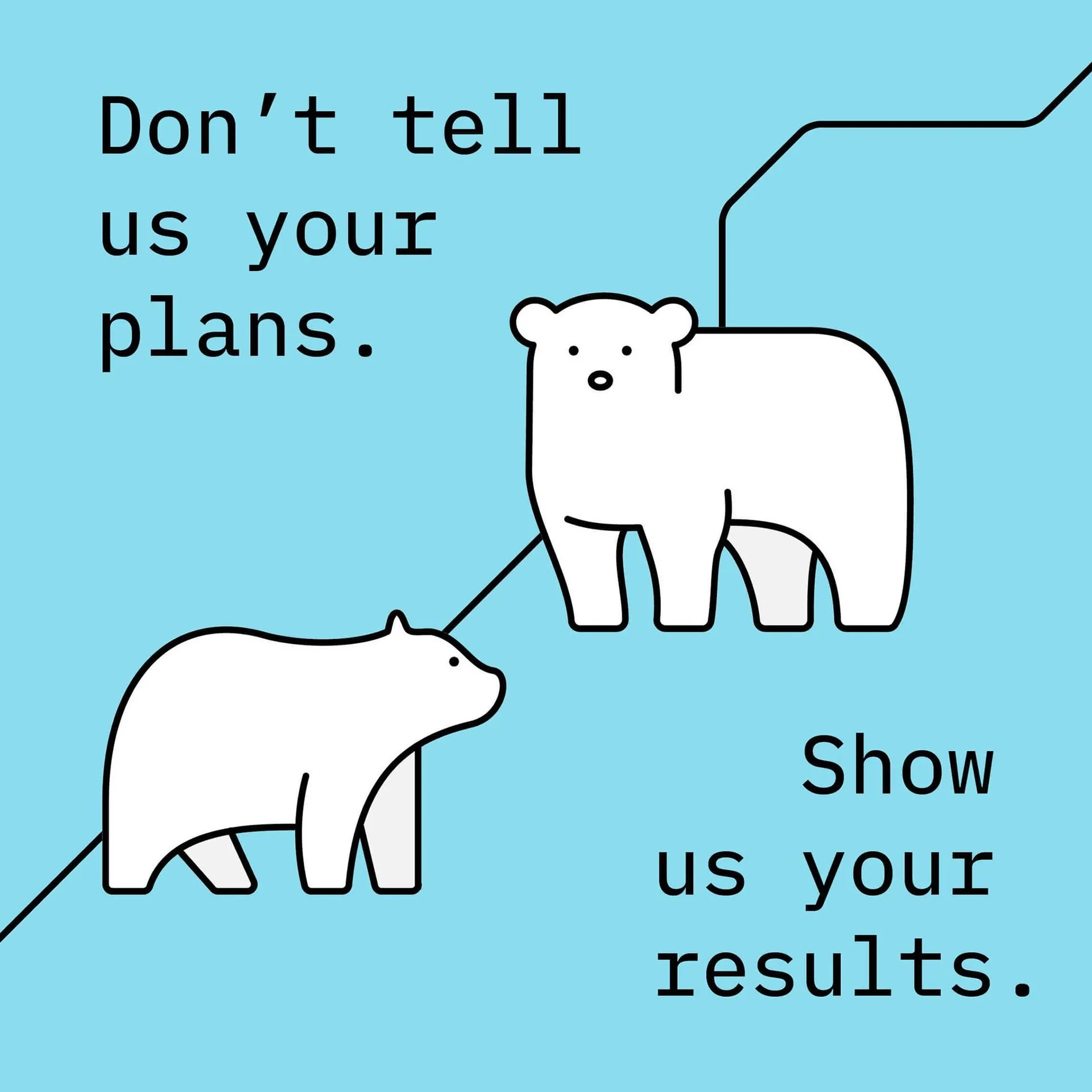
Illustration on a light blue background featuring two white cartoon bears along an ascending black line chart, accompanied by the text:

Show the work behind the sustainability claim

A credible sustainability claim starts with substance, not a polished narrative. It should explain the action being taken, the part of the offer it relates to and the outcome it is intended to support. Broad promises can leave audiences unable to distinguish real progress from storytelling without substance.

Sustainability communications are stronger when they combine business drivers, sustainability goals and marketing. They should make the challenging work visible, including what has been achieved, what remains difficult and what has been learned. This is particularly important in B2B, where customers need to understand how a product, service or technical capability relates to their own operational decisions.

Where a claim cannot be supported clearly, foundational education may be more useful than stretching the apparent benefit of a product. Clarity and honesty protect trust while leaving room for creative communication.

Sources: Credibility in ESG Means Showing Your Work, Faking bad: why marketers need to maintain standards in a post-truth world

Connect technical expertise to customer outcomes

Sustainability positioning is most credible when it grows from a real capability that customers already recognise. Yokogawa Test&Measurement extended its established Precision Making platform by connecting accurate, repeatable measurement to the work engineers and scientists do in energy production, diagnostics equipment and supply-chain waste reduction.

The resulting story did not treat sustainability as a separate corporate theme. It framed precision as a practical enabler: measurement helps quantify and prove progress, accurate information supports decisions and incremental improvements can contribute to wider impact. The campaign idea, "Built on precision", linked the company's tools, technology and people to changes its audiences were working to achieve.

This approach gives a B2B claim a clearer basis. Rather than asserting that a brand is sustainable, explain how a specific capability helps customers measure, manage or respond to a relevant challenge.

Sources: Yokogawa: Elevating sustainability – precisely, Research and insights

Align the claim before it reaches customers

A sustainability position cannot be sustained by marketing alone. Brand development is more authentic when it is rooted in the genuine experiences of employees and customers, rather than in empty statements. Involving people early also surfaces practical concerns about whether the organisation can deliver the story being developed.

This matters when a claim spans a product, service, commitment and customer experience. Different teams can hold different parts of the picture: marketing may communicate the offer, product teams may evolve it, customer-facing teams may explain it and leadership may set direction. Without conversation between those groups, a new narrative can feel disconnected from the reality that sales and service teams must represent.

Build alignment around what the organisation can demonstrate now, what needs further work and how the claim will be explained consistently. This creates a more durable basis for customer trust.

Sources: The inside story: why your people shouldn't be just passengers on your brand journey, Ready to reinvent? Challenge accepted.

Stats

A 2025 peer-reviewed study of 174 US industrial B2B buyers found that specific objective information and metrics were more effective than vague sustainability claims.

Justin R. Muñoz

FAQs

What makes a sustainability claim look like greenwashing?

A sustainability claim can look like greenwashing when it presents an attractive promise without showing the action, evidence or limitations behind it. Claims also lose credibility when they obscure negative outcomes, exaggerate a product benefit or use storytelling in place of substance.

How does sustainability improve a B2B offer for customers?

Sustainability improves a B2B offer when it helps customers address a practical challenge through the product, service or expertise they buy. For Yokogawa Test&Measurement, precision was connected to helping audiences measure progress, reduce waste and make informed decisions in work such as energy innovation and diagnostics.

What can a supplier claim before products meet sustainability goals?

A supplier can describe the work it is doing and the progress it can substantiate, rather than implying that an unfinished ambition has already been achieved. Honest communication can include challenges and failures as learning moments, alongside verified achievements and commitments.

What makes a future sustainability commitment credible?

A future sustainability commitment is more credible when it is accompanied by clear work underway, rather than a promise alone. Explain the actions, progress and learning behind the commitment so audiences can understand how the organisation intends to move from ambition to delivery.

Which sustainability trade-offs should a supplier disclose?

A supplier should disclose material limitations, difficult outcomes and gaps that could change how an audience understands a sustainability claim. Clear communication should not cover up negativity, and sustainability storytelling can include failures where they help customers understand the work and learning involved.

Who should approve sustainability claims before publication?

Sustainability claims should be reviewed by the people who understand the underlying work, the offer and the customer context, not by marketing in isolation. Involving employees and teams affected by the brand helps identify whether the claim reflects genuine experience and can be explained consistently.

How do I review sustainability claims before publishing?

Review each claim for strategic relevance, demonstrable substance and clear, honest communication before it reaches customers.

  1. Start with the real customer need

    Define the customer challenge the claim is meant to address before developing the message. Test whether the proposed statement explains a practical benefit of the offer, rather than attaching a generic sustainability theme to the brand.

  2. Check the substance

    Identify the work, capability or outcome that supports the claim and make sure the wording does not go beyond it. If the support is incomplete, explain the initiative more carefully or provide useful education instead of overstating the benefit.

  3. Test for clarity and honesty

    Review whether the claim communicates what audiences need to understand, including meaningful limitations or learning. Make sure the people responsible for delivering and explaining the offer can stand behind the message.