What makes an interactive B2B trade-show demo make an unfamiliar offer clear?

An interactive B2B trade-show demo works when participation reveals the offer's practical value rather than distracting from it. Start with a message that passers-by can grasp quickly, let them explore relevant challenges or outcomes, and provide deeper detail for technical audiences. Measure whether the experience produces useful information and follow-up conversations, not only traffic or dwell time.

Make the offer legible before making it interactive

The first job of an exhibition experience is to help visitors understand why the offer matters. Begin with the practical challenge the product addresses, rather than leading with abstract features or technical detail. A clear experience can then give visitors different routes into the proposition, with more depth available for people who have more time or expertise.

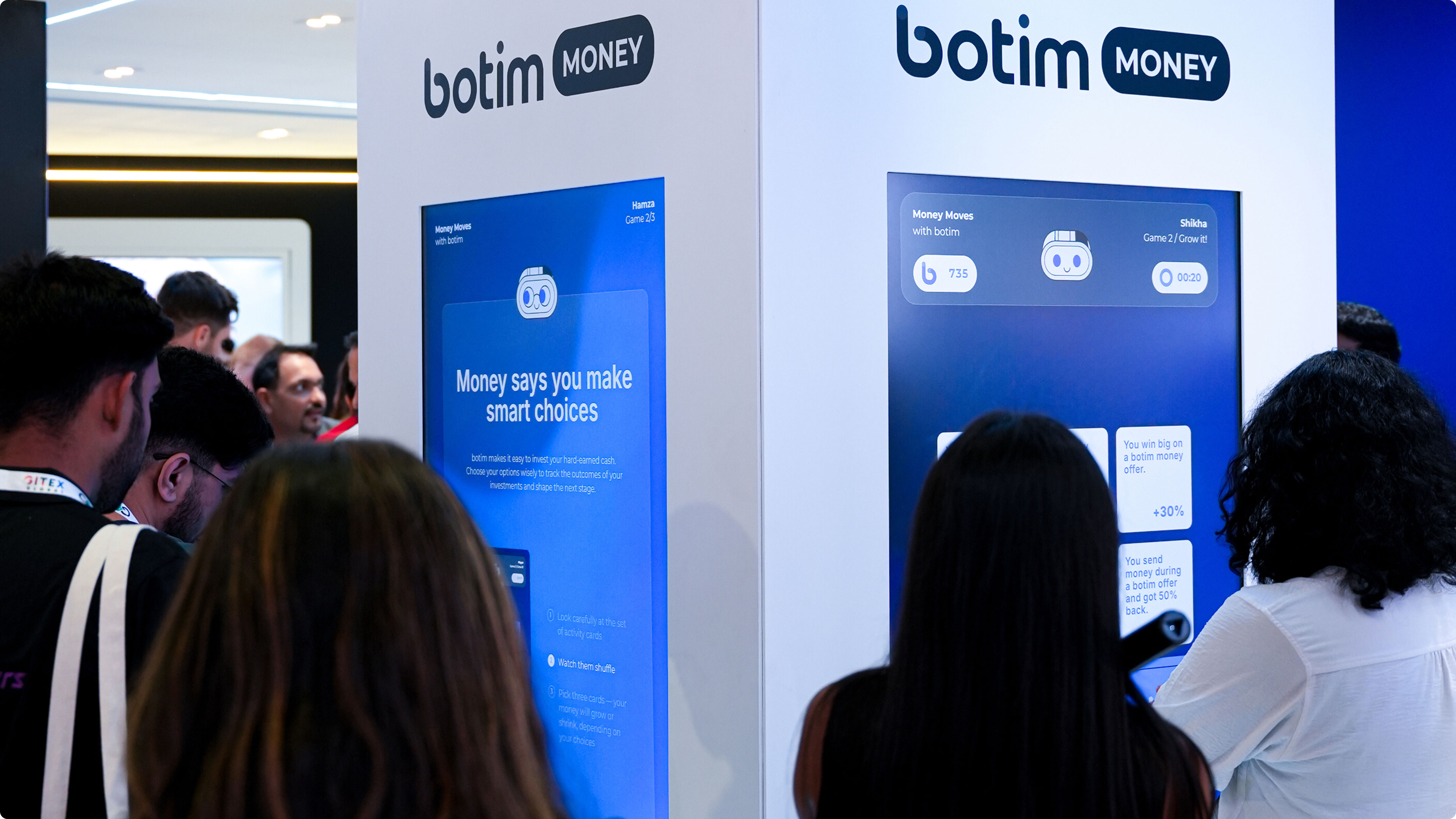
This approach is particularly important when the audience includes both technical and non-technical stakeholders. For a software vendor with a dense white paper, a more graphical experience translated key points into relatable practical challenges and offered layers of complexity for different audiences. At GITEX GLOBAL, botim money used three touchscreen games to show how people could earn, grow and manage money, making the story immediately accessible to passers-by while keeping their attention on the product value.

Sources: Humanising B2B and leading with empathy, Why it pays to play in B2B

Use interaction to demonstrate value, not create novelty

Interactivity is credible when the action itself helps a visitor experience, assess or personalise the value of the offer. A game, calculator, assessment or configurator should therefore have a clear connection to the product story and give the participant something useful in return. If the activity could be replaced by an unrelated game without changing the message, it is unlikely to improve understanding.

Interactive tools can also create a value exchange. Calculators can help prospects quantify a problem, assessors can produce a tailored report, and configurators can help them explore options relevant to their needs. In return, the organisation can learn from the information and choices participants provide. This makes interaction more than an attention device: it can create a useful basis for a more relevant sales conversation and future content.

Sources: Why it pays to play in B2B, Everyone’s a winner: exchanging value in B2B marketing

Design for different levels of technical confidence

An unfamiliar B2B offer may need to work for people with very different reasons for visiting the stand. Some will want a quick explanation of the proposition, while technical buyers may need more detail before they can judge relevance. A single fixed demonstration can make the experience either too shallow for specialists or too dense for everyone else.

Build the interaction around a clear core message, then let visitors choose how far they go. This can mean moving from a simple practical challenge to a more detailed explanation, asking questions that surface a participant's circumstances, or providing personalised recommendations. UST's NavigatorAI, for example, guided prospects through tailored questions and generated recommendations based on individual challenges. The principle for an exhibition is the same: give visitors a relevant route into the proposition, while retaining enough substance for informed discussion.

Sources: Humanising B2B and leading with empathy, UST NavigatorAI: Creating personalised experiences with generative AI

Judge the experience by what happens after participation

Booth traffic and dwell time can indicate attention, but they do not by themselves show that visitors understood the offer or became stronger prospects. Track participation alongside the information participants share, the questions they ask, the conversations that follow and the quality of any next action. This helps distinguish a busy activation from an experience that supports meaningful commercial follow-up.

Interactive experiences can produce useful signals when participants receive a relevant outcome in return. A cyber exposure calculator gave Hiscox users a clearer picture of their cyber risk while creating a security profile that could inform later conversations. Similarly, assessment tools can capture responses that help tailor future engagement. For an exhibition demo, the most useful measurement combines the visitor's ability to articulate the value with evidence that the interaction enabled a relevant next conversation.

Sources: Everyone’s a winner: exchanging value in B2B marketing, UST NavigatorAI: Creating personalised experiences with generative AI

Stats

UFI's December 2025 barometer found that 22% of respondents prioritised visitor participation through demonstrations, competitions or gamification, and another 22% prioritised interactive learning formats.

UFI

Forrester's Q1 2025 survey of more than 250 event decision-makers found overall event satisfaction fell 8% from 2024 to 2025.

Forrester

FAQs

When do game features distract from a trade-show message?

Game features distract when the activity does not directly reveal the product's value or practical relevance. They can also weaken the message when every visitor receives the same shallow experience, regardless of their expertise or available time. Build mechanics around the challenge the offer solves and provide routes to deeper explanation.

What should an exhibition stand measure beyond visitor numbers?

An exhibition stand should measure participation, time spent on the relevant task, information or responses shared, and the conversations and next actions that follow. Interactive tools can create useful audience data when visitors receive personalised answers, reports or recommendations in return. These signals are more useful than footfall alone for assessing whether the experience supported qualification and follow-up.

What makes a product demo lead to useful follow-up conversations?

A product demo is more likely to lead to useful follow-up when it gives a visitor a relevant answer to a real challenge and creates a basis for a tailored next discussion. Assessments, calculators and personalised recommendation tools can turn participation into information that helps shape later engagement. The demo should therefore connect the visitor's situation to a clear product value, rather than simply display features.

Where do consumer interactive demos fall short for unfamiliar B2B offers?

Consumer interactive demos can fall short when they rely on instant entertainment without helping visitors connect the activity to a complex business challenge. Unfamiliar B2B offers often need layered detail and a route from a simple practical problem to more technical explanation. An experience should accommodate differing levels of knowledge rather than assume a single audience motivation.

How do I test a trade-show demo message before the event?

Test whether the interaction makes the proposition understandable, relevant and worth discussing before committing to a full exhibition build.

  1. Define the core value

    Write the practical challenge the offer solves and the one value visitors should be able to explain after the demo. Keep this message distinct from feature lists or technical documentation. Identify which audiences need a quick overview and which will need more depth.

  2. Prototype the interaction

    Create a simple version of the experience that lets participants act on the product story rather than merely consume content. Include a clear route from the initial message to more detailed information. Make sure the interaction provides a useful outcome, such as an answer, recommendation or relevant discussion prompt.

  3. Check understanding and next actions

    Ask test participants to explain the offer, its value and what they would do next after using the demo. Record where the message is unclear, where the activity feels unrelated and what questions it produces. Refine the experience until participation supports a credible product conversation.