What should I test before committing to a new business model?

Test the assumptions that would make the new business model worth pursuing: the strategic problem, the proposed customer value, the practical constraints and the evidence required for a decision. Define clear hypotheses and tests, involve the people who will deliver the change, then use the results to prioritise or reject the option.

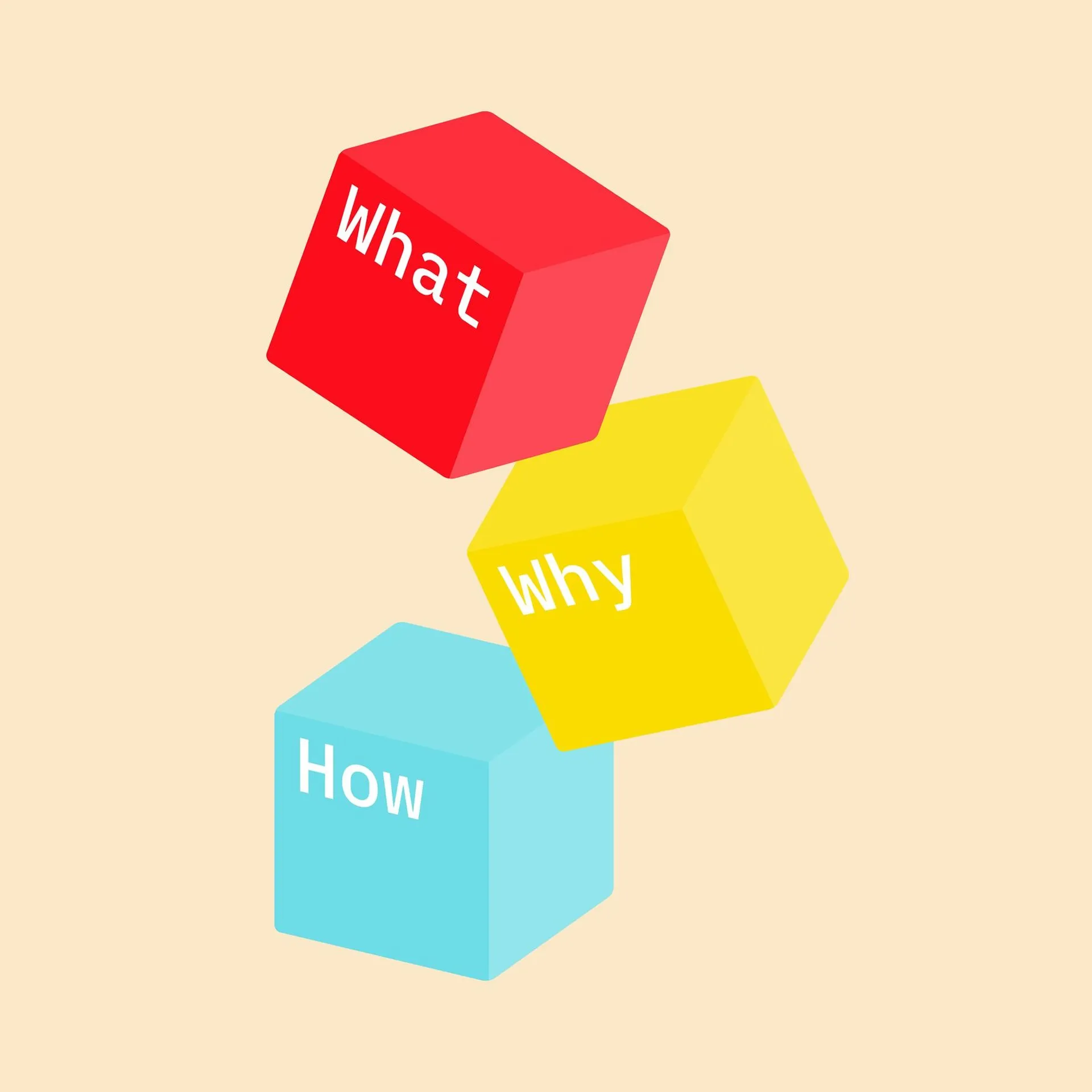
Three tilted, stacked cubes in red, yellow, and blue, each labeled with the words What, Why, and How in white text.

Turn strategic options into testable assumptions

Before committing capital, reduce a broad strategic option to the questions that determine whether it can work. Start with one clear strategic question, rather than a long list of loosely connected opportunities. From a shortlist of possibilities, frame the hypotheses, questions and tests needed to make an informed decision.

This approach was used with Carbon Tanzania, where a workshop initially explored answers to a single strategic question. As discussion progressed, participants recognised that they were addressing the wrong question. Reframing the challenge around protecting Carbon Tanzania's equity and legacy created a more productive basis for deciding what to do next. The practical lesson is to test the framing as well as the proposed solution. If the question is wrong, apparently rigorous research, financial modelling or customer work can still lead to the wrong commitment.

Sources: Carbon dating: the power of trust and relationships in driving business strategy

Use data and imagination together

Historical data, market research and financial analysis are useful inputs, but they may not reveal a credible new direction on their own. Use them to establish constraints, audience evidence and the current position, then create time-limited exploration to develop alternative possibilities. Begin with a clear objective, follow promising hypotheses, and stop exploration when it no longer produces meaningfully new insight.

Creative exploration should not operate separately from evidence. Qualitative and quantitative research, audience intelligence and other research can help refine ideas for impact. The purpose is not to choose between analytical planning and imagination. It is to make options clear enough to compare, identify what remains uncertain, and focus testing on the assumptions that could change the decision.

Sources: The importance of being curious, Ready to reinvent? Challenge accepted.

Create alignment through structured contribution

A new business model requires more than executive approval. Product, sales, marketing, finance, operations and technology teams will each see different constraints, customer signals and delivery implications. Bringing those perspectives into a structured process can reveal issues early, but participation needs a clear purpose: resolving a strategic question, choosing among options or defining what must be tested.

Cross-functional workshops can provide a focused setting for people to surface ideas and challenge assumptions. They work best when leaders encourage collaboration, protect time from distraction and reward shared contribution rather than individual ownership. This is not an argument for endless consensus meetings. It is a way to create enough shared understanding that teams can act on a chosen direction, rather than treating it as an external recommendation they do not understand.

Sources: Forget the lone genius: creativity is a team sport, Ready to reinvent? Challenge accepted.

Stats

A 2025 study of 246 design-thinking projects found that early experimentation improved innovation effectiveness and efficiency.

Technovation

A 2025 systematic review retained 10 papers representing 292 transformation cases and found broad, consistent evidence linking dialogic change practices with more successful transformation.

Australian Journal of Management

FAQs

What makes experimentation turn into busywork?

Experimentation becomes busywork when it is not tied to a clear strategic objective, hypothesis or decision. Set a defined period for exploration, identify what new information would matter, and synthesise the findings when further discovery no longer adds value. Research and data should help refine ideas, rather than become a substitute for choosing a direction.

What assumptions should scenario planning test?

Scenario planning should test the assumptions that make each strategic option credible, including the problem being solved, the conditions required for success and the factors that could invalidate the choice. Use alternative futures to expose what is being treated as certain, then turn the most important unknowns into focused questions or hypotheses. Keep the work anchored to a clear objective so exploration leads to a decision.

What turns stakeholder input into commitment during a transformation?

Stakeholder input becomes commitment when people can contribute meaningfully to a defined strategic question and understand how their input affects the direction. Focus collaboration on shared priorities, surface tensions openly and give teams a clear framework for working together. A direction imposed without that understanding can be harder for customer-facing and delivery teams to embrace.

What business results should creative work be expected to change?

Creative work should be expected to improve a defined business outcome, not simply generate more ideas or content. That outcome may include a clearer strategic direction, stronger audience engagement, improved customer relevance or revenue growth, depending on the challenge. Cross-functional ideation was associated with revenue growth in The business of imagination research, but leaders should still define the specific outcome and evidence required for their own decision.

How do I run a test-and-learn process for a new business model?

Use a focused sequence that converts a strategic option into evidence for a capital-allocation decision.

  1. Frame the decision

    Define the single strategic question the business needs to answer before investing. Reduce the option to its essential problem, customer value and practical constraints, so the team is testing a decision rather than exploring without a destination.

  2. Set hypotheses and tests

    Identify the assumptions that must be true for the business model to work and write a test for each priority assumption. Decide what customer, market, operational or financial signal would support the option, and set a time limit for gathering that evidence.

  3. Synthesize and choose

    Bring the findings together and assess whether they materially change the strategic choice. Stop discovery when it is no longer producing significant new insight, then prioritise, adapt or reject the option with the relevant functions involved.