How do I make a broader offer credible to new buying groups?

Make a broader offer credible by connecting expanded capabilities to clear business outcomes, retaining the technical proof that established trust, and expressing the same proposition across brand, website, content and sales conversations. Test whether buyers understand the organisation's role beyond its legacy category, not simply whether they recognise its name.

Move from capability claims to a credible partner role

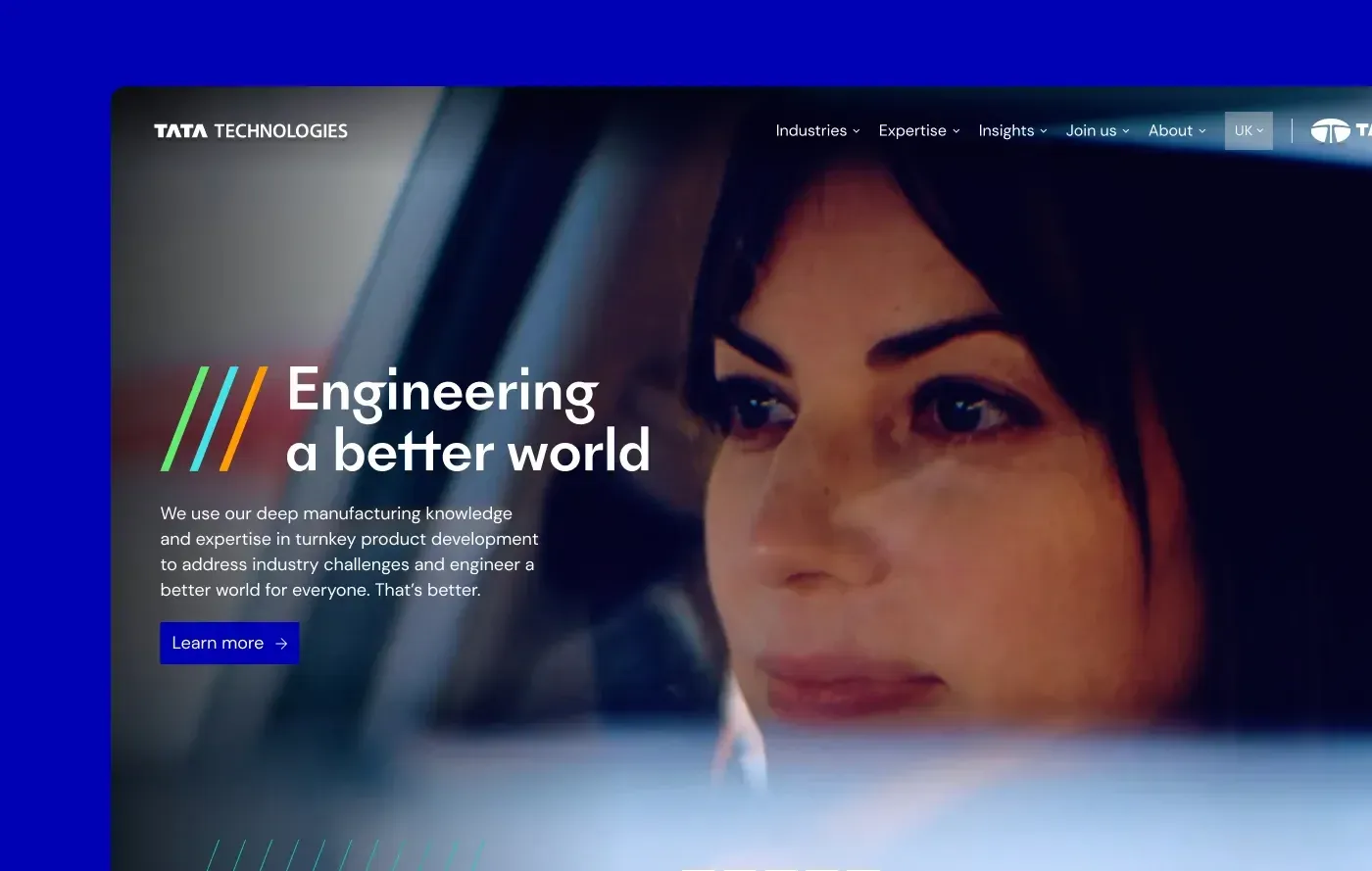
A broader offer becomes credible when it explains what the organisation enables, rather than simply listing new services. Tata Technologies had expanded beyond its automotive engineering heritage into digital transformation, product development and end-to-end engineering, but that shift was not widely understood. Its new strategy and identity reframed engineering around improved human outcomes and organised website content around customer challenges and industry needs rather than service listings.

The same principle guided Dassault Systèmes as it moved from a technical software reputation towards an experience design proposition for board-level decision-makers. Its campaign retained the company's innovation credentials while presenting technology as a means of imagining and designing future scenarios together. The aim is not to abandon technical depth, but to make that depth meaningful to the people deciding whether the organisation can address a wider business challenge.

Sources: Tata Technologies: Re-engineering for a better future, Dassault Systèmes: Positioning for executive growth

Build proof into every buyer touchpoint

A broader proposition can lose credibility when buyers encounter different explanations in different places. The brand needs a coherent message that connects technical expertise, commercial relevance and real-world impact across website content, campaigns, employee communications and sales materials. IBM addressed a similar problem by turning complex technical case material into concise, shareable stories that linked its innovations to familiar objects, places and experiences.

For technical audiences and senior decision-makers, the level of detail may differ, but the underlying promise should remain consistent. Siemens's technical reports were reframed around business benefits in an interactive web experience so that business leaders could understand the value without needing to absorb all of the technical detail. This gives buyers a clearer route from capability to outcome while preserving the evidence that technical stakeholders need.

Sources: This is IBM: Brand Awareness Campaign, How to Inspire Decision-Makers to Be Bold

Use research to identify the perception gap

Before changing messages, establish how customers, prospects and internal teams currently describe the organisation. Customer listening can reveal whether people associate the business with a legacy product, a specialist technical role or a broader strategic contribution. It can also show which aspects of the expanded offer are unclear, unsupported or not relevant to a particular buying group.

This is especially important where a business is entering a new sector or role. A new narrative should be based on more than an assumption that an existing offer will transfer. Stakeholder discussions, customer research, market analysis and competitive audits can help define the actual challenge and the evidence needed to support a new position. Strategy Object, for example, used stakeholder interviews and audience research to identify that its value lay not only in its platform, but in enabling collaboration, innovation and trust between governments.

Sources: Research is how we ask questions, listen and learn, Where logic meets magic: why strategy underpins every great idea, Strategy Object: An identity built on international trade

Stats

In a 2024 survey of 632 B2B buyers, 69% reported inconsistencies between supplier website information and information from sellers.

Gartner

FAQs

What makes a broader offer seem risky to unfamiliar buyers?

A broader offer can seem risky when buyers cannot see how new capabilities connect to proven expertise or business outcomes. Risk also increases when the proposition is vague, technical claims are not translated for senior audiences, or different channels give conflicting accounts of what the organisation can deliver.

Where does a broader offer lose credibility across buying channels?

A broader offer loses credibility when the website, technical content, campaign messaging and sales conversations present different promises. It can also weaken when complex proof remains buried in dense materials that buyers cannot easily understand, remember or share.

What helps buying groups agree on an unfamiliar supplier?

Buying groups need a clear explanation of the supplier's role, supported by proof that connects technical capability to the outcomes they value. A consistent narrative, accessible evidence and messages tailored to both business and technical audiences can make the organisation easier to understand and discuss internally.

What makes sustainability claims believable in a product offer?

Sustainability claims are more believable when they are tied to the actual product or service and supported by specific, verifiable operational evidence. Broad language without a clear connection to what the organisation supplies can create distrust and make the claim difficult for buyers to assess.

What should a website say about a broader offer?

A website should explain the customer challenge, the outcome the organisation helps create and the capability that makes that outcome credible. Tata Technologies used content organised around customer challenges and industry needs rather than service listings, while IBM made complex technical impact easier to understand through concise, shareable stories.

How should sales teams explain a broader offer?

Sales teams should connect the broader offer to a buyer's business context while using technical expertise as proof, not as the whole story. They need clear, consistent narratives that show how established capabilities enable a wider strategic outcome for the customer.

How do I align brand messages around a broader offer?

Create a proposition that buyers can recognise consistently, understand in context and validate through relevant proof.

  1. Listen for the current perception

    Speak with customers, stakeholders and customer-facing teams to understand how they currently describe the organisation and its value. Identify where legacy associations are stronger than awareness of the broader offer, and where different audiences need different forms of explanation.

  2. Define the outcome and proof

    Translate capabilities into the business outcomes they enable, while retaining the technical evidence that supports the claim. Build the proposition around a clear role for the organisation, rather than a list of services or features.

  3. Apply the message consistently

    Use the same core proposition across the website, content, campaigns and sales conversations. Adapt the depth and examples for each audience, but do not change the underlying promise or the proof behind it.